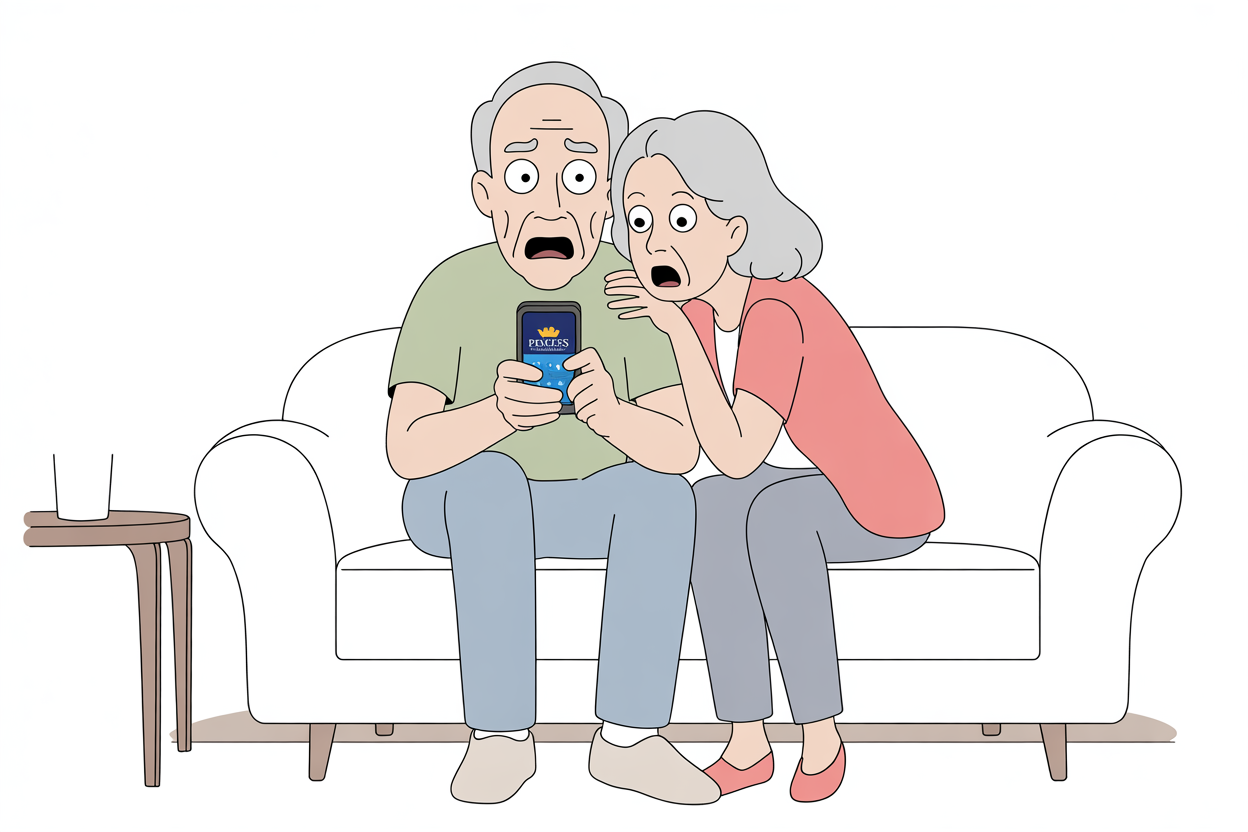
Cartoon of a shocked older couple sitting on a couch staring at a phone showing the Princess Cruises app, reacting to news that their booking has gone wrong.

He paid $2,369 for his cruise, but Princess canceled the reservation anyway

Robert Battaglia paid $2,369 for a Panama Canal cruise with Princess, booked through a travel agent, and he and his wife Norma paid the final balance a day before it was due. Two days later, he opened the Princess app and the reservation was gone. When his travel agent called, a representative said the couple were in default for nonpayment and owed roughly $2,000 more, though no one could say where the charge came from. It eventually traced back to a Princess Plus upgrade his wife had tried to add online, only for the website to report that the purchase failed and tell her to handle it later. Princess canceled the booking anyway and kept $1,298 as a cancellation fee, even though the account showed no balance due and the agent could see no pending charge. Here is the principle worth holding onto before you accept a cancellation like this: when a customer pays on time and the company’s own statement shows nothing owed, the burden is on the company to explain any later charge before it takes punitive action, not after.


Illustration of a worried couple beside a yellow rental car with its hood up on a snowy Alpine road, the man on his phone for roadside help as a man in lederhosen inspects the dead engine.

Help! Alamo charged me $1,000 after my car battery died in the Swiss Alps

Kjell-Erik Berggren rented a car from Alamo at Geneva Airport for a six-day trip through Switzerland, and it worked perfectly until the last morning. Staying in a mountain village at 1,500 meters, he and his group woke to a cold, frosty morning and a car that was completely dead: no lights, no starter, nothing. Roadside assistance told them to leave the vehicle and find another way to the airport, which they did at considerable expense. Then, two months later, Alamo charged more than $1,000 to his credit card with no prior agreement or warning, on two invoices showing different totals that did not even match what was charged. The company pointed to a roadside protection product he had declined and an insurance deductible he had chosen. But there is a principle worth knowing before you accept a charge like this: rental companies are typically responsible for mechanical and electrical breakdowns that are not caused by customer negligence or misuse, and a battery that dies on a cold morning after five days of normal use points to a defect in the vehicle, not a mistake by the driver.

Stylized illustration of a distressed traveler clutching his chest in front of a palm-lined hospital as medical staff wheel a patient on a gurney toward the entrance, evoking a vacation cut short by a family emergency.

The hotel refunded his money, but the booking site kept it anyway

When John Moss’s stepfather was rushed to the hospital, he knew his Florida vacation was over before it started. He contacted Traveluro, the site where he had booked a nonrefundable $615 stay at the Hilton Melbourne Beach, and sent hospital records proving the family emergency. The hotel understood and agreed to cancel without penalty, releasing the money back to the booking site. All Traveluro had to do was pass it along. Instead, weeks of silence followed, until Moss filed a dispute with his credit card company and Traveluro suddenly made him an offer: drop the dispute, and we will send your refund. Here is what every cardholder should understand before saying yes. A credit card dispute freezes the transaction while your issuer investigates, which means the merchant cannot touch the money until the matter is resolved. That is real, tangible leverage, and a company asking you to give it up in exchange for a promise is asking you to trade the one protection the law puts on your side.

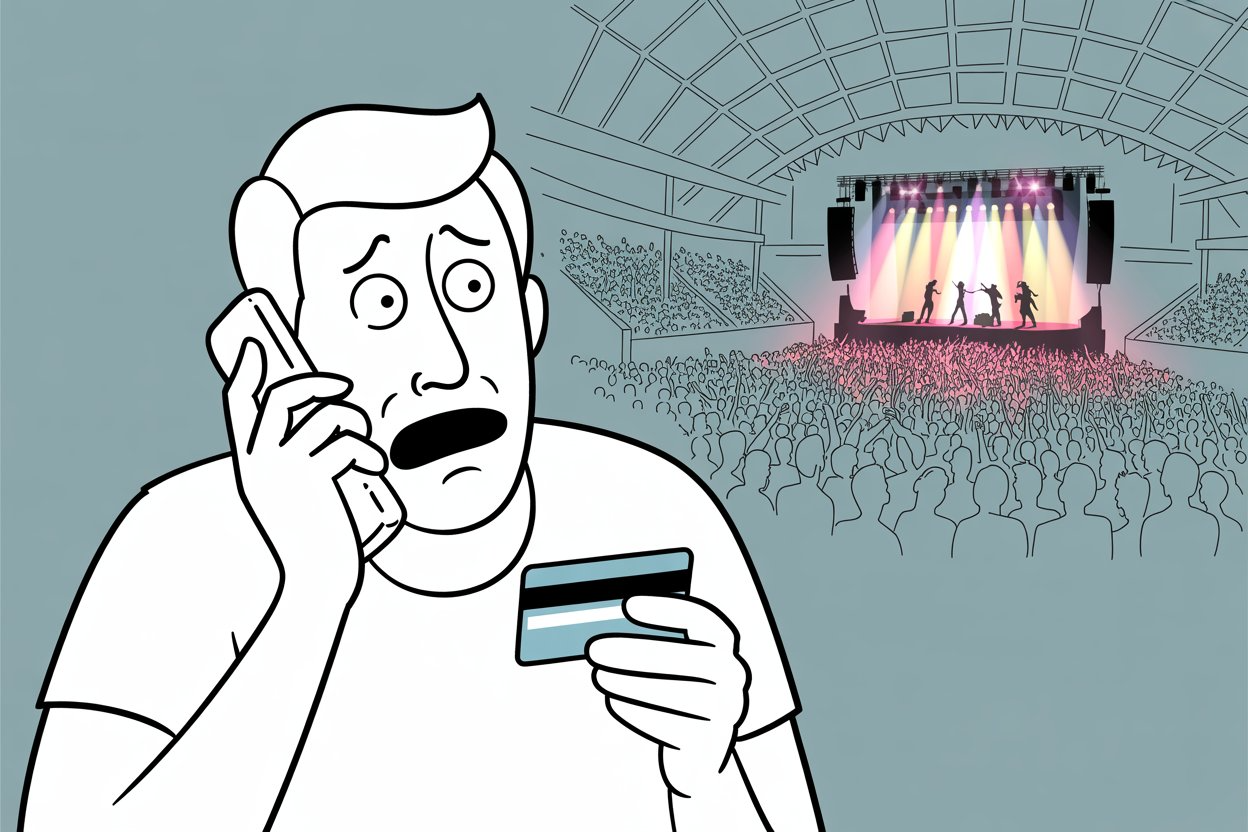
Illustration of a worried man on the phone holding a credit card while a concert crowd watches performers on stage, representing a StubHub ticket refund dispute.

This StubHub rep’s “help” with Coldplay tickets cost me $3,000!

Paul Avron’s daughter bought three Coldplay tickets at Hard Rock Stadium in Miami for $1,027, nine months before the show, as a birthday gift for her best friend and the friend’s dad. On the day of the concert, the StubHub app said the tickets were being released, but they never appeared. With the show already starting, the family called StubHub in a panic and asked for the tickets or replacements so the group could get in. The last representative refused to provide replacement tickets and said they had to buy new ones, promising StubHub would refund the original $1,027. The rep said he saw three tickets for just $1 more than the original purchase and sent a link. The tickets were actually $1,000 each, and StubHub charged the credit card $3,000. The family disputed the charge with their credit card company and contacted StubHub directly, but both representatives said they would not credit the account. The family never accepted or used the expensive tickets and never attended the concert. StubHub’s FanProtect Guarantee promises valid tickets or your money back, and says StubHub will find comparable replacement tickets when possible.

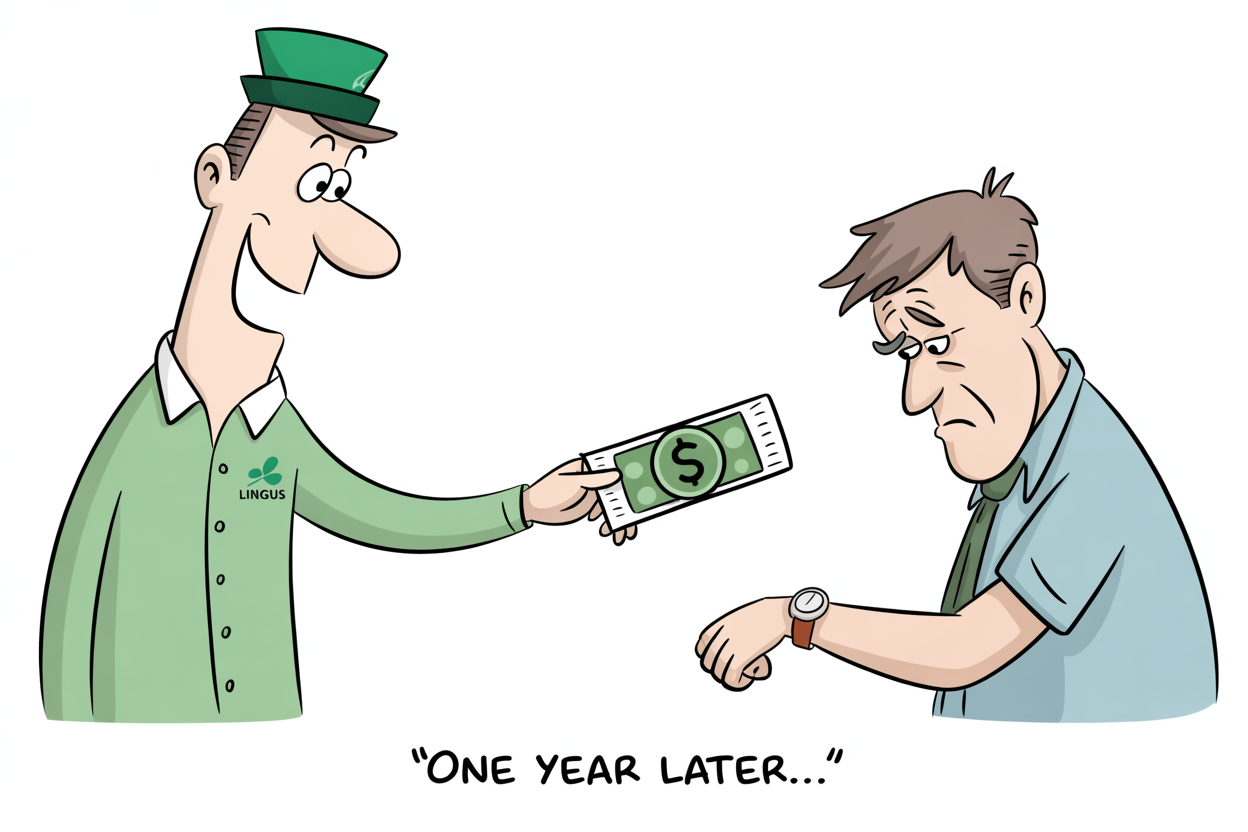
Illustration of an Aer Lingus representative offering a voucher to a frustrated customer checking his watch, with the caption “One year later…”

Aer Lingus issued her voucher but ghosted her husband for over a year

After a death in the family, Beatrijs Albarran and her husband Jorge had to cancel their Aer Lingus flights. The airline issued their refunds as vouchers, $938 for her and $925 for him, and emailed that both had been processed. But when Beatrijs called the next month to book a new trip, an agent told her Jorge’s voucher was never actually issued. The couple, who live in Buffalo, New York, wanted to fly from Toronto to Scotland because the fares are better, and asked whether the vouchers could be reissued in Canadian dollars. Beatrijs received hers in U.S. dollars within a reasonable time. Jorge’s never arrived. For more than a year she called repeatedly, hearing the same response that a supervisor was working on it, while automated emails said the case was under review. More than 15 months after Aer Lingus said it processed the voucher, it still had not appeared. Under Aer Lingus policy, vouchers are issued in the same currency as the original booking, so no conversion was needed to book from a Canadian airport, and the Department of Transportation requires airlines to process refund and credit requests promptly.

Minimalist editorial cartoon of a frustrated couple sitting back-to-back on a single gray suitcase in an airport terminal with their heads bowed, both staring at their smartphones with downcast expressions, surrounded by blurred information board signs in the background, illustrating a Cleveland couple's stressful return trip from Greece after Delta and Sky Express cascading booking errors forced them to pay for a new $435 ticket and recheck their luggage in Athens

An agent error turns a simple return trip into a costly odyssey. Will Delta fix it?

Robert Kempke and his wife flew from Cleveland to Athens with a return through Thessaloniki on Sky Express, a regional carrier booked through Delta. Their online check-in for the Sky Express flight was blocked because of a 185 euro balance linked to a duplicate third passenger using Kempke’s name. Sky Express refused to fix the error and told them Delta had to correct it. The Delta agent canceled and rebooked the Sky Express segment, which collapsed the entire return itinerary including the Athens to Cleveland flight. The Kempkes paid $435 for a new Aegean Air ticket to Athens, retrieved and rechecked their luggage, and rebooked their U.S. return. Delta initially promised a refund plus 12 euros for seat assignments, then denied the claim. Under U.S. Department of Transportation rules, passengers are entitled to automatic and prompt refunds for flights canceled by the airline. EU Regulation 261/2004 applies to flights within or departing the European Union.