



Renegade travel agent brings ticket pricing fight to America

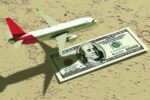
What’s the most maddening thing about airfares? Probably the pricing. You’re offered a low “base” fare, only to have fees, taxes and surcharges tacked on to it. By the time it’s all added up, the fare has doubled. Why can’t they just quote an all-inclusive price to begin with?

That’s what Stanley Gyoshev, who founded the online travel agency Lessno with Assen Vassilev, thought. So they did something about it. They successfully lobbied the European Union to change its pricing rules. Now they’re setting their sight on the United States. I recently spoke with Gyoshev about his efforts to change the way travelers buy tickets.

Q: How did you get the EU to change its airfare rules?

Gyoshev: We have always fought for fairness and disclosure, so when the Meglena Kuneva, the European Union Commissioner for Consumer Affairs, announced that she was going to examine Web sites selling air travel products for such shenanigans, we prepared and presented a policy brief explaining how the interest of the consumers in the air travel could be protected.

Commissioner Kuneva and the members of her cabinet responded so well to our brief and our recommendations and analysis that us in the joint working group of the Directorate Generals of Health and Consumers and General Energy and Transport in drafting new legislation on the subject. The rest is history.

So due to the hard work of Commissioner Kuneva and her colleagues, all EU air travel Web sites are required to publish the total price for a standard ticket, so travelers can compare the prices.

Q: It’s a little unusual to find a travel company pushing this kind of rule change. What’s with that?

Gyoshev: We were never just about the technology or the interface. Our vision was that we were going to be an agent of the traveler, not a travel agency, which most of the time represents some corporate airline interest, not the interests of the traveler. So the first thing we did was set out to design a site that would be user-friendly and would help people find what they define as the best possible trip: the shortest travel time, the greatest probability of arriving on time, only exchangeable and refundable tickets, or the cheapest price.

Q: Here in the U.S., the government has a “hands off” approach to the airline industry, and particularly to the way in which fees are broken out on the Web. How do you plan to change things?

Gyoshev: In the U.S., there is no central agency which has the single role of protecting consumers, so there are several ways in which this could happen. For one, the federal government could increase consumer protection by using laws relating to unfair advertising — by insisting that airlines only advertise products and pricing which is readily available to the traveler without undue restrictions and red tape. The second is that since major international airlines are selling tickets in Europe, they will need to comply with the EU regulations. Since they need to make consumer friendly changes to their European Web sites and advertising, we are hoping there will be some carry-over to the U.S. sites.

Q: Is there a non-regulatory way to compel airlines and travel agencies to quote a full price?

Gyoshev: Maybe. We are planning to actively monitor Web sites for airlines and airfare sellers in the U.S., and will offer consumers advice on the best products available on the market. We are also planning to talk with more reporters like you to teach consumers about the progress that has been made in Europe and that is possible for the U.S. as well. In the future, we may also undertake efforts to encourage Congress and the attorney generals to support the enforcement of fair advertising principles for the entire industry.

Q: What can the average traveler do to support these efforts to end this bait-and-switch scheme?

Gyoshev: The only way to end the bait-and-switch game is to stop supporting airlines and airfare sellers who practice this deceptive tactic. Travelers should spend the time to find a company they trust not to nickel and dime them with every fee and tax they can dream up. If a traveler comes across an especially misleading ad or fare listing, we invite them to email us or their state and federal representatives. If American travelers help us draw attention to this problem, we’ll be much better off in pushing for legislation similar to the new transparency law in Europe.

  • http://www.alaskatravelgram.com Scott mcmurren

    This is a great move by Mr. Gyoshev. It’s a disservice for airlines (or hotels and rental cars for that matter) to be less than forthcoming about the total price of their cost or service. Optional add-ons, such as meals, need not be included. But mandatory fees, surcharges, taxes and so forth should be disclosed in full. I support his efforts.

  • http://www.lookwhojustblouin.com Trista B

    Hats off to you Mr. Gyoshev. I look forward to seeing how this plays out here in the states.

  • DrBubba

    This is going to mess up my business model. I was going to start an airline and sell first class tickets to anyplace from anywhere for $200. However, I was also going to charge $10,000 at the gate for each piece of checked or carried on baggage ,where baggage is defined as anything larger than a credit card. Darn.

  • Carver Farrow

    I’m only half way convinced. In the US at least, it is rare that a merchant quotes a price that includes mandatory government taxes or assessments. The only regular purchase that comes to mind is gas.

    Why then would we become confused when it comes to the airlines utlizing the same model that everyone else does?

  • Carver Farrow

    I’m not convinced. In the US at least quoted prices rarely include taxes and other government fees or assessments. The only one that jumps to mind is gas.

    So what’t the problem with airlines using the same model which we very familiar with?

  • WishingEveryoneWasLikePalmairEuropean

    “Why then would we become confused when it comes to the airlines utlizing the same model that everyone else does?”

    Even seasoned veterans of airline travel are not familiar with the model the airlines use, because they don’t use the same model as, well, anybody else. Unlike the sale of retail goods where sales tax is the only addition to the listed price, airlines add multiple taxes, regulatory fees, and “surcharges.” These fees and surcharges vary from airline to airline, and even the taxes vary from flight to flight. What the airlines are doing now is unbundling their fares to charge for every little thing they can think of. In the health care field, unbundling became illegal many years ago (in the US, anyway). This is why, for example, your dentist does not, and cannot, charge you more for administering more anesthetic; nor will a hospital charge you every time they change your bandage. The airlines are developing a new pricing model where anything and everything is broken down, and a price is put on the resulting fragments. That may be fine for optional things like food on a 2-hour flight, but it’s not the same when they charge for non-optional things like drinking water, food on a 10-hour flight, or fuel.

    Your example of gasoline/petrol can actually be used the other way, since several taxes & fees are added to the base price to give the posted price. But just as when I buy gas, when I buy a plane ticket I really don’t care how much of my money goes to pay for fuel, taxes, departure fees, or the pilots’ retirement fund.

    What I want to know is simply, how much?

  • Dave

    There’s a big difference between quoting a price that doesn’t include the government-imposed taxes and fees and quoting a price that doesn’t include a company’s own surcharges and fees. The government-imposed monies do not go to the purveyor of the product or service, and it is fair that companies be allowed to quote a number that represents what the company will actually receive from the customer. What is despicable is the practice of quoting a phony, unpurchasable base price, then adding on lots of fees that they will collect for themselves. This is truly bait and switch, and I don’t know why it isn’t already illegal. The “fuel surcharge” is the prime example of something that should by law be a part of the quoted price. This is nothing more and nothing less than part of the cost of the ticket to the customer, and part of the cost of doing business to the provider of the ticket.

  • Lianne

    Fuel surcharges are the silliest thing the travel industry has come up with. As much as I dislike baggage fees, food/beverage fees and the various ticketing fees, at least there is the psudo-rational “unbundling” explination (“we only want to charge you for the services you use!”) has a warped logic behind it. Fuel is part of a plane/cruise ship’s most basic operating expenses. A fuel charge is like buying french fries and being charged a potato fee.

    Kudos to Gyoshev, hope he’s successful.

  • Steve

    The one I hate the most is advertising flight prices for “each way, based on purchase of round-trip ticket”. To me that’s like offering a price for one shoe, based on buying the pair. I wouldn’t have a problem with it if you could actually buy the one-way ticket for that price, but of course you can’t. So you cannot actually purchase anything at all for the advertised price. How can that be legal???

  • mark

    I would love to see this pass i hate it when i get an email to fly to London for 250.00 only to find out there are 550.00 in other fees to add on