



What costs travelers $87 billion a year and is basically unavoidable?

ishot-4

If you thought fees, or nonexistent customer service or high fuel prices were the biggest problems facing travelers, think again. It’s traffic, according to the Texas Transportation Institute’s 2009 Annual Urban Mobility Report.

This chart shows the total cost of congestion for each population size group. It accounts for the amount of wasted time and fuel due to traffic congestion. The total cost of congestion in the urban areas is $87.2 billion in 2007 or an average of $757 per peak-period traveler.

Let’s put $87 billion into a little perspective.

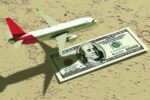
• If you had that much money in single-dollar bills, a stack would be 28,998,000 feet, or over 5,492 miles. That’s a round-trip between Washington and Los Angeles.

• The 2003 Iraq war package cost U.S. taxpayers $87 billion.

• We’re not above throwing $87 billion away, either. The Fed gave Lehman Brothers a loan for that amount back in the day.

As you might expect, bigger cities are more affected by traffic than rural areas. More than 20 urban areas had a total annual congestion cost of at least $1 billion each. And the areas with populations over 3 million account for about 57 percent of the congestion cost.

No matter what you do, traffic gets worse. Higher fuel prices only seem to make the numbers level off a little.

The bigger problem may be how we see this issue — or, more to the point, fail to see this issue.

Traffic doesn’t exactly make headlines. If you read this site and others like it, or pick up one of the few surviving newspaper travel sections, you’ll see that traffic is hardly ever mentioned.

Maybe if we started talking about it, we could do something about it.

  • Bob Murphy

    Actually, I think about this every time I encounter a major artery that’s backed up because of construction during commute or business hours.

    I’m sure the government entities involved don’t want to do the construction at night to avoid paying for lighting or shift differentials to the workers. But I would imagine the cost to society is many, many times that, when you consider wasting the time of hundreds or thousands or tens of thousands of people, wasted fuel, extra wear and tear on vehicles, and extra accidents in stop-and-go traffic.

    This kind of cost-shifting is a common problem in modern society. The attitude of “I’m going to save money at your expense” plays out in countless ways – for instance, airlines downsizing call centers to save money, which shifts the cost to the customers by making them wait on hold.

  • Jasper

    I am not sure what there is to talk. The solution is clear: a lot more infrastructure, preferably transit and redevelopment of a lot of sprawl, much like in Tyson’s Corner just outside of Washington, DC.

    The problem is that
    * many DOTs still think everything can be solved with more roads and only more roads;
    * politicians are unwilling to raise taxes to pay for the infrastructure, while ignoring the hidden waste of traffic jams;
    * citizens that keep re-electing previsouly mentioned politicians; and
    * neighborhoods that go NIMBY.

    In short: everybody wants more infrastructure, but nobody wants it in their neighborhood, nor does anybody want to pay.

  • http://www.aspendew.com AspenDew

    Jasper: “In short: everybody wants more infrastructure, but nobody wants it in their neighborhood, nor does anybody want to pay.”

    Hammer, meet the nail’s head.