



US Airways and United Airlines practice “discriminatory” pricing, study finds

US Airways and United Airlines practiced discriminatory pricing against disabled passengers, in apparent violation of federal law, a new study conducted by Towson University finds.

The research, conducted by Jonathan Lazar, a computer and information sciences professor, found both airlines routinely refused to waive fees for blind callers booking by phone, even after being made aware of the regulations.

The results will be published in the next edition of Government Information Quarterly.

Under federal law, if callers identify themselves as having a disability and having trouble accessing the airline website, they must be offered the lowest fare available at the website at that time. A disabled caller may not be charged extra for using the phone center or making a reservation online. In either case, once the caller identifies that there is a regulation that requires either one of those two items, the airline must comply.

But that’s not what happened when researchers contacted the airlines.

Out of 60 phone calls to airlines, there were a total of 15 violations, either where the airline charged more for the fare on the phone than the fare available on the web at the time, or where the airline refused to waive the call center fee. One of the phone calls actually resulted in two separate violations.

US Airways had a failure rate of 40 percent, while United failed to comply with federal law 33 percent of the time, according to the researchers. Let’s get down to a few call samples. Here’s one to United:

United #9- The fare quoted on the phone was the same as the fare quoted online, but the airline representative indicated that there would be a fee for using the phone call center. When the caller noted that there was a federal law that required that the fee be waived, the airline representative said that they cannot waive the fee.

Here’s another from US Airways:

USAirways #7 – While the airfare on the phone was the same as the airfare online, the airline representative noted that there is a $25 fee for using the call center. When reminded about the federal regulations that prohibit someone with an impairment being charged that fee, the airline representative checked with the supervisor on-duty, came back, and said that the fee would not be waived, and the caller should just use the website. When the caller noted that the website is inaccessible and therefore they could not use the website, the airline representative said to “call tech support” but that the call center fee would not be waived.

Neither US Airways, United Airlines or the Transportation Department has responded to a request for a comment on this study. I will update this post when they do.

The conclusions are a even more unsettling. “In practice,” its authors suggest, “the discriminatory pricing is likely higher than the data in this study indicates,” adding,

While this study clearly shows that awareness of this law is insufficient among airline call centers, all of the callers knew about their rights under the regulations. In each of the study phone calls, the callers immediately acknowledged that they had a disability, that they had difficulty using the website, and that there was a regulation requiring they be charged the same fare on the phone as on the website.

The research suggests airline employees lack a basic understanding of disability laws. A large number of airline representatives sent disabled callers to the company’s tech support center or into an automated phone system to respond to an issue with inaccessibility of a website, showing a genuine lack of understanding of the needs of travelers with disabilities.

Professor Lazar’s study recommends the Transportation Department should work to raise awareness among travelers and airlines about disability rules. Although there are laws in place to protect disabled travelers, “implementation of these regulations lags behind the intent, at least in the area of preventing discriminatory pricing in the sale of airline tickets.”

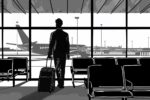
(Photo: NguyenDai/Flickr Creative Commons)

Update (2 p.m.): United has responded.

We take these matters very seriously and will immediately send a reminder to everyone about how to best serve our customers with disabilities.

Update (6 p.m.) The Transportation Department has responded.

U.S. and foreign air carriers operating flights to and from the United States are prohibited from charging fees or not making web fare discounts available to passengers with disabilities who cannot use a website on the basis of their disability and thus must purchase a ticket by phone or in person.

Carriers that charge fees in such circumstances are not in compliance with the law, and the Department’s Aviation Enforcement Office will be conducting investigations of carriers’ compliance with this requirement in the near future.

The Enforcement Office has already conducted and is continuing to conduct test calls to ensure airlines are complying with the new Air Carrier Access Act regulation in other areas, such as enplaning/deplaning and the availability of Complaint Resolution Officials.

Secretary LaHood continues to believe that web site accessibility is extremely important to ensure nondiscriminatory access to air travel for people with disabilities, and we plan to issue a proposal this year to address this.

We are committed to ensuring that our air travel system is fully accessible to passengers with disabilities.

  • sweepergrl

    Just when I thought the airlines could go no lower, we hear this. I would like to see these individuals as well as the company prosecuted and fined. That would get everyone’s attention quickly. The fines should be used to repay the discrimination victims and any money left over should go to fund disability rights programs.
    I would be interested to see this study branched out to investigate airlines charging for service dogs. We all have heard those stories and it would be interesting to see how often it is happening.

  • SirWired

    While certainly the described practices are illegal, and are clear violations of the ADA (or FAA rules… I don’t know which), I think calling it “discrimination” is not the right terminology. The airlines are treating all pax who call the phone lines equally; they are not actively punishing blind callers. I think the proper terms here would be “failure to make a reasonable accommodation.” The airlines aren’t being evil here, just incompetent.

    Hanlon’s Razor: “Never attribute to malice that which can be adequately explained by stupidity.”

  • Stanley King

    My question is, “Why aren’t these airlines charged/fined persuant to ADA?”

  • J C

    SirWired may be right about airlines not being evil, just incompetent. Or is it simply lack of training. Is the bulk of those 40% calls, the ones that get picked up over seas? Is it non caring incompetence? Seems like it’s about time the airlines got on the stick and properly train their employees to handel these situations.

  • ptkdude

    All airlines practice price discrimination. In fact, airline seat pricing is the best example of it.

  • Joel Wechsler

    Can someone explain to me how the airline call centers determine if a caller is blind and therefore unable to access the website?

  • noah

    “While certainly the described practices are illegal, and are clear violations of the ADA (or FAA rules… I don’t know which), I think calling it “discrimination” is not the right terminology. ”

    –this is PRECISELY what disability discrimination is. The airline has set up a system (i.e., online booking) that cannot be accessed by some people because of their disability. It’s no different than installing stairs, and claiming that you don’t discriminate against people who are in wheel chairs because they should just stand up and walk up the stairs.

  • Kevin M

    Joel: under the Americans with Disabilities Act, it’s illegal to require proof of the disability claimed; in fact, if the disabled person merely says “I have a disability”, the covered party (the business, government agency, whatever) cannot even ask what the disability IS, they can only ask what sort of accommodation is required. Therefore, if a caller identifies himself to the call center as disabled and due to that disability is unable to use the website, the company MUST Make reasonable modifications in policies, practices and procedures that would otherwise deny a person with a disability equal access to services, UNLESS the modification would fundamentally alter the services. I’d say that no airline could argue with a straight face that waiving a fee fundamentally alters the services, but with a company as despicable as United or USAirways, you never know what they might argue.

    Nonetheless, I’m with the posters who say this is probably an untrained call center, rather than deliberate malice on the part of the airlines. So much of ADA law is well-settled that company lawyers are good about coming down hard internally on violations when they hear about them.

  • Joel Wechsler

    @Kevin M Thank you for the infiormation. I am not as knowledgable about the ADA as I should be, nor, I’m afraid, are many others.

  • Jonathan Lazar

    Just one technical comment: someone with a disability can use a web site if the web site has all of the appropriate accessibility features built in. We did an accessibility inspection of the web sites of the 10 largest airlines, and 4 airlines had accessibility problems on their web sites: United, USAirways, Alaska, and JetBlue. We only called those 4 airlines, we did not call airlines that had the appropriate accessibility features built into their web site.

    Jonathan Lazar
    Dept. of Computer and Information Sciences
    Towson University

  • Lianne

    @ptkdude

    Normal airline price discrimination is legal because its treats everyone as crappily as possible. Very egalitarian!

    However if I try to base my price segmentation around race, disability, religion or gender, that’s illegal.

  • Kris

    This is what happens when airlines outsource their call centers to India.

  • Jesse

    Though I think the airlines should be fined for this – this begs the question … what’s now going to stop everybody and their mother from just using the line “I’m vision impaired” when using call centers to book tickets?

  • Jeanne (in NE)

    @Jesse: Using a website means I don’t have to listen to “Peter”, “Mary Jane” and “Betty” at an overseas call center pretend that they’re located in Kansas City.

    Seriously: I work as an election worker on a district level (12 – 13 polling places per election, random assignment, so have seen ~50 different polling places) and each polling place is required to have a device available to allow the disabled to use the device. Use of the device is not restricted to the disabled. I have never, ever had anyone at any polling place that did not have a disability use that machine or even make a joke about doing so. Most people (notice I didn’t say “all”) would not feign a disability just to call a call center.

  • http://www.loganairportvaletparking.com Billy Bell

    It is truly ignorant for the airlines in question not to honor the ADA laws. They should be fined very heavily.

  • Joe in NJ

    Another reason to boycot US Airways and United….

    I am already boycoting Spirit… because of their idiotic fees.. these two other airlines seem to be going in the same direction.

  • y_p_w

    I’m just wondering how this might all fall into place given that many airlines have outsourced their call center operations.

    When I called United’s mileage program to try and book a “partner airline” flight, it was in fact required that I contact them by phone. I spent nearly an hour trying to turn my family’s accumulated mileage into an interisland flight on Hawaiian Airlines. The gentleman I talked to for about 45 minutes was obviously South Asian, and I’m guessing at some call center in India. I doubt that he nor his superiors were much aware of the Americans with Disabilities Act.

  • http://Dorothy4mkay@msn.com Sahsa

    How does anyone know that the caller is telling the truth? I live in Northern California and I see many instances of people using handicapped spots and/ or claiming that they need preferential treatment, when in fact, they just want to be catered to.

  • Recovering Lawyer

    If airlines don’t want to be taken advantage of by callers who claim a disability and don’t have one, the easiest and least discriminatory thing for them to do is simply to make their Web sites accessible rather than implementing a separate and unequal ticket purchasing process for people with disabilities.

  • SirWired

    @noah: It is NOT “discrimination” if you provide a reasonable alternative. The law certainly does not recognize it as such. If a place has a handicapped lift available around the back, it isn’t discrimination to not provide a wheelchair ramp at the front.

    The issue here is that the reasonable alternative does not, in fact, actually work. The fact that the website does not work to begin with is perfectly legal. Yes, getting the website to work would be preferable, but if the same tickets were available to those those that call the reservation line, there is no discrimination.

  • http://www.cockam.com ajaynejr

    Why don’t credit card companies take off an illegal fee from a credit card bill upon receiving a dispute letter. Even if the cardholder signed the credit card slip. Or do they?

  • Chicky

    Outsourced, overseas call center. Sounds familiar to me. I had a dispute with a call center over a credit card bill. They called me at 7 a.m. Sunday morning, which is clearly against the FTC Fair Debt Collection Practices Act. I told them so and told them if they ever called me at that time again, I’d have the FTC down on their heads in a heartbeat. Of course, because they were in Mumbai, or Delhi, they didn’t get it. Then, I sent a letter to the customer service division, really getting them for it. This was over a $25 payment that I’d already sent in, BTW. See “Slumdog Millionaire” for a brief glimpse of how the call centers work.
    Anyway, if citing the federal regulations does not work with the uninformed “customer service” associate, the disabled individual needs to send correspondence concerning the matter to their state’s Attorney General and to one of the bigwigs at the offending airline, using Chris’ handy-dandy e-mail contacts. Let them know their call centers are screwing up, big time.

  • noah

    @SirWired — didn’t you read the original post? They charged the blind users to make the reservations by phone, which was the only way they could make reservations (because, as you say, the web site didn’t work properly for blind people). You can’t make the disabled person pay for your reasonable modification.

  • Carlo

    Sahsa, how do you KNOW that? Some disabilities are not as plainly visible as others. Someone in a wheelchair or a white cane would have a very obvious disability. Someone with COPD or perhaps is under doctor’s orders to keep physical activity to a minimum for whatever reason is not something you can see for yourself just by looking! I, myself, suffered a very serious illness recently, for which (someday soon, hopefully) I will receive a temporary handicap permit. There are days I get out of breath very easily and other days when I seem to do okay. But since I never seem to know from one moment to the next, shall I toss my permit aside because I really just want to be, how do you say, “catered to”?

    As for those of you asking “how do you know if they’re really disabled when they call?” The answer is: you don’t. You have to take their word for it. There are a few duds in the world who will game the system. But guess what? Most people don’t know about this and the vast major of people who call and say “I’m disabled and you can’t charge me fees” are being honest. They know about it only because they really are disabled.

    These are violations and the airlines deserve to be fined for not training their employees. HOWEVER, I agree with SirWired that they aren’t malicious discrimination. I ran into this a lot when I worked for a telephone relay service for the deaf. Deaf people are like the rest of us – they like to order pizza delivery A LOT. Pizza Hut was as clueless as our airlines here. We would call and announce our caller – Pizza Hut would immediately hang up on us. We would always have to call back at least once or twice to get our message through that we weren’t trying to sell something. Dominos, on the other hand, always listened and almost never hung up on us. They were well trained on how to handle relay calls. Kudos to them, I say. (Actually, Wal Mart is as clueless as Pizza Hut is, come to think of it. Takes 3 or 4 callbacks to get them to stick around and talk to the caller.)

  • http://twitter.com/pyyhkala Mika Pyyhkala

    I attended a DOT Air Carrier Access Forum this week in Miami on behalf of the National Federation of the Blind, and stressed the importance of technology accessibility including web sites, mobile phone applications, IFE systems, kiosks, etc. DOT indicates it plans to issue an SNPRm to amend Part 382 to include web sites, kiosks, and IFE systems. The best example of an IFE system issue is with JetBlue’s RED system which is not accessible to me as a blind airline passenger. Also I fly about 75 segments a year, so its critical to me that these things are corrected.

    I am working with Dr. Lazar’s report, DOT, and contacting the carriers on behalf of NFB in regards to the report. We in the NFB passed a 2010 resolution at our convention regarding airline web site accessibility.

    The primary issue I work on for the National Federation of the Blind invovles a variety of airline travel issues that affect the blind. Anything from training issues to compliance monitoring to web sites to iPhone applications to gate information display screens.

    Speaking of gate information display screens
    http://pda.continental.com
    provides good quality accessibility in a nonvisual format to data typically found on a gate information display screen such as standby lists, upgrade lists, seat map data, flifo data, etc. I can access this information with my pc screen reader, VoiceOver on my iPhone, or a refreshable Braille display. Soemone without a disability can also access the data without having to be looking at the gate screen eg from an airport restaurant.

    I also extensively “worked with” AirCell, the provider of
    http://gogoinflight.com
    to get them to introduce a nonvisual captcha to their service. Earlier in 2010, they added an excellent nonvisual logic questions captcha alternative that is accessible to both blind and deaf blind individuals. I’ve used the GoGo Inflight WiFi service on several flights since they made the change, in fact, I used it on all flights I have taken that offered the service. I took a flight the day I found out they made the change, because I was so excited and passionate about the issue and wanted to test it first hand. The primary challenge in working with AirCell was getting some of their business people to understand the importance of accessibility and universal design. It took many hours of time and extensive work to get to the right people inside AirCell, and then several months for them to actually put the fix in to production.

  • Ralph

    Hello all,

    What a fascinating thread or conversation regarding this article. There are many great points. I would like to point out that in business, “discriminatory pricing”, refers to segmentation of the market and pricing differences, based on price elasticity characteristics of these segments. Price discrimination used this way is legal and beneficial to the consumer.

    Companies often adjust basic prices to allow for differences in customers, products, and locations. In discriminatory pricing, the company sells a product or service at two or more prices, although the difference in price is not based on differences in cost.

    The best vanilla example, is a diner or restaurant having an early bird special, for a steak dinner that is 50% of between 430 and 530, when their typical business is slow.

    What these airlines did is Discrimination against the handicap. I believe that does fall under Federal protection.

    I am losing my hearing and will some day be deaf. So, it was nice to read these remarks. Thank you. Shows decency is still alive in the world, however small the corner may be.. :)

  • Anonymous

    I am almost in the same situation… the only difference is that I am 25 years old. I will try to follow your advices. 
    I am sure that I will have excellent results.
    bed and breakfast Glasgow  
    accommodation Glasgow

  • Pingback: Significant upgrade pricing discrepancy on award ticket (elite v non elite) - Page 3 - FlyerTalk Forums