



JetBlue’s “classy and professional” move for disabled passenger in need

Here’s a pick-me-up story for a Monday morning: Penny Parrish’s niece bought a roundtrip ticket to Florida to visit her ailing father late last year, but when he died and she asked to return home early, JetBlue Airways charged her a ticket change fee.

Parrish’s niece is deaf, so she suspects there may have been a communication problem at the airport. That’s when she discovered a rarely-used list of JetBlue contacts on my site.

I emailed JetBlue, based on names and addresses I found on your Web site. I focused on a customer support person and ADA [Americans with Disabilities Act].

In the end, they said that although they did not have any obligation to do so, they would credit the $169 back to the charge card. They also passed along sympathy to my niece.

It was classy and professional.

Given that discrimination is rampant in the travel industry — as I discussed in yesterday’s Navigator column — I agree that JetBlue’s actions are both classy and professional. I wish the ticket agents had taken the time to understand Parrish’s niece before asking her to pay a change fee, but in the end, the airline did the right thing.

This does, however, raise an interesting question: When should an airline waive its fees? Is a death in the family a good enough reason? How about financial hardship? Difficult personal circumstances?

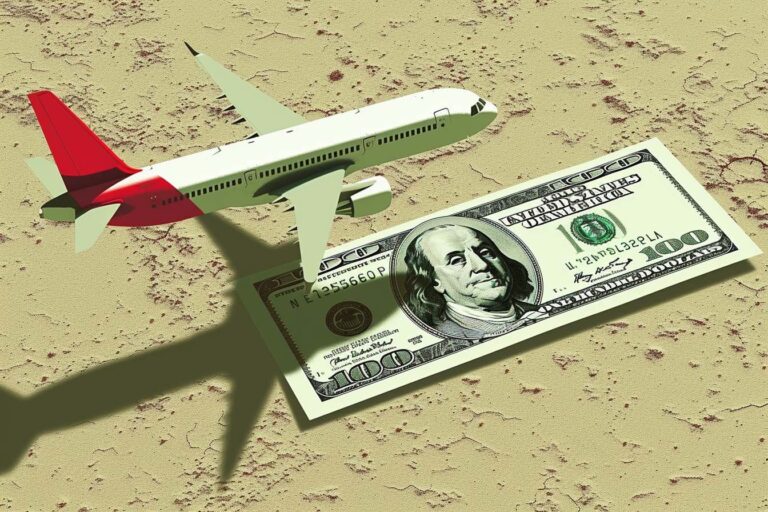
I remember a time not so long ago when change fees were routinely waived, often just for the asking. Today, they’re a major revenue source for airlines. If the current trend holds for 2009, airlines will have made well over $2 billion from reservation and cancellation fees, according to the Bureau of Transportation Statistics (here are the numbers through the early fall).

Shouldn’t airlines be making their money the honest way — through ticket sales — as opposed to from “gotcha” ancillary fees, like those required when you change your ticket? I believe carriers like Southwest (and to an extent, JetBlue) have already answered that question.

What do you think?

(Photo: Drewski2112/Flickr Creative Commons)

  • MikeS

    I don’t see any problem with airlines charging a change fee >>IF<< it is somehow related to the cost of them doing the change. Say, it takes them 10 minutes, the fully burdened cost of the employee is a whopping $100/hour so they charge $20. No problem.

    But they charge $169??!!! And then they blame it on higher fuel costs?? What a bunch of bull.

  • Cynthia

    Chris . . . I get an error when I click on the link for the transportation stats.

  • Chicky

    I think change fees should be based (kind of as MikeS said) on the complexity of the change, and the reason.
    For example: Changing a letter or spelling in a name or a house number in an address? No fee.
    Death of a family member? No fee.
    Retooling an itinerary, unless it’s for the death or illness of a family member? 5 percent of the ticket price.
    Most places offer a fee scale based on the time required for the service and/or the complexity of the service. Airlines should do the same.

  • Mort B

    MikeS is completely right. No-one objects to fees that are proportional to the cost of providing some special service, but the current schedule of change fees is way out of line with the cost of providing such changes. In point of fact, if the pax is able to make the change on-line without the assistance of a reservation agent, the fee is essential unjustified.

  • Di

    I agree with those above. I just want to clarify proportional. Proportional as in a small percentage of the price, on a sliding scale of reason and time distance between the day the change is made and the date of the actual flight. You should never have to pay a change fee more than the cost of the ticket, even if the ticket only costs $69. If it is an itinerary change made close to the date of travel, except for a death in the family or your connecting flight (with the airline or it’s partners) got canceled or changed, then I can see a change fee coming close to the price of the ticket, just like tours will only give you a percentage (or none) of the cost as a refund if you cancel a week before you travel. Charging to fix a spelling error should not cost anything, because it can prevent you from traveling.

  • David Z

    This does, however, raise an interesting question: When should an airline waive its fees? Is a death in the family a good enough reason? How about financial hardship? Difficult personal circumstances?

    In my limited experience dealing with airlines, they waive change fees for really serious medical situations, death of the passenger and/or family members, and/or military orders. While everyone will argue when the airlines “should” waive them, obviously only they will decide that.

    Shouldn’t airlines be making their money the honest way — through ticket sales — as opposed to from “gotcha” ancillary fees, like those required when you change your ticket? I believe carriers like Southwest (and to an extent, JetBlue) have already answered that question.

    A friend of mine in an airline recently gave me a sort of reasoning. Warning: could turn you off:

    Airlines nowadays are essentially selling tickets lower than what they can really afford to. Since people want (even demand) lower prices, airlines decided to give that with certain restrictions or conditions.

    Many (if not all) airlines do state those change/cancel rules, kind of in exchange for this or that. That’s on the assumption the passenger is willing to pay the ticket and take the flight as is.

    It’ll be arguably interesting to see how many people booked those non-refundable, change-fee tickets and took them as is without changing them at some point vs. those that bought and paid to change them. I can be wrong, but I’ll assume for now the former is greater than the latter based on my limited experience dealing with people on such.

    The airlines have long been wanting to sell “honestly” through just ticket sales and upsells. It’s just that many people can’t (and won’t) afford their prices, so the airlines need to find a way to make ends meet.

  • LeeAnne

    @Chicky – I completely disagree with having the change fee be a percentage of the ticket price. My opinion aligns with others in this thread: the cost of the change should be proportional to the cost of providing the service. Just because my ticket is going to someplace exotic, and thus costs hundreds of dollars more than the guy flying from LA to Atlanta, why should I pay more to change my return date? It’s the exact same service…it costs the airline the exact same amount of labor to make that change. It should be a flat rate, same for everyone.

    As for when an airline should be expected to waive a fee — this is a tough call, because once an airline does it one time, they’ve set a precedence and could be expected to waive it every time for that situation. I agree that a death in the family should qualify for flexibility…and other situations should be evaluated on a case-by-case basis.

  • Chicky

    @LeeAnne: I was just throwing a figure out there, on the assumption that an exotic itinerary is usually a bigger pain in the keister to alter than the guy flying cross-country on a US carrier. I was just brainstorming. Not like the airlines are going to listen to me anyway. LOL.

  • Aaron

    A fee to discourage certain types of behaviors — i.e. charging $10 for a phone reservation, so as to get people to use the Web, which is less labor-intensive — makes sense. But when fees are a major part of an airline’s income, well, that’s just bait-and-switch — they are advertising tickets at a lower price than what you’ll actually pay. Time for the feds to get involved.

  • Noah

    I really don’t understand all these comments about what the change fee “should” be. In a world of airline deregulation, the change fee should be what the price that the market is willing to pay. The airlines seem satisfied that the amount they charge is the amount that will maximize their profits from change fees – i.e., maximizes the value of (# of changes) x (change fee price).

    I don’t see how we can complain about that. After all, we elected the Congress that deregulated the airline industry, and we elected Reagan who appointed FAA folks who furthered the deregulation agenda. If we don’t like a deregulated airline industry, we should elect officials who will fully re-regulate the industry. The solution is not some minor piecemeal effort involving change fees, or luggage fees, or whatever. Of course, if you say “regulation” these days, certain political commentators will freak out and call you a socialist, and then you’ll have a heck of a time getting elected. Which just goes to show that the vast majority of Americans do not support dealing with the “problem” of airline fees. For better or for worse…

  • Justin

    @ Chris,

    I have a question I think everyone is wondering. Are airlines really losing money like they claim? Certainly, there have been a few go under and fail. However, are these big airlines REALLY bleeding cash as they tell the consumer?

    Are these “Baggage fees”, a la carte, and change of ticket costs really justified as a way to make up for losses or are they a ploy? I have wondered this for quite some time. I mean, to me, I believe that just charge one price and be done with it. I know, as you have stated, you believe that too. Yet, is this a revenue they REALLY NEED or is this just a money grabbing technique?

  • Alicia

    I agree that JetBlue’s actions are both classy and professional. I wish the ticket agents had taken the time to understand Parish’s niece before asking her to pay a change fee, but in the end, the airline did the right thing.

    Thanks for posting

  • Marian Marbury

    Interesting question about whether most airlines are losing money. I tend to think they are. So I actually don’t mind fees as long as the airline is totally upfront about them from the beginning. For example, it is hard to compare airlines just based on price because they have different baggage fees, so I can’t compare easily. But the change fee is pretty standard and if I don’t want to be subject to one I can 1) fly Southwest, which I do as often as possible; or 2) buy a fully refundable ticket.

  • Andrea

    The fee is not about the “cost” of the change fee, it’s really about the cost of the inventory. I sell you a lower-cost ticket (non-refundable) in advance so that I can fill up my airplane. If you suddenly ditch that flight — a seat goes empty. Now you want to use that same “cheap” seat on a last-minute “higher-priced” seat. You’re gonna pay the difference, one way or the other. This applies to all airlines. SWA is the only one that just charges you the difference in the ticket, not an “extra” change fee.

  • Nancy

    I don’t think “financial hardship” should be an excuse for the waiver of fees. Most people have money–they just don’t want to spend it. While airline change fees are obnoxious, they also serve a purpose. They allow people to buy cheap NON REFUNDABLE tickets. A full fare, refundable ticket is more than the average person traveling for leisure wants to spend. If they want the flexibility of changing their travel dates for free, then they should cough up the dough.

    I remember reading a complaint you (Chris) addressed here awhile back where the person complaining about a fee tossed in the obligatory “we’re on a fixed income.” Well, if you’re “on a fixed income” maybe you shouldn’t be going on the vacation. Just a thought.

  • Carver Farrow

    @Noah

    A a free marketer I would agree with you EXCEPT for the fact that airlines don’t operate in a free market. They operate much closer to an oligopoly. Consider that the barriers to entry are extremely high, competition on many many routes is minimal if not entirely fictitious. They also get special immunity from litigation from Congress. And the list continues.

  • Zally

    Am I missing something??? Using some of this reasoning, I could book a trip for February 20th from Atlanta to Miami and then call the airline and ask that they rebook me for the day before Thanksgiving and waive the change fee, or only charge me a percentage of what I paid for my ticket, or…. something equally silly. Cheap tickets come with heavy restrictions. Period. If you are not in agreement with the change fees or cancellation penalties, look into a higher fare with different fare rules… Or purchase travel insurance.

  • Noah

    @Carver Farrow–

    No argument here. But you don’t solve the problems of an oligarcy by regulating the effects of the probelm. You need to regulate the oligarcy, i.e., the industry. I’m 100% behind re-regulate the airline industry. I am 100% against phony piecemeal solutions like setting a limit on luggage or change fees. They’ll just find another way to make that money back.

  • Jake

    @Noah

    “We” didn’t all elect the deregulation Congress, nor did “we” all elect Reagan. Some of us are just lucky recipients of the ignorance of the masses.

  • http://oussamastake.blogspot.com/ Oussama

    I think it is easier for the airlines to make money on fees and charges, than to go through the pain of finding what is wrong with the organisation and fix it. You know the mundane stuff like employee engagement, efficiency, customer service and a few other things

  • Joe Farrell

    Airline math is pretty simple:

    Lets say we have 150 seats from NY to Phoenix. The airplane is an A320 and we are going to leave with a standard 82% load factor – which means you will fill 123 seats. Your cost per available seat mile is 9.50 cents. Its 2150 miles from JFK to PHX, meaning the direct cost of operating the flight is $30,587. Jetblue then knows a departure costs them $5300 in ancillary costs to operate the airlines, gates, advertising etc. So they need $35,887 in revenue to break even. That is $291 a ticket to earn a profit. Looking a week of advance purchase airfares on Jetblue on the JFK-PHX route – they range from $179-$229. . . so you can see the problem operating an airline.

    Lets say you sell 110 seats at $199 a ticket you have revenue of $21,890. you need to generate another $13,997 out of the last 13 last minute tickets to turn a profit on the flight. Looking online, the last minute ticket between jfk and phx is $500 for the last minute leg – roundtrip. Only about $50 more than the advance purchase fare.

    So – you then sell 13 seats at $250. $3250 in revenue – you are now up to $25140. 1/2 your customers want to check bags- 60 folks at $50 – up to $28,140. 10 have rebooked their tickets at a cost of $150 – just about $30k. you have now met the cost of operating the flight – but hte fixed costs for rent, advertising, etc, are not met. You’ve lost money on the flight.

    Can you dump 10 tickets at priceline? $175 each? That’ll help.

    But you can see that operating an airline, even one as fuel efficient and well – run as Jetblue – loses money at these fare levels.

    You want to end junk airline fees? Airline sells 85% of its seats – or 127 seats a flight. Total cost to operate the flight and earn a 2% profit is $288 a ticket. your ticket from JFK to PHX is now $600 a ticket instead of $388. You willing to pay it? That price goes up about 5% a year for the cost of labor, wages and benefits, plus the variation in fuel cost.

    Your choice.

  • Jim J

    @ Zally

    Things happen in people’s lives that can cause travel plans to change. The airlines know this and some really take advantage of customers who must revise their plans. Southwest Airlines doesn’t charge for changes made prior to the day of departure. They, of course, expect the passenger making the change to pay the difference in cost if the fare for the new flight is more expensive, Southwest is consistently profitable. The legacy carriers, who charge is much as $150 to change a ticket, are hemorrhaging money. Perhaps there is a lesson to be learned here.

  • Carver Farrow

    @Noah

    That’s where we differ.

    I strongly prefer a market based solution to problems. If a market based solution is not possible, then we should regulate as lightly as possible. When we consider that most arenas where the government either highly regulates or controls work very inefficiently, markets look better. Public schools, IRS, DMV, etc.

    Derugulation, for all its woes caused prices to fall substantially, making air travel affordable, for many, even if it turned it into a commodity. Even with all of the various ancillary fees, its still far cheaper to fly today than before.

  • Kevin M

    @Joe Farrell,

    Your analysis looks good, but it leaves out a lot of other pricing manipulations that also affect profitability. On routes with a lot of competition (there are four airlines, for instance, that offer nonstop service from New York City to Phoenix, several others which offer connecting service), airlines are constrained to some degree on pricing. The less competition, the higher revenue per seat mile.

    As an example: Baton Rouge, LA (state capitol, center of a metro area of over 750,000 people, has three airlines: Delta, American Eagle, and Continental. AE flies only to Dallas, CO only to Houston, and Delta only to Atlanta and Memphis (inherited from Northwest). By contrast, New Orleans, 80 miles southeast and a slightly larger metro area (1.1 million), is served by those three, plus United, US Airways, JetBlue, Southwest, AirTran, and (formerly and soon to return) Frontier.

    Round-trip airfare with advance purchase restrictions, Baton Rouge to Atlanta, is routinely $100+ more than identical restriction fares from New Orleans – because AirTran flies that route. Similarly, Baton Rouge to Dallas is typically at least $100 more than New Orleans to Dallas because Southwest flies that route. Although the two Louisiana cities are 80 miles apart, the angle between them means the flying distance differential is usually considerably less. So the distance should account for (at most) 9.5cents x 80 miles, or $7.60, and probably much less because there’s not 80 more miles of flying. If anything, landing fees in Baton Rouge are cheaper than in New Orleans, so there’s no real reason fares should be so much higher – except they can be. My guess is that most of the legacy airlines with big networks have quite a few of these “monopoly” routes feeding their hubs with people who aren’t flying on elsewhere and are thus paying the jacked up prices – which offsets some of the losses.

    Assuming a similar plane with similar costs per seat mile, the 450 mile flight from BTR to ATL (450 miles x 150 seats x 9.5 c/asm) = 6,412.50 in direct costs to operate that flight. But with an 82% load factor, each passenger would only have to fork up about $52 each way ($104 RT) to cover direct operating costs. Coincidentally or not, that’s slightly less than advance purchase RT New Orleans to Atlanta fares. Fares are double that for Baton Rouge, so with the same load factor, Delta gets $6,412.50 that goes straight to the bottom line on each flight from here and the same on the way back. Even more, for the handful of walk-up passengers, coach BTR fares are $820 round trip, so $410 each way, meaning an extra $350+ each way for each walk-up passenger.

    So not all routes are such black pits of despair for the airlines.

  • Kevin M

    Another thing about Southwest’s lack of change fees – by treating the two halves of your round trip ticket separately, you get even more benefits. I once had purchased a RT ticket on Southwest. The outbound portion was only 6 days away, so I had to pay the highest fare for a refundable ticket. The return fare was far enough out that I got a nonrefundable fare. (On any other airline, I’d probably have had to pay the refundable fare price for the entire trip; the return leg savings this way was something like $150.)

    Two days later, the trip was scrubbed, and on cancellation, Southwest treated each leg separately. The outbound portion of the fare, being refundable, was credited back to my card immediately (and I mean, the credit posted that night). The return portion stayed available as a credit I could use 100% against a future flight up to one year from when I’d bought the ticket.

    It really is that simple.

  • Joe Farrell

    @Kevin – which explains why the airlines are losing money since no one in their right mind is gonna pay that much to fly to a place they can drive to in 5 hours.