Internal TSA memo warns Good Samaritans: “We cannot allow a distraction”

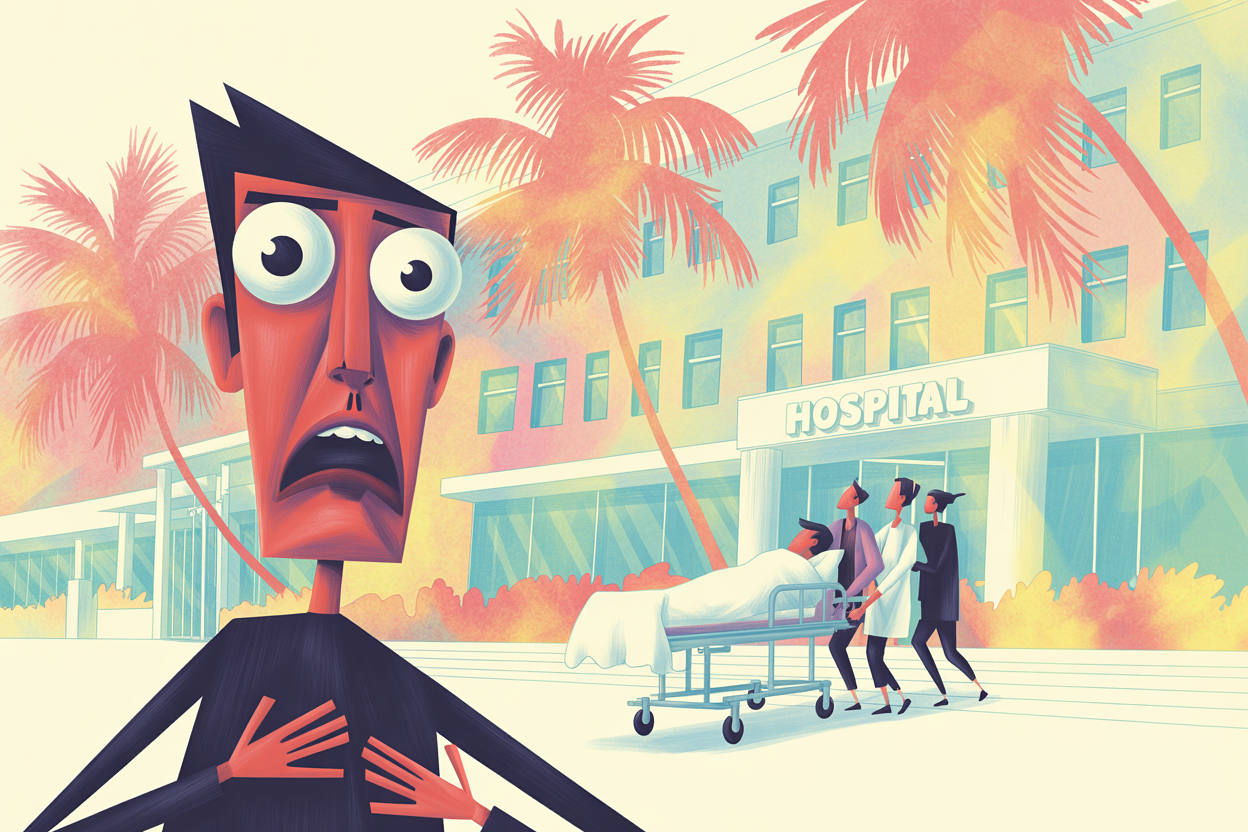
If you’re unlucky enough to have a medical emergency on a plane, your flight attendants are trained to help. Same thing goes for other public places, like restaurants and schools. But an internal memo circulated to employees at one airport suggests the TSA would rather you take your heart attack elsewhere.

While most of the document is reasonable, part of it raises serious questions about the TSA’s mission and its place in an overall airport operation.

Here it is, in its entirety:

All TSA employees:

Below is the guidance from OSHE on the specifics of a TSA employee offering First Aid/CPR/AED. This excerpt is from the Occupational Safety and Health Manual.

The importance of this guidance is for TSA employees protection. First and foremost as TSA officers we are not first responders to an emergency and we cannot allow a distraction during our critical mission.

In the event that first responders are needed please announce or call 9-1-1 immediately. It’s essential that you realize that providing emergency care as a Good Samaritan, is working outside of your job description and you are not covered for medical or time loss through the Occupational Workers’ Compensation Program.

Below is the guidance from the Occupational Safety and Health Manual which is provided by OSHE mandated local compliance:

12.1 First Aid/CPR/AED

a. In a medical emergency, TSA employees shall be aware of and know how to activate the local and/or airport emergency medical services response system.

b. TSA employees may voluntarily enroll in local first aid, CPR, and AED training programs. The training must be on their own time and at their own expense regardless of who offers the training.

c. TSA employees trained and certified in first aid or CPR/AED, may provide emergency care as a Good Samaritan only when excused from security duties by their supervisor or manager.

d. At a minimum, TSA employees performing as a Good Samaritan should consider the use of “body substance isolation” techniques―protective gloves, pocket mask, or other recognized physical barriers designed for rescue breathing. Protective equipment, such as gloves and pocket mask, are the responsibility of the Good Samaritan.

I’ve asked TSA to comment on this memo, which appears to have been sent out to officers at one airport yesterday.

But if this is an agency-wide notice, then it does beg a few questions:

Why aren’t TSA employees given basic first-aid training? Why do TSA employees have to ask for permission from a supervisor before helping someone who is having a medical emergency? (What if it’s their supervisor who is having the emergency?) And why not cover a TSA employee for medical or time loss when they’re helping a passenger or co-worker in need?

I understand that TSA employees have a primary mission. But it is not their only mission. Just as flight attendants, restaurant servers and educators are trained to perform first-aid functions and encouraged to help during an emergency, TSA employees should also be trained and encouraged to assist a passenger in need.

Update (Feb. 26):

A TSA spokeswoman has responded to my questions.

Why aren’t TSA employees given basic first-aid training?

TSA’s mission is to ensure the security of the traveling public by preventing terrorist threats from entering the transportation system. Many TSA employees are able to administer emergency aid because they are independently trained, perform volunteer work in the emergency medical field, or had previous careers in the emergency medical field. TSA recognizes the value of having employees who are trained and certified as EMTs or first responders should an employee or member of the general public have a medical emergency. TSA has issued direction that allows employees to act as Good Samaritans.

TSA employees have responded to incidents of medical distress and TSA recognizes their quick response, skills, and dedication to helping others during these critical times of need.

Why do TSA employees have to ask for permission from a supervisor before helping someone who is having a medical emergency?

When responding to a medical emergency while on duty, TSA officers are to inform their supervisors nearby, in order to quickly adjust staff and ensure a security vulnerability is not created. Often, supervisors are aware of which members on their team are trained to respond to medical emergencies and support their workforces when a crisis situation occurs.

Why not cover a TSA employee for medical or time loss when they’re helping a passenger or co-worker in need?

TSA employees can file worker’s compensation claims if desired after responding to a medical emergency. Any claim will go through the standard adjudication process.

(Photo: anendel/Flickr Creative Commons)

  • Sarah Di

    Any supervisor who wouldn’t “relieve them of their security duties” to try to save a life shouldn’t be a supervisor, or really even a human being.

  • John

    Chris,
    I think this one falls into the liability area. If it’s part of their duties then they have to receive training and refresher training. If they screw up, they can be held liable for failing to perform correctly (Good Samaritans are exempt).

    Also, as security folks, someone faking or inducing an emergency could cause a distraction that allows someone to evade a check point (how many times has this happened in a movie?). They need to primarily focus on making the checkpoint secure and everything else is second. As a former government employee, that’s how I read this. The supervisor statement is there to make sure that someone is focused on the screener’s responsibilities while the screener is lending aid.

  • David H

    I agree. The first four minutes are one of the most critical periods in a medical emergency. In the screening area, the only people working are TSA officers, and it seems heartless at the least to deny those who are able to from rendering assistance. It also puts the TSA Supervisor in a difficult position. Is he/she going to say no if there are no other first responders around? If not, then why does permission need to be asked?

    It’s better to ask forgiveness after possibly saving someone’s life, than to ask permission. If this results in the TSA employee being fired, I’m sure the media would love to hear his story. TSA = Thoughtless, Stupid & Arrogant (and I’m not always referring to the frontline staff either. There are some good ones I’m sure).

  • hmmm

    But then those wily terrorists could fake a heart attack and distract the TSA agent thus allowing a whole herd of terrorists through!

    Please. Isn’t safety part of the name? They absolutely should be trained in First Aid/CPR and should respond in the event of an emergency.

    By requiring the agent to ask a supervisor for permission it seems that the TSA memo writer thinks that agents aren’t competent to make a snap decision on their own. What does that say about who is hired to work the baggage x-ray?

  • Cynthia

    Ummmmm Chris . . . not ALL restaurant servers and/or staff are trained in first aid . . . that’s making a really broad assumption.

    It might be so in the larger chains and hotels but even there I think it is a dangerous assumption. They might have posters in the kitchen detailing how to do the Heimlich maneuver or how to do rescue breathing and CPR. I used to work in a resort hotel’s food/beverage and conference department and the most we had were those posters and some basic first aid (if that).

  • http://everything-everywhere.com Gary Arndt

    Chris,

    If we help people who have heart attacks, we are letting the terrorists win.

  • http://www.airships.net/ Dan @ Airships.net

    For an agency which pretends to be concerned about “distactions,” the TSA forces their screeners to devote enormous resources of time and attention hunting for completely harmless items, taking their focus away from truly dangerous things… like explosives and terrorists.

    The TSA knows that no-one will ever crash a plane with a knife again (let alone a nail file, or a plastic toy sword from Disneyworld), since the person would be trampled by his fellow passengers long before he got near the flight deck. Yet the TSA distracts its screeners every hour of every day by having them hunt for nail clippers, cigar cutters, and pen-knives. (Of course, taking 10 minutes to help a heart-attack victim until the paramedics arrive — something that happens once in a blue moon — is considered an unacceptable “distraction.”)

    America is supposed to be a democracy; rule by the people. Why do we allow this lunacy? Why don’t we demand that the TSA take our safety seriously? After all, we’re the ones on the planes, don’t we have the right to demand smart, intelligent procedures?

  • Lawrence Thelegend

    God forbid if one of the TSA agents is having a heart attack and I have to “check with my supervisor” before assisting him/her.

  • sweepergrl

    And I thought my opinion of the TSA couldn’t get any worse. At this point, you’ll be lucky if they call paramedics instead of cops. After all, a heart attack is interference with the TSA’s objective of complete incompetency and you deserve to be hauled off in cuffs.

  • Jose

    This is quite disturbing. It is one thing to ensure you stay at your post. But, this pretty much tells TSA employees that they are on their own if they choose to help someone in need. Is that the right message to send? And they wonder why they can’t get good people to join TSA. Uh, hello….

  • LeeAnne

    This one actually has me stymied. On the one hand, CLEARLY it’s just not morally defensible to stand and watch someone in medical distress and not offer to help, IF your help could possibly save that person’s life.

    On the other hand, as a couple other people pointed out, TSA agents have a primary, and crucial, mission to keep our airplanes safe…and if their abandoning their post resulted in a terrorist getting on a plane and blowing it up, was their choice to help the ill person the right one?

    Perhaps I’ve watched too many movies – but I can absolutely see this as a distraction tactic that some wily, well-trained terrorist cell might use to be able to bypass security in some way. If there is a situation in which a TSA agent abandoning his/her post could result in a security breach, then I really do feel that the agent has an obligation NOT to. However, they also have an obligation to take whatever actions are necessary to help that person, without abandoning their post. Ensuring that all agents know how to summon emergency medical response at their facility is the way to assure that.

    Honestly, I just don’t see anything wrong with this memo. Does that make me heartless? I just don’t think so. Airports do have trained medical response units – and those are the people who should be assisting in a medical emergency, not the low-wage TSA agent who is ensuring that terrorists don’t get on your plane.

  • http://www.roamingtales.com Caitlin @ Roaming Tales

    It seems to me that they are stopping short of an outright ban of letting TSA agents perform first aid but they are highly discouraging it.

  • Don

    Chris,

    In this case, I believe you are doing TSA a disservice. TSA’s mission (regardless of how effective we perceive them to be) is security: First, middle and last. No one would suggest that a Secret Service agent abandon their post or leave POTUS’ side to assist a civilian in the event of an “emergency” (real or staged). This policy takes the guesswork out of the hands of the line agents who naturally would want to come to the aid of a stricken passenger and limits their liability for not responding. In the event of a seeming emergency, activate 9-1-1, and stay at your post. Remain vigilant!

    I am a volly EMT, and this works for me.

  • Scarlett

    I hardly think that “allowing” one TSA agent to leave his post to help someone who’s having a heart attack is going to allow all the terrorists to run by all the OTHER TSA agents NOT helping the person in distress. In those situations it usually happens that people standing around often offer assistance as well… Additionally, if someone falls in line having a heart attack or a stroke, you’re going to have to re-route the line anyway to move around the “traffic jam,” and they can close down the lane who lost an agent. It’s not like the TSA is going to lose one of it’s employees temporarily, and then just break down and allow everyone just to pass through without being checked out. If anything, it seems to me like they may be even more alert, suspecting this was an attempt to provide a distraction, as some have mentioned above.

  • Bill

    Don’t worry about a TSA agent having a heart attack – they have no hearts!

  • http://www.lidodeckcruises.com Cal Ford

    Yeah ….. What the last guy said ……

  • Noah

    “No one would suggest that a Secret Service agent abandon their post or leave POTUS’ side to assist a civilian in the event of an “emergency” (real or staged).”

    –not so. The president’s personal security detail have in many instances been dispatched to assist in an emergency near the president’s location. Admittedly, this works because the president has like 800 guys guarding him at once, so it might not work for the TSA, but what Don said just isn’t true.

    Query: Do you not have to know basic punctuation rules to write memos for the TSA?

  • Teresa Stewart

    I’m with Scarlett…and it seems to me that the TSA should have a specific set of instructions in place for dealing with a passenger medical emergency. A TSA agent leaving their post to assist with a medical emergency is really no different than the TSA agent leaving their post due to suffering their OWN medical emergency, and I would certainly hope there’s a specific set of instructions dealing with THAT possibility! It shouldn’t be an option for Mr. Scary Terrorist to sneak through security regardless of whether the TSA agent is assisting someone having a heart attack, or having a heart attack themselves.

  • Thomas

    John

    The Good Samaritan Act protects ANYONE who responds to a medical emergency that performs within the “Limits of their training” For an example, if they’re trained in CPR and current, the act protects them from liability.

  • Liz

    It seems to me that there are always so many TSA agents standing around doing nothing “critical” that if a handful were to assist in a medical emergency it would not distract them from their “mission”.

  • oceankitten

    i guess i’m in the minority, but i kind of agree with TSA’s directive. yes, they’re arrogant, self-serving buttheads, but i’d rather they be buttheads at their post than mostly useless at a distraction.

    but i look at this from the opposite end of spectrum: i work for a company that REQUIRES its employees (in our code of conduct) of offer assistance to anyone in need. while this technically only applies to when i’m on the clock, it is implied that i am always a representative of the company and therefore should always avail myself. the issue i take with this is that as a woman, i never know when i could be putting myself in a situation where hard could come to me, and i feel like my company is more concerned with their image than my safety. i make this argument every other year when i’m forced to recertify my CPR/first aid at the red cross, but i’m not even allowed to excuse myself, and have been told that if i refuse to offer aid, i face disciplinary action.

    so, i’m almost jealous of TSA’s stance on rendering aid; but i think a better approach would be to certify some of the employees in first aid, and then make sure those people are always working in a large group, so if that person has to go help, there’s always many more security people who can carry on.

  • Sean

    I have to agree completely with Scarlett. How about instead of writing a memo telling that the TSA can’t render aid without permission from their supervisor, writing an operating procedure for what to do in the case someone does have a medical issue in the security line. Procedures that indicate the number of staff that can assist, how to additional cover, stopping all affected lines (be it by the inflicted individual(s) or by TSA members assisting) is what they should be focusing on. The thought that as soon as someone falls with a heart attack, every TSA member rushes over there and all of the people waiting in line rush through security like a free for all is absurd.

    Don’t several states have “Failure to Render Aid” laws?

  • http://www.angrymarks.com/ Kevin Fields

    I can see why TSA wrote this memo, it’s a CYA notice actually. Nothing wrong with that.

    The only exception that I can see is with regards to “rescue mouth breathing”. Modern CPR techniques DO NOT require this, as it has been found that the body contains plenty of oxygen to sustain an individual for several minutes Rescue mouth breathing would only be required if there is an airway obstruction, such as the air passages becoming swollen and closed off. Chest compressions alone, if performed immediately, should be sufficient for your “Good Samaritan” until emergency rescue personnel can arrive to take over.

    So, disappointing to see that bit of information in there. Perhaps TSA should go ahead and pay for employees to be trained in modern CPR techniques as well as crisis management? Wait… how much are we paying TSA agents again, and what are their education requirements?

  • Sarah Di

    Doesn’t the very nature of having a medical emergency in the area cause a distraction? As long as all the security posts are properly covered and reasonable procedures are followed, I don’t see how a properly trained TSA employee rendering aid until the designated medical team can arrive causes anymore of a distraction.

  • Joe Farrell

    The terrorists are just standing around, buying airline tickets at random, with bombs in their bags just waiting for someone, somewhere, to have that coronary that creates the distraction to let them board with that bomb.

    They have given up getting someone hired on for minimum wage with the catering company, or cleaning company or the baggage company or even the TSA itself as a way to get the bomb on undetected. They’d rather work the fake heart attack scheme. . . why do we suffer these fools?

  • Natalie

    I’m not going to belabor points that were already made, but liability is liability. It’s sad, but that’s the world we live in. You can’t just tell them it’s okay if they want to respond to an emergency in a memo and leave it at that. If we want them to be able to respond to basic medical emergencies, it has to be part of their job description. If it is part of their job description, it’s only a matter of time before they would need to be compensated accordingly for having that extra skill and someone would have to come up with the money to make sure they are all certified in CPR.

    In most workplaces, employers do not expect employees to be CPR certified and handle medical emergencies of customers. However, most workplaces also don’t have a specific directive prohibiting assitance in certain situations. But, most workplaces don’t have the far-ranging slice of the public that the TSA comes in contact with.

  • FJP

    Sadly, it is probably reasonable for TSA to consider the possibility that an apparent medical emergency is a ruse intended to create a diversion so as to allow a security breach or incapacitate the TSA personnel. They should have just come out and said so in the memo rather than dance around the issue. Also, they should make it clear that it IS the TSA’s duty to make sure first aid is summoned IMMEDIATELY, without making any judgments about whether it is a grnuine emergency or not. It would be appalling to learn that TSA ever chose not to summon aid because they thought the passenger was faking it.

  • Aaron

    Kinda makes sense to me… a fake medical emergency is a perfect way for the bad guys to distract the TSA people. Still, as a frequent traveler, I have yet to see any evidence that TSA is doing anything but making air travel more inconvenient. The knowledge that there is no way my fellow passengers will be armed with a 12 oz can of soda or a large tube of toothpaste certainly doesn’t make me feel any safer. TSA is just another factor in my decision to drive rather than fly when possible.

  • Duke Nukem

    Hmph…the TSA…Typical Stupidity Arising!!!

  • Jeff Pruett

    “I’m with the government and I’m here to help.”
    I’m not sure that I want help from an incompetent, arrogant agency like TSA.
    The best folks I’ve meet you work in airports are skycaps. I’d rather have one of them with or without training.

  • http://www.angrymarks.com/ Kevin Fields

    “Sadly, it is probably reasonable for TSA to consider the possibility that an apparent medical emergency is a ruse intended to create a diversion so as to allow a security breach or incapacitate the TSA personnel.”

    No, it is not reasonable. Has this ever happened before anywhere? I mean, besides on TV or in the movies? Breaches in security don’t happen by wild Looney Tunes-style escapades. They happen because those who breach security do so in a manner that allows them to blend in with everybody else. The key to breaching security is not through extraordinary means which could attract attention, but through ordinary means that doesn’t attract attention.

    TSA has been a master of “security theater” for awhile, but I didn’t realize that they had gone into script writing as well.

  • Carver Farrow

    I’m having trouble with this hollywood scenario. What exactly are we afraid of. Someone jumping over the machines? Someone sneaking something through the X-ray. This is one of those situations where we have to use reality.

    Consider. At that typical TSA checkpoint, for each line, you have one person at the metal detector, one person checking the x-ray machine, and another person making sure that the luggage gets on the conveyor belt. Additionally, you have the ID checking person, two secondary screeners, and other floaters who restock the white plastic bins.

    With all of those people, surely, one person, perhaps the bin stacker, could be spared in case of an emergency

  • drone

    Wasn’t in the employee mail. I checked my email twice today.

  • Henry Bowman

    “Why do TSA employees have to ask for permission from a supervisor before helping someone who is having a medical emergency? (What if it’s their supervisor who is having the emergency?)”

    We can only hope. That way, it’s a self-solving problem.

  • MarkieA

    I’m not sure it’s fair to rant against the TSA – as many have done in this forum – for being REactive versus PROactive, and then complaining when they try to be more proactive because you don’t agree with what they’re being proactive against. I agree that the sceanrio of “slipping one by the TSA agent when he’s distracted by the fake medical emergency” is the stuff of movies, but imagine the outcry if it did happen. What I would like to see from TSA is a policy as to what TO DO in a medical emergency, not a policy on what NOT TO DO

  • http://blog.scottlaronge.com Scott

    It may help to think as the TSA as on sentry duty, one of the general orders (From wikipedia: http://en.wikipedia.org/wiki/General_Orders_for_Sentries)of which is:

    8. Give the alarm in case of fire or disorder.

    “While this is rather straightforward and obvious, keep in mind that a fire or disorder of some kind might be a deliberate distraction to keep you from observing some other disorderly or subversive activity. If you are certain that a fire is not meant to be a distraction, you should fight the fire if you have the means to do so. Remember, however, that your first responsibility is to report whatever is amiss.

    They have to check with their supervisor to be relieved. Besides, it’s not like assisting in a medical emergency is a five minute thing, they would have to speak with the EMTs during & after and probably spend time following up.

  • BLBuchanan

    I have news for TSA, there are laws in place regarding ‘failure to render aid’ (I recall one case where a woman was raped or murdered, because people ignored the desperate woman’s pleas and instead just kept walking by), Particularly when, one is trained specifically to aid in emergency situations. Understanding TSA’a mission, and the importance of said mission, the fact that TSA is telling it’s employees NOT to render aid unless released from duties by a Supervisor/Mgr., could open a legal quagmire of litigation centered around ‘failure to act’ and the employees are more than likely personally legally liable and will open themselves to civil suits/civil action, if the victim suffers harm, when it could have been avoided if the victim was not ignored/and ‘by passed’ by, working TSA Agents. Personally, it’s a sad day when a Gov’t Agency does not have an immediate action plan in place for such instances, which you know will a)happen one day or b) be taken advantage of intentionally by those out trying to beat the system.

    Best of Luck and Well wish to you all, just in case

  • J P

    Henry Bowman February 24, 2010 at 11:11 pm

    “Why do TSA employees have to ask for permission from a supervisor before helping someone who is having a medical emergency? (What if it’s their supervisor who is having the emergency?)”

    We can only hope. That way, it’s a self-solving problem.

    Real classy Henry – insinuating that the death of a TSA supervisor would be a good thing. While the vast majority of us dislike the security theatre on display at the airport, stating that the death of a low level bureaucrat would help solve the problem is troubling.

  • Shari

    Taking on the TSA again Chris? Good for you.

    This only serves to reinforce the negative view I have of the TSA. Not only are they utterly incompetent when it comes to protecting our airports and flights, they’re losing sight of just what their fundamental role is – to serve the people. If I were in line, I’d much rather have the delay of them helping someone having a heart attack than me whizzing through line while they go through the bureaucracy of figuring out who should help, oh wait, we can’t, let’s call for help, ok, who’s going to call for help…. Liability has been mentioned, though in most states, there are Good Samaritan laws that protect those that come to aid.

    @ Scott – No, many medical emergencies aren’t quick, though some are. But time is vitally important if someone is having a heart attack, or is choking. In the case of the latter, five minutes is a matter of life and death. With a heart attack, those five minutes can dictate how severe it becomes, how much damage is done, or even if the person survives. In a medical emergency, every minute counts. I’d rather them lose the five minutes to aiding the person and the five minutes to talk to the EMT than have that person possibly suffer.

    I do wonder, if seems as though everyone is thinking that the entire line has to shut down. Why wouldn’t one or two people be able to aid while the others keep “guarding” us, being our sentries (though I think my cat does a better job of that than most TSA folk do), and keep the line moving. Heaven knows, there are usually extra people there that can fill in.

  • Carver Farrow

    @BLBuchanan

    That’s actually not entirely correct. Most states limit failure to render aid to three circumstances, 1) there is a legal duty to do so based upon your special status: e.g. police, firemen, paramedics, EMTs, etc/ 2) a special relationship, spouses, parents/child, teacher/student etc.; 3) you caused the situation that

    Members of the first group have rendering aid to the public at large as a fundamental part of their core mission, a la LAPD “to protect and serve”

    TSA doesn’t perform an analagous role. Though probably law enforcement, its very specialized in its mission, i.e. protect travelers from a terrorist attack.

  • TSA person

    I am a National Registry and State Certified EMT at TSA and I have been told not to respond to medical emergencies even if I am on break. At our facility the nearest on site first responders, who do not have my level of training or certification, take an average of 15 minutes or more to arrive on scene and the ambulance takes from 30 to 45 minutes to arrive with ALS (Advanced Life Support), an EMT-B and a Paramedic.

    If you need CPR/AED (Automated External Defibrillator) I will watch you die with an AED / mask kit hanging on the wall over you, and my jump bag with all my gear safely stored in my locker. After 3 minutes the brain starts to die, after ten minutes you might as well call your favorite funeral home first call driver for a body pick up.

    I have been told that neither the Air Port nor TSA can bear the liability and that even though a dozen or more AEDs hang on the walls throughout the Airport we are not to touch them since they will not provide training because of liability. Many of of us have the training on our own, but “Let them die” appears to be the rule. Heavies in charge show up and just stand around and watch and offer no aid, just call 911 and wait, with total disregard of the available assets.

  • bill

    A good point above abt primary duty of TSA agent to a person having an “apparent” med emergency: the 1st 1st 1st thing to do is NOTIFY someone who can do something effective at a higher level. Even if TSA screener comes out of EMT background it is unlikely that TSA screen/observ posts will be stocked with meds/ eqpt to guide therapy This is true even in a hospital with up-to minute cardio capabilities and was 1st thing impressed upon us as students in med school. “call the code and be sure you’ve been heard,” then render assistance. Doing a CODE BLUE on your own is not a recipe for success. It would be reassuring if somewhere in the memo this point was more clearly stated. With regard to allowing terrorist(s) to slip thru unobserved while a screener is doing CPR, it does seem unlikely, since only so many screeners can fit around a down patient, and TSA seems to suffer no qualms about shutting a line down or halting it for no aaparent reason at other times.

    A side note to individual above who stated that distractions as a means of gaining an objective are mostly seen in hollywood productions; your pint is well taken that this sort of shenanigan may be more likely to put TSA on alert and may therefore be less effective than trying to blend in and sneak thru without attracting attention, but both are similar in that they are attempts to misdirect attention (can you misdirect inattention?, or just foster it?). Either may work. A famous classical example is the capture of Nova Cartago (modern Cartagena) by Scipio Africanus in the 2nd Punic War. By misdirecting the defenders’ attention to one point where the walls were accessible but strongly defended by an assault there, while mounting an escalade at another point that was supposedly inaccessible/impregnable, the Romans were able to get into the city, neutralize a very strong defensive position and capture the Carthaginian stronghol in the Spanish peninsula. If, as we have seen, some terrorists are willing to employ desparate means, even to point of suicide in the attempt, it is reasable to suppose they might try a harebrained, distraction-based scheme to try to get past a checkpoint, but it may not be effective, since the people you are attempting to distract are not required to fall for the ruse.

  • Ernest

    If you have ever notice what people do in a real emergency, you would probably understand TSA’s memo. Any time some one trips or sneezes, everyone seems to stop working and ‘helps’, which is another word for standing around doing nothing. I have seen it hundreds of times in prison staff (as an EMT, not a prisoner), banks, government buildings and on the street.

    Telling a screener to stay at his post until relieved makes sense to me. I remember in my old Army days, one of the General orders was “I will not leave my post until properly relieved”. TSA is not the army and screeners are not soldiers but it makes sense given the importance of their mission.

    They seem to have a hard time putting the square peg in the round hole on a normal day without any distractions. Why make it easier to screw up.

  • TSA person

    I am an NREMT-B and fire fighter with TSA as my second job. The two persons that responded after my comment missed the point, I am not to respond even when I am on my own time, (in uniform) or even when properly relieved and after 911 has been called !!!! Guess I will have to change clothes during my lunch when I am off the clock, since breaks are on the clock, and just stand by for emergencies which must allow me enough time to change back into uniform and assume duty within the 30 minutes. Fat chance of that working.