Should airlines charge a change fee even if they can resell the seat?

Christopher Parypa/Shutterstock
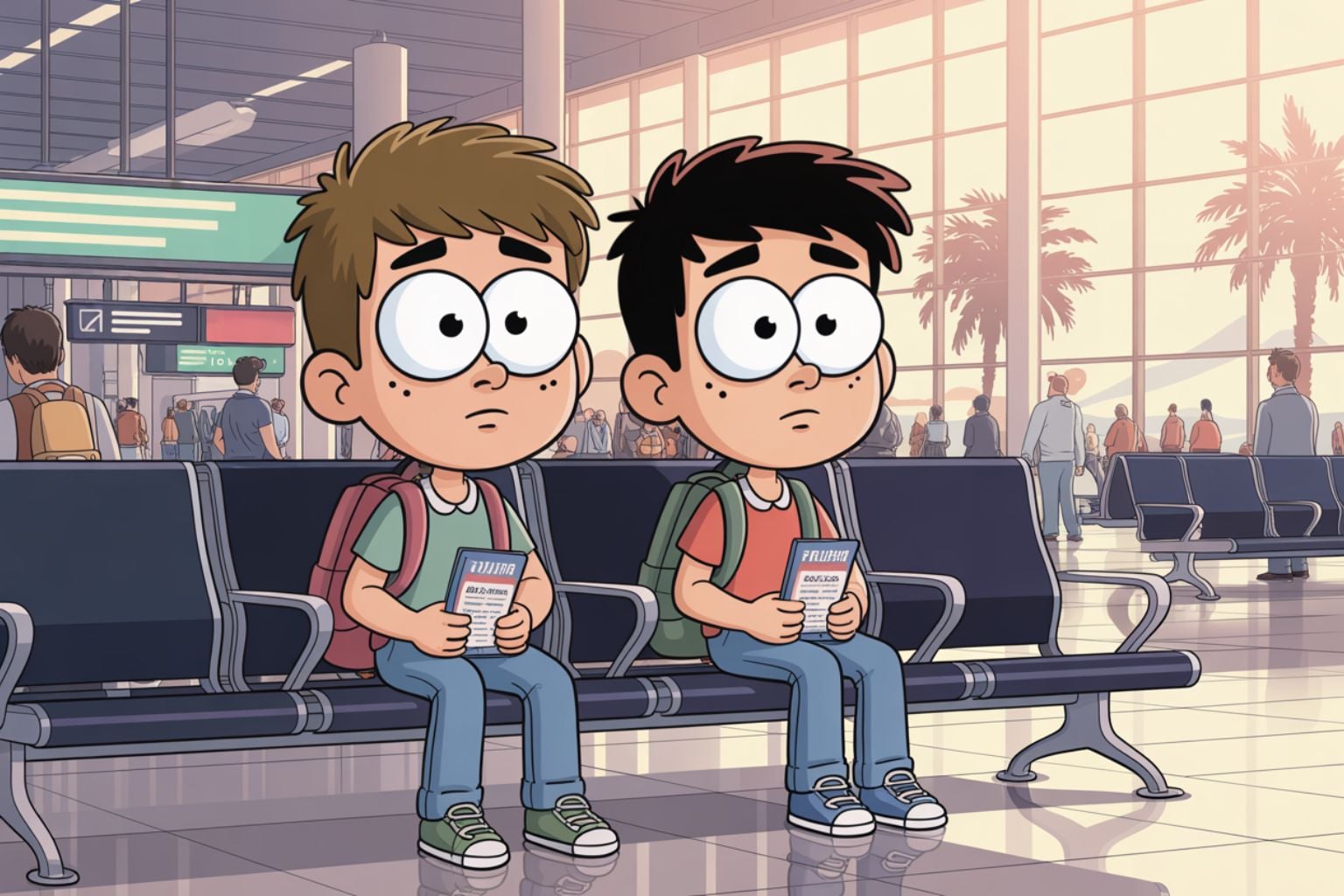
Question: We recently booked a one-way ticket from Los Angeles to San Francisco on Virgin America to get us home after our trip from Tahiti. But about a month later, our travel agent informed us that our return flight from Tahiti to Los Angeles had been canceled.

I called Virgin America and was told that it would cost us $180 to change the flight to the next day, when our new flight was scheduled.

There are more than four months between now and then to resell those two seats. If those four seats were not rebooked in the next four months, I would be OK with getting charged or losing my money.

Virgin’s “guest services commitment” promises the airline is “constantly striving to give you the kind of Virgin America experience you came to us for in the first place.” I can’t believe that an airline is so steadfast in a policy that it can’t work with a customer.

Vacationing is supposed to be relaxing and enjoyable and sometimes plans change, which I understand. What I don’t understand is that when things do change, why an organization like Virgin America has to make it stressful and inconvenient on their customer’s pocketbook. — Bret Bickar, Alameda, Calif.

Answer: You’re right, there’s something fundamentally unfair about airline change fees. If an airline can resell the ticket, why should you have to pay for the change?

But Virgin America is doing what other airlines also do, and have been doing for a long time, and I don’t have the room for the argument in this column.

Here’s what struck me about your case: You used a travel agent to make your booking, and if you did, then your itinerary should have been connected. That means Virgin America should have known about your change and would have put you on the next flight at no cost to you.

(Actually, that’s one of the reasons you use a travel agent; they can ensure your itineraries are connected, preventing you from being stuck in an airport with no way to get home.)

Your travel agent should have told you that your Los Angeles to San Francisco flight was taken care of. When you called Virgin America, the representative you spoke with should have also seen that you were flying in from Tahiti. But somehow, these flights were not connected.

This is a common problem with do-it-yourself travel agents. They buy several legs of a flight separately, assuming that they’ll be taken care of when something goes wrong. But they aren’t. You’re considered no-shows when the flight is delayed or canceled and are forced to pay for a new one-way ticket to reach your destination.

I asked Virgin America to look into your itinerary. It refunded your change fee and allowed you to fly one day later at no extra cost.

Should airlines charge change fees even if they can resell the seat?

View Results

Loading ... Loading ...
  • sirwired

    The change fee also covers the possibility that the airline will be unable to re-sell the seat, or will end up selling it for less.

    But largely, yes, it is arbitrary. The airlines KNOW they are a profit center, and the restricted fares are priced accordingly. If the change fees were smaller, the tickets would be more expensive.

  • sirwired

    Change fees don’t just cover costs; the knowledge that some customers will pay them (resulting in additional profit) is baked into the price. No change fees = higher fares. Same thing with pre-paid hotel or rental car reservations.

    Since airline fares vary over time (unlike, say, football tickets), the ability to change the name on the reservation would lead to “ticket arbitrage” where people would buy inexpensive advance fares and then re-sell them for more later. The airlines would prefer to get that last-minute money instead. If ticket arbitrage were allowed, you can be sure airlines would raise their prices drastically to make up for the lost profits.

  • Cybrsk8r

    The OP should have been reimbursed, but not by Virgin.

    The OP should not be on the hook for the change fees. The airline that cancelled the flight from Tahiti to LA should reimburse the OP for any change fees resulting from that cancellation.

    Why? The flight was cancelled four months before its scheduled departure. The flight was not cancelled because of weather or mechanical problems. It was cancelled because the airline made a business decision to cancel it. To not operate that flight anymore. The OP, or is this case the OP’s travel agent, made the travel arrangements based the airline saying that flight was going to happen.

    Now if the airline decides to simply drop a flight from their schedule, then that airline should shoulder all costs a ticketed passenger incurs because of that decision.

  • http://www.facebook.com/jeff.m.braziel Jeff M Braziel

    I agree that non-refundable means non-refundable. However, I would like to see airlines change their re-booking fee to something more based on a % of the fare paid, with a sliding scale based on when the airline is contacted to make the change. A change more than 90 days in advance would get full credit towards the purchase of a new ticket, 60-89 days 90% credit, 30-59 75%15-29 50%, 7-14 25%, and under 7 10%. This would eliminate the situation of change fees exceeding the price of the original ticket, while still allowing airlines to maintain a restricted ticket structure, and collecting the ancillary fee they unfortunately have come to rely on.

  • BobChi

    Once again people buying nonrefundable tickets and not believing that’s what they really are. Plans do change. That’s why you either pay extra for a refundable ticket or you take the ticket change fee into account when you decide whether you want to do business.

  • BobChi

    Exactly. When you buy two tickets that is a risk you take. I think the travel agent probably dropped the ball here.

  • emanon256

    A lot of the carriers are now offering discounted fares that are not refundable, but don’t have a change fee either. This is in addition to refundable and heavily discounted with a change fee. They are calling them “Flexible” fares. Probably a way of trying to get closer to what WN started. They are more than the deep discount tickets, but not nearly as expensive as refundable tickets.

  • flutiefan

    i’m glad you said this. not all airlines offer “same itineraries” as Chris suggests. on many, there is simply no way to link them. we are separate business, so frankly why do i care if Air Tahiti or whomever has canceled their flight? that has nothing to so with my business and my product.

  • Cybrsk8r

    But your wedding analogy is flawed because the guests don’t pay for the food, etc. But if I pay for a seat on a plane, whether I’m sitting in that seat when the plane takes off is irrelevant. If I don’t cancel my ticket and the plane takes off without me, the airline has still sold that seat and I won’t get any refund, and I’m OK with that if it’s my decision. The airline makes exactly the same amount of money flying my empty seat as they do if I’m sitting in it

    I had a one-way ticket this summer on United. I would have cost more to change the ticket, so I just booked another one-way fare on another airline. Southwest, BTW.

    In fact, since the weight of both me and my luggage is not on board, the airline makes more money than if I’d have actually showed up, since they may burn a gallon or two less jet fuel without my added weight.

    Of course, I realize I’m applying logic to something which is inherently illogical, so I don’t expect many people to agree with this.

  • http://www.facebook.com/people/Alan-Gore/100000957978287 Alan Gore

    Your arbitrage scenario is pure airline hogwash. Airline accountants pride themselves on their ability to calculate ticket prices for precisely the maximum yield. If passengers really could buy ahead and then resell for a consistent profit, this would mean that tickets are, on the average, underpriced – and that just doesn’t happen.

    I’m hoping that the new, more populist Congress coming in allows resale of tickets (with airlines being compensated the $10 or so it actually costs to change the name on a ticket record).

    If this happens, the airlines will kick and scream for the week or so that it takes them to realize that studying the price action on a secondary market gives them the information they need to price tickets precisely, so that arbitrage does not occur. This is solid gold information they would not be able to gather in any other way.

  • mikegun

    Unless the TA explained the risks. Note the story doesn’t state they went to the TA for assistance after the schedule change.

  • sirwired

    It would be “hogwash” if airline tickets were priced like cruises: The price of a cruise varies frequently (as yield managers adjust them), but is not coupled tightly to when you book, and the price only changes drastically if the yield managers completely screw up. Arbitrage of cruise tickets would almost certainly put you on the losing end, or razor-thin margins, at best…

    But airline yield management is VERY different, since they serve both leisure (cheap) and business (less price-sensitive) markets. (vs. the monolithic market of cruise passengers, or, for that matter, concert ticket buyers) Airlines make a lot of money from last-minute (generally business) travelers; they subsidize the leisure travelers that perform the service of keeping the cash flowing and keeping the seats full enough to at least gas up the plane. If tickets could be freely transferred for a nominal fee, there would be a thriving business in advance-purchased tickets being resold to last-minute travelers at a discount to published last-minute fares, and the airlines would miss out on those profits themselves. (It’s a pretty low-risk proposition to assume that SOMEBODY going from a busy Point A to Point B will want to do so at the last minute, and will be willing to pay more than the leisure traveler that booked months ago.)

    In a free-form secondary market, advance-purchase tickets would be in much-higher (more expensive) demand, driving up prices for leisure travelers while last-minute tickets would become cheaper (because many of them would be resold advance-purchase tickets.)

    The no-transfer system keeps leisure prices low (leisure travelers are generally very price-sensitive), and business prices high (which provides much of the profit.) While a freer market would arguably produce more “fair” fares, it’d be a smaller one, as price-sensitive leisure travelers chose an alternate form of transportation.

  • sirwired

    The airline knows that some people will be stuck paying the change fees; this is baked into the price. No change fees = higher prices. This, by the way, is one reason why tickets from ticket consolidators (i.e. Bucket Shops) are less expensive that normal tickets; they are generally unchangeable, or the change fees are extremely high (i.e. hundreds of dollars.)

  • http://www.facebook.com/people/Alan-Gore/100000957978287 Alan Gore

    If the existence of a secondary market would actually drive up advance-purhase prices, airlines would be tripping over eachh other to grant resale rights; in fact, they would love to run such a market themselves and link to it from the company site. The whole point of the flurry of miscellaneous fees the last two years has been the use of fees as an effective increase in fares.

    Here in Arizona, the consumer has a general right to resell tickets to games, concerts. etc. by themselves or through brokers. Every major event has a special little area designated outside for ticket resellers to operate. Event operators can treat all sales as final, while at the same time the consumer can adapt to changes in plans with minimal cost. Everybody wins, and we can only wish we had jurisdiction over airlines.

  • Miami510

    Story: I arrived very early for a connecting flight to take me back to Miami… my home. I asked if there were seats available on the earlier flight and was told by the gate agent that the plane was half empty…. but changing would cost me $70.

    I pointed out that their giving me a seat on the earlier plane was to both our advantages; I could get home three hours earlier, and the airline (whose initials are DELTA AIRLINES) would have a chance to sell my seat on the later flight… which she pointed out was a full flight. While telling me I was right (made sense) she also said “rules are rules,” and her hands were tied.

    I sat around, read and ate some awful terminal food (air terminal… I survived the meal) and took the later flight. I was inconvenienced, and the airline flew the earlier flight half empty and probably had to turn some paying passenger away for the later flight.

  • Jeanne_in_NE

    There, there. Do you feel better now, getting all that off your chest?

  • emanon256

    I do, thank you :)

  • Ed Boston

    Thank you for putting it so clearly. This isn’t an issue about the OP buying a non-refundable ticket or even the fact it had a change fee associated with it. It is about how the airlines screw over the passengers by making changes with out any repercussion. This isn’t like he missed a connecting flight because the one he was on was late and the tickets weren’t combined or that the TA didn’t warn him about the danger, that so many posters have said. It is about the fact that an airline made a change and he is having to pay for it. Virgin shouldn’t have to eat the fee either. The first airline should have to.

  • sirwired

    No, airlines would NOT be thrilled with a secondary market that would drive up advance-purchase fares. There would be fewer leisure travelers (because of the increased prices), and therefore reduced cashflow. This is why there isn’t such a market. This is why fares have been non-transferable since deregulation. (or before? I don’t know; I’m not that old.) Fares were a LOT more expensive during regulation, and the industry much smaller, so I don’t think anybody wants to go back there…

    And yes the whole purpose of fees has been to increase revenue, but there is a breaking point.

  • sirwired

    Neither airlines nor any other form of common-carrier transportation have ever been responsible for the consequences of not getting to your destination as originally scheduled. What you planned to do once you got dropped off is not (and never has been) the carriers problem. It doesn’t matter if the carrier was an ancient oceangoing steamship or an airplane. and it doesn’t matter what you planned to do, whether it be to catch another flight, see a concert, start a cruise, whatever…

    If the airline was required to pay up for changing their plans, there wouldn’t be any airlines. What if the meeting they failed to deliver you to resulted in you, high-dollar executive, losing a $1B deal? Would they be on the hook to cough up $1B to your company?

    While arguably it might be “fair” for the airline to be responsible, as a practical matter, it isn’t even remotely economically possible to do so.

  • sirwired

    But there IS a repercussion… if the change was unacceptable to him, he could have requested (and received) a full cash refund, and he could have then booked on another carrier that would get him there on the appropriate day.

    And yes, it IS the fault of whomever didn’t buy linked tickets (which would have required booking on another carrier besides VA; there are plenty to choose from from LAX -> SFO) This wouldn’t have been an issue at all if they were linked, as the change to that leg would have been free. The lack of an interline agreement is one of the reasons the VA ticket was cheaper… you make your choice, you take your chances.

  • http://www.facebook.com/people/Alan-Gore/100000957978287 Alan Gore

    Airlines love it when they can trap passengers in “violations” of their insane web of made-up rules when far from home and not in any position to bargain. They live in fear that some carrier (will it be Southwest?) will be first to break out of the monopoly thinking that dominates the industry to the extent of opening up a secondary market in tickets.

  • y_p_w

    I remember doing that once on AA for a flight back to California. The gate agent asked me if I had all my luggage and told me that I had a minute to decide. She put me on that plane, where I was the last passenger to board. Didn’t cost me anything although I had another issue. I had a ride waiting for me, so I bit the bullet and used my credit card on an air phone. I managed to place a staticky 1 minute call for $15 and my ride was late when I got there.

  • y_p_w

    I remember booking my SFO-MIA-SFO flight a few years back. At one time the cheapest fare before taxes was $330. I ended up paying $400 after the fare went up because my boss asked me to delay any plans until we could determine if I was needed in the office. I looked over the options for fully refundable and restricted fares. I think fully refundable was $1600 and restricted was about $1400.

    At that price of course I wasn’t going to pay for the ability to get a refund. If I have to change my plans I just eat it.

  • sirwired

    If Southwest (or any airline, for that matter) thought a secondary market in tickets was a good idea, they’d be allowing it already. But, they, like the rest of the industry (but not you), have realized it’d be a horrible idea for their bottom line. You keep utterly ignoring the passenger volume / cashflow issues dramatically higher advance purchase fares would cause.

    And change fees are not “an insane web of made-up rules”; they are a pretty basic part of any restricted fare on most airlines.

  • y_p_w

    With several airlines a no-show ticket can still be used to fly on a future flight – typically standby. The Southwest no-show policy is meant to encourage cancelling rather than simply not showing up.

  • Cybrsk8r

    Well, then, I guess his decision to use a travel agent was pretty stupid. Really makes me wanna cough up the extra money for one. I’ll never use a travel agent again after reading this.

  • Cybrsk8r

    But on Southwest, I have every reason to cancel, because a $125 one-way ticket is still worth $125 if I cancel. On United, however, that same $125 ticket is worthless if I cancel. So why should I waste my precious time on hold for a ticket agent to cancel a ticket when they’re not gonna give me anything for it anyway? To be nice to the airline? Are they nice to me?

  • bodega3

    You are making assumptions that aren’t fair to the TA without knowing what was presented to the OP and what the OP decided to do. I can’t tell you how many times I have heard, ‘Well I have never had a problem before’ only to have them overnight or coming in upset over THEIR decision when it is going to cost them more.
    Too many make decisions based on price. Without more information from the OP on how the decision to fly Virgin was made, you really can’t blame the TA at this point.

  • Ed Boston

    We just had another story earlier this week I think about another situation where it seems the TA messed things up for a traveler. But since we don’t have all the information on either of these stories, it’s hard to come to any conclusion. But it sure doesn’t look good in either case for the TS.

  • Ed Boston

    But people are sure making assumptions on what the OP did/didn’t do and blasting him for that.

  • bodega3

    But someone pays for that food and if you have ever been in the situation where it was going to cost you if you have noshows, you would understand. Years ago people made plans and didn’t change them. Now they change their plans mulitple time a day. The airlines had to come up with this and Southwest is changing their policies, too, because their passengers are screwing with them as well.
    When you buy a ticket, you made a decision. If you change your mind, and you get a restrictive ticket, it will cost you. Why is it the carriers place to cover you? Most people who complain about this aren’t business owners, or they would get it.

  • bodega3

    Which is a start. If their passengers don’t pay attention, Southwest will go the way of the other carriers. This is the second big change they have made in a relatively short time. This is exactly how the major carriers started out getting their passengers attention.

  • bodega3

    Exactly. If the TA had issued the Virgin flight, the TA would have handled this. There is more to the story…as seems to be par for most cases here!

  • bodega3

    Typical because the whole picture isn’t present.

  • bodega3

    That doesn’t mean it works well in AZ for everyone. Those who are greedy screw those who want a reasonably priced ticket. Some entertainers are not allowing resale.
    You use to be able to change names, so tickets were sold, especially 1/2 of oneways. But with the need for ID’s, which took place well ahead of 9/11, this stopped the practice.

  • Lucy M.

    I agree. Travel agents try to ticket airlines with ticketing agreements but many times passengers just want the cheapest options even if it includes multiple tickets. A good agent will try to advice of the rare possibility of this type of schedule change and the consequences. Agents then work with the airlines to get the best resolution when a problem arises. Even at an added cost of $180 the final cost of the Virgin America/Air Tahiti tickets was probably still less than the cost of an interline agreement itinerary.

  • Lucy M.

    Southwest is still not refundable. And though no change fee, very likely that there would be a fare difference.

  • Lucy M.

    I do think airlines shouldn’t waiver from their change policy but I have to agree with your sentiments. Especially when an airline reduces routes. Airlines will offer a refund or a not as good option. It would only be fare if airlines were made to pay a change too if it resulted in an added connection or changed by hours! If only Air Tahiti paid the customer $100 or what have you that would alleviate the B6 change.

  • emanon256

    It’s a lot different now. For the past 4 or 5 years I have been able to get a flexible fare on F9 for only $40-100 or so more R/T, and a refundable fare for $120-200 or so more than the biggest discount. I think the legacies are finally catching on too. Lately UA is offering me $500-600 R/T for restricted, $700-800 for flexible, and then $1,000-1,200 for refundable. And AA has been $350-400 for restricted and $450-600 for flexible and also $1,200 or so for refundable. I still usually buy the cheapest unless I think I might have to change. And if I do have to change, I know full well that I have to pay for it.

  • Lucy M.

    It’s VX, Vigin America that we’re talking about not VS. VX does currently has very limited interlines agreements including Air New Zealand, Air China, and Air Pacific but not that quite connect to destination Tahiti when I search.

  • http://flyicarusfly.com/ Fly, Icarus, Fly

    Hi Ed. I do understand your point. There is a fine difference in the scenarios, though. The flat tire is completely out of your control. Buying linked or separate tickets is usually a choice. There IS a way in most cases to use partnered airlines to create an itinerary, but sometimes it’s more expensive than buying two separate tickets. So if the consumer chooses to save some cash that way, the second airline doesn’t really have an incentive to bail you out.

  • Bill___A

    I suppose all of the airlines, hotels, car rental companies, etc. could collect $10 from each of us on every transaction and put it into a sort of “whiner’s slush fund” for those who think they are so terribly wronged.
    Why does the passenger think that it is Virgin America’s issue that some other airline cancelled a flight??

  • bayareascott

    The stupidest thing about the change fee argument is that if you buy the cheapest available ticket, and then pay a $150 change fee, you are usually saving hundreds of dollars over a changeable fare. You still win! Shut up!

  • http://twitter.com/lindabator Linda Bator

    logisically impossible, which is WHY the reason for the change fees in the first place.

  • http://twitter.com/lindabator Linda Bator

    There are only CHANGE FEES on NONREFUNDABLE TICKETS.

  • http://twitter.com/lindabator Linda Bator

    But that airline has NOTHING to do with the 2nd airline booking – flights CAN be cancelled – and the government requirement is that you get a REFUND for TAHT FLIGHT, or the airline reaccommodate you to another. Had they booked a full itinerary, then this would not have become an issue.

  • http://twitter.com/lindabator Linda Bator

    Why – because he bought the one ticket with an agent and the other on his own??? That’s his stupidity – and obviously based on expense, as I would NEVER have suggested that, knowing the flight limitations to Tahiti in the first place.

  • http://twitter.com/lindabator Linda Bator

    Southwest even CHANGED to a more restrictive rule regarding name changes!

  • Ed Boston

    Your point being? What I was talking about is the story is about an issue with a change fee. There have been several comments implying the OP was trying to get a refund, which is not the case. The OP knew they were not refundable and didn’t want a refund.