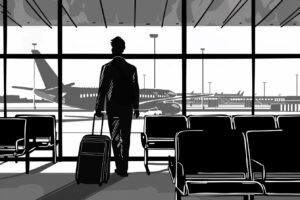





Are travelers frill-seekers? No, but here’s what they really want

Free drinks. Room upgrades. Better restaurants.

That’s what the travel industry thinks you want from your next travel experience.

American Airlines last month announced it would start serving Admirals Club lounge visitors free drinks, adding that it decided to make the move because it’s “committed to investing in enhancing the travel experience for its loyal customers.”

Priceline, meanwhile, announced the launch of a free new service on its site that lets future hotel guests search its database of published-price hotels for all kinds of valuable hotel freebies. (Customers who “name their own price”, however, will still face surprise parking charges and resort fees that add to the cost of their prepaid room.)

Also, details of Royal Caribbean’s highly anticipated Allure of the Seas leaked out. Among the ship’s planned amenities will be a Brazilian churruscaria restaurant and the first Guess store at sea.

But is that what travelers really want? Perhaps not.

A 2006 survey conducted by travel distribution company Amadeus offered a surprise answer: It isn’t frills or cheap tickets, but value that travelers are looking for. In some cases, they are even willing to pay more to get a better product.

But it could be even simpler, say experts: The travel industry could start by taking a few things away.

No more commodity fares.

For airlines, giving passengers what they want could mean ending what’s been called the “commoditization” of airfares. The concept — that an airline seat is not a service but an economic good that is essentially indistinguishable from one offered by a competitor — has been a driving force in the industry, according to experts. At some point after airline deregulation, carriers decided their economy class sections — and by extension, some might argue, their economy class passengers — were commodities.

“There is a very clear movement to evolve from commodity shopping to providing the consumer with a more personalized travel product and corresponding experience,” said Jim Davidson, the president and chief executive of Farelogix, a travel distribution systems company based in Miami.

In the meantime, passengers who want to avoid the being treated like a commodity can book a ticket on a carrier like Southwest Airlines and JetBlue Airlines, which offer a more inclusive product, according to industry observers.

Lose the hotel extras.

Hotels face similar pressures as airlines. Many have responded by unbundling their rates — taking items that used to be included in the price of a room and charging a la carte. For example, access to the pool or hotel gym used to be part of the room rate, but at some properties is added later, as a mandatory “resort” fee of between $10 and $30 a night. Some don’t even bother with an explanation. And even the properties that don’t charge mandatory resort fees will add a “concierge” or “bellhop” fee or even a surcharge for the minibar or safe (which they do not guarantee will keep your valuables safe).

A recent J.D. Power and Associates guest satisfaction survey suggests a backlash against fees, with a majority of hotel guests expecting amenities such as wireless Internet access to be included in the price of the room. Until hotels rebundle their rates, experts suggest trying an all-inclusive resort, like Jamaica-based Couples Resorts, or an American chain hotels like Residence Inn and Homewood Suites.

Cruises: be authentic.

Increasingly, the cruise industry is sailing away from the all-inclusive vacation concept and turning it into a trip to the mall, say observers. The further the cruise industry drifts away from that, by introducing ships with waterslides and rock climbing walls, the further it moves away from the product most travelers think of when they think of cruising. A recent survey by travel insurance company TravelGuard found that cruise passengers were happier with their floating vacation than their land-based getaways, but that they looked for value and adventure, not over-the-top amenities.

Fortunately, not every cruise line feels bigger is better. Viking River Cruises or Avalon Waterways may make you feel more connected with the ocean you’re sailing on. If you’re looking for a more authentic cruise experience, experts suggest you downsize your cruise ship.

Cars: Take the ‘no-fee’ pledge.

Car rental customers are also looking for value, and again, car rental companies believe that means they want low prices. And while industry observers say that’s true, it doesn’t necessarily mean they want the fees that are often added to it. Some forward-looking car rental executives see that. Asked about fees in a recent interview, Robert Barton, the chief operating officer for U-Save Car & Truck Rental and president of the American Car Rental Association, said he was opposed the creative pricing some car rental companies had embraced lately.

“My personal view is to charge a fair price for the product,” he said, adding that he was “adamantly opposed” to à la carte pricing.
Avoiding fees is difficult, for now, but many one tried-and-true method is getting a pre-paid voucher (by booking through Hotwire or Priceline) which ensures you’ll pay the rate you were quoted.

Adding an amenity or service is almost always good news for the traveling public, but sometimes, taking something away is even better.

(Photo: Tiba/Flickr Creative Commons)

  • BucksterSF

    It will never work. People rarely, if ever, look beyond the presented price. Why do you think ala carte got popular? Because the airlines and hotels and car companies wanted to? No, it was because us stupid humans will book something that’s $5 cheaper even through it isn’t a better deal.

    Got the same airfare? Lower yours by $10 and charge a $20 bag fee and you’ll fill your planes while the other guy cancels flights.

    It’s crazy, and it’s exactly what we deserve based on how we vote with our dollars.

  • Aaron

    >“There is a very clear movement to evolve from commodity shopping to providing the consumer with a more personalized travel product…”

    “Personalized travel product” is Airline marketing-speak for “more fees”. I think we should go back to the days when the price of an airline ticket included two checked bags and a cup of ice with a few drops of soda. If that means “commodity” pricing than commoditize me, baby!

    Aaron

  • Aaron

    I should add that I like my American Elite status, but it just seems wrong to me that a million-miler can drink for free in the Admirals Club while Joe Sixpack, going on his once-every-two-years vacation, has to pay $50 for the privilege of taking his clothes with him to Maui.

    Organizations are successful when they concentrate on their core business. American Airlines (and their competitors) need to decide if they are in the business of transporting people or getting them sozzled before they get on the plane. Do one thing and do it well, please.

    Aaron

  • Charles

    Always be careful when examining the results of surveys. Surveys can be a powerful means of gauging public opinion. But, they can also produce surprisingly erroneous results. First, a survey company can (often unintentionally) word a question to bias the result. A perfect example, would be: “Are you willing to pay more for a better product?” That would be an awful survey question because most everyone would vote yes. A better question would present alternatives and prices and allow the participant to choose which they prefer (and I imagine the Amadeus survey probably did do something more akin to the latter than the former, so I’m not saying I don’t trust that poll in particular). But, it’s easy to create a survey that gives you a result you like and any survey by a group with a finger in the till is suspect. Also, no question asking “pay more” is useful, since the real question is “how much more”.

    The other problem is that famous saying of Dr. House: “Everybody lies”. The term is “socially desirable responding”. People respond to surveys not with the way they act, but the way they would like people to think they act. Would I pay more for better service? Let’s see, have I every flown Spirit? Yes I have, so I should answer no, right? But, I’ll likely answer yes. It does not matter that the survey is anonymous, this is a psychological response and surveys have to be very carefully designed to overcome this response. So many surveys claim that people don’t want this, object to that, and would pay more if they got some extra whatever. But, the real vote is with their wallets. Yep, they may say they would pay more for better service, but the better service airlines cited, Southwest and JetBlue, are certainly not successful in spite of charging higher prices. In fact, they are successful due to lower prices and just happen to have a corporate culture that has resisted the practices of the other airlines.

  • Carver

    @aaron

    it just seems wrong to me that a million-miler can drink for free in the Admirals Club while Joe Sixpack, going on his once-every-two-years vacation, has to pay $50 for the privilege of taking his clothes with him to Maui.
    ————————-
    Joe Sixpack generates perhaps $500 in revenue to American Airlines over the course of a year. The million miler generated tens of thousands of revenue over the same time frame. He (or she) has paid for that drink many times over.

    Moreover no one gets membership into the admiral’s club for free. (access yes, membership no) Joe SixPack can purchase a membership like everyone else can.

  • Carver

    Any analysis of what travelers want should begin with seperating out frequent elite travelers from leisure travelers. The needs and wants of these groups are very different. Talking collectively is usually a pointless exercise.

  • Janice

    You know what I want – I want to know what my cost will be upfront and disclosed to the fullest BEFORE I buy. Give me your price and let me decide if I want to pay your price. Either I do or I can look elsewhere for a better rate. I remember going to the car dealership with my father and he would say, “tell me your price, including tax, tag and title, without any add-ons, and I’ll tell you if I’ll buy your car. If the price is different when we finally sit down to sign the paperwork then I will walk out of your showroom and go somewhere that will do that.” Simple, to the point and my father never had a problem buying the second car from the first dealership that treated him the way he wanted to be treated. Very simple and until the travel industry changes these current assinine add-ons, I will be sticking close to home. Not a bad idea – contributing to my local community!

  • Aaron

    @Carver: True, but maybe if American treated Joe Sixpack with more respect, he’d generate more business. Joe has friends and co-workers and family, and word-of-mouth goes a long way. I fly 50-80k/yr on American and maybe 3000 every 2 years on Jet Blue, but guess which airline I recommend to the people I talked to? It’s this short-sighted attitude, I think, that has airlines in the mess they’re in. One word: Southwest.

    Aaron

  • Carver

    @Aaron

    Perhaps, but that’s all warm and fuzzy. I don’t see how Joe SixPack is being disrespected by being charged for bags explicily rather than having the charge hidden in a higher fare. I am writing this from the LA. I flew down here for $49 with 6 days advance purchase.

    Southwest makes money, because it has won the PR battle that it’s lower cost that other airlines, even when its not true, period. As Arizon opined in another thread, that’s probably why they won’t let their fares be collected and displayed simulatenously with other airlines for fare comparison.

    Also Southwest gets to cherry pick its routes. Its like comparing Fedex to the post office. Fedex operates in the high margin overnight market while the post office has to deliver all the low revenue mail to every corner of the US.

  • Steve

    Once again, I feel the need to argue that there’s a substantial difference between “a la carte” fees that you can choose whether or not to pay, such as checked baggage fees, and deceptive mandatory fees like hotel resort fees.

    IMHO, the latter should be illegal. If I cannot get out of paying a fee, it should be rolled into the base price. What possible justification is there for charging a base rate for the room and then a $10-30 “resort fee” for amenities that I may or may not use but have no choice but to pay?

  • Meredith Putvin

    Southwest is also transparent in their Fees and pricing. They quote you an all inclusive rate, then break out what fees and taxes are included to get that rate. You get the break out before you Confirm the reservation.

    I have never been surprised with extra-fees with them because I am told when I book it.