Black and white cartoon of a woman with wild, disheveled hair glaring angrily near an airport check-in counter as a wary uniformed agent watches her from behind the desk. airline blacklist

Is it time for an international blacklist of problem passengers?

If an airline bans you for screaming at a flight attendant or trying to open a door at altitude, you can usually walk to a competitor’s counter and buy a ticket. Britain wants to put an end to that, and its actions may ripple across the Atlantic. The Department for Transport and the Home Office are reportedly working on a national system that would let UK airlines share details of serious offenders, so a person barred by one carrier could be flagged at check-in by another. A trade group has welcomed it, and a budget carrier has been lobbying for exactly this kind of database. On its face it sounds like common sense: keep the dangerous few off everyone’s planes. But a shared ban list raises harder questions than the headlines admit, starting with the ones that decide whether it protects passengers or quietly turns into something else: who decides who belongs on it, what counts as unruly, and if an airline flags you and you think it is wrong, who exactly do you appeal to?
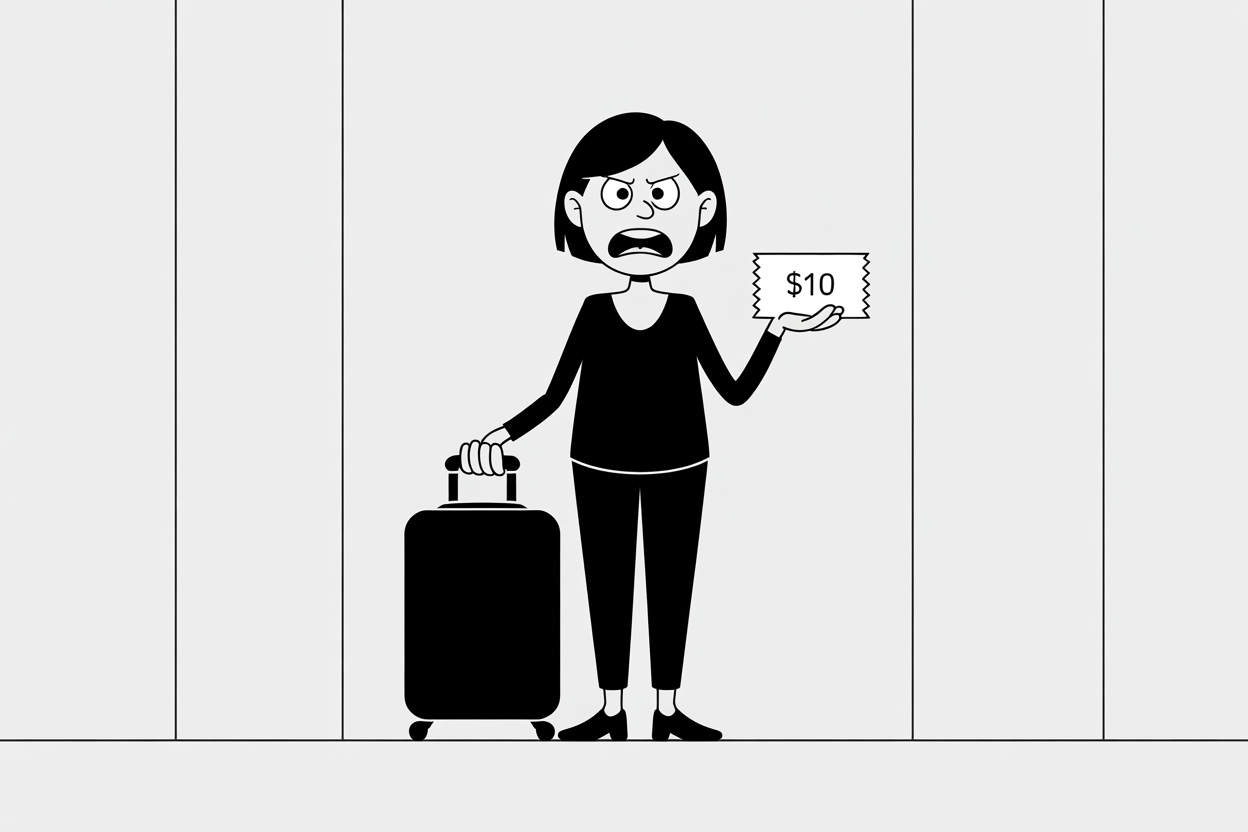
An angry airline passenger stands with a suitcase while holding a $10 voucher after a flight delay.

The delay tax: Why your airline voucher barely covers your expenses anymore 

When a flight is delayed or canceled, airlines cover only what they call duty of care: a meal voucher, sometimes a hotel, or a refund if the flight is canceled. Angela Justice received a $10 voucher after her Boston to Chicago flight was canceled. The real cost, the delay tax, is far larger. It includes nonrefundable hotels travelers cannot reach, lost wages, child care that keeps ticking, and the replacement flights passengers must book themselves when the airline’s rescheduling timeline proves useless. Airlines calculate compensation based on what it costs them to reschedule a flight, not what it costs the traveler to miss the reason they flew in the first place. The official story is that duty of care solves the problem and the Department of Transportation signs off. But the law was written in a different era, when travel was simpler and airlines were more generous, and regulators have not caught up now that delays are chronic and carriers watch every penny.

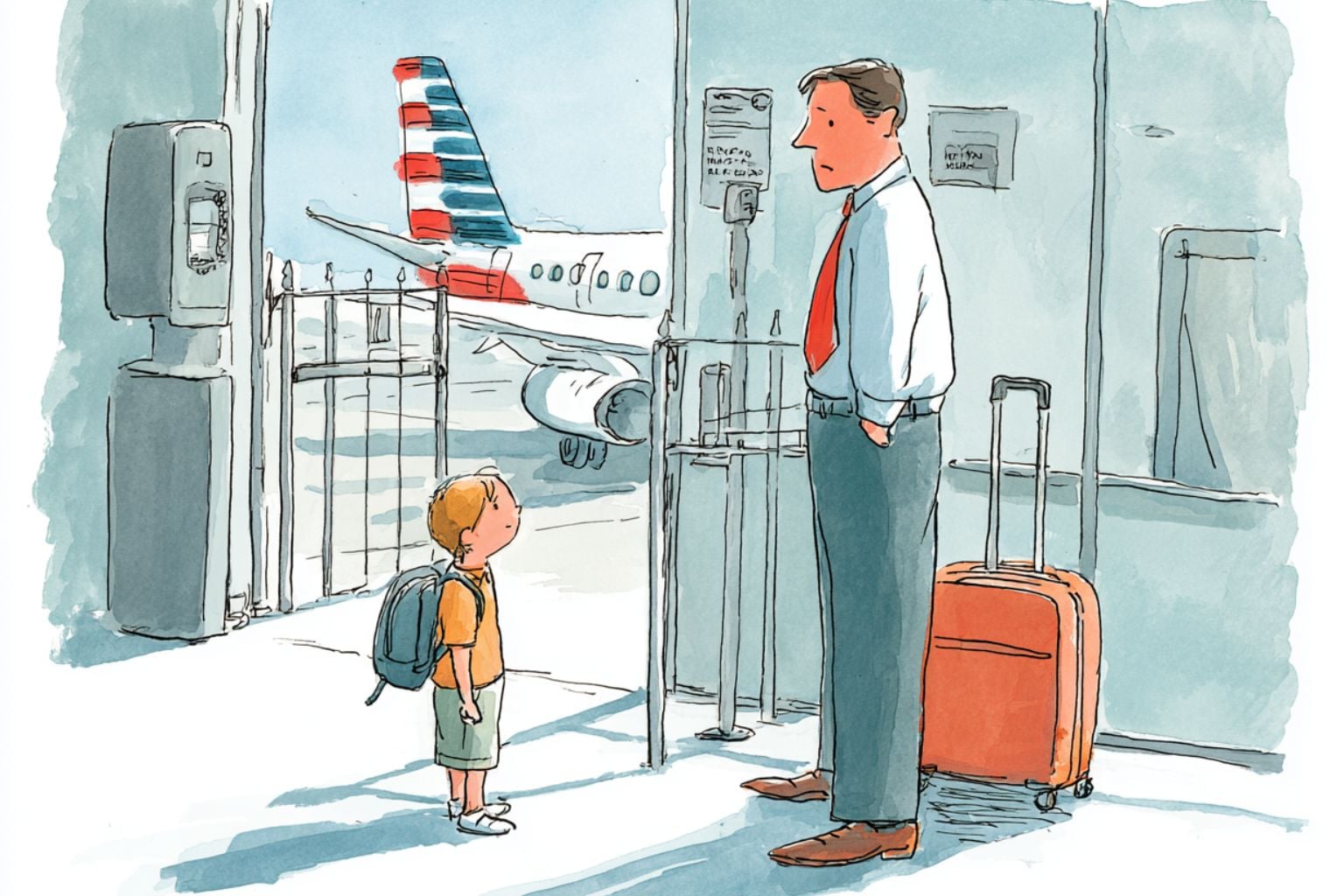
Watercolor editorial illustration of a father in a white shirt and red tie standing with his young son who carries a backpack at an American Airlines departure gate, with an American Airlines plane visible through the window beyond the closed gate door, illustrating how families get separated when airlines pull passengers from boarding lines and document involuntary bumping as voluntary

American Airlines claims I voluntarily gave up my seat, but that’s a lie

Charles Shearer was traveling from Cleveland to Japan for his mother-in-law’s funeral when American Airlines pulled him and his young son from the boarding line. His grieving wife boarded alone while gate agents offered $500 vouchers, with one even verbally acknowledging the bumping was involuntary. American later documented the incident as voluntary in its system, denying him the federal compensation of up to $2,150 per passenger that involuntary bumping triggers when passengers arrive over two hours late. Federal law mandates 400 percent of one-way fare in cash compensation, paid at the airport on the day of the flight.

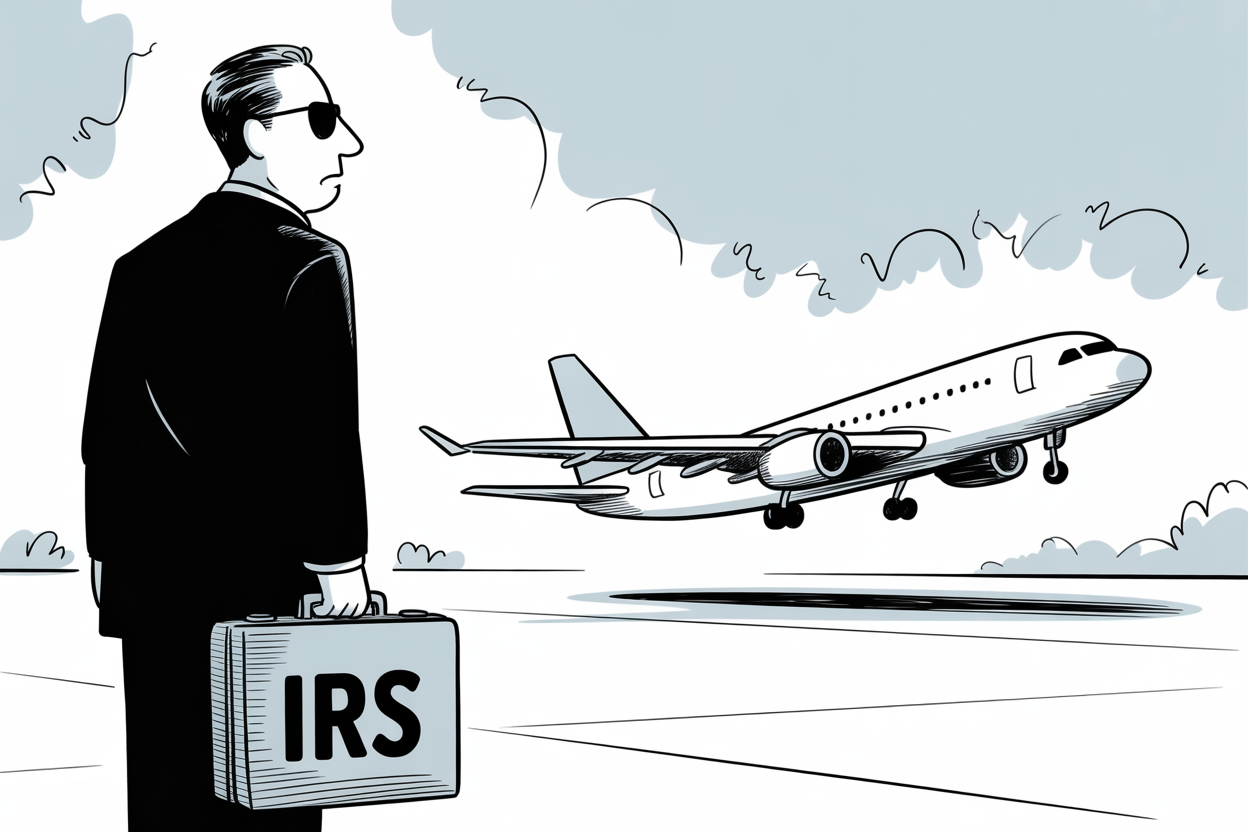
Editorial cartoon showing an IRS official in a dark suit holding a briefcase labeled "IRS" watching a commercial airplane taking off, depicting the tension between tax authorities and budget airlines seeking a tax holiday during the jet fuel crisis

Budget airlines want a tax holiday—but where’s yours?

The Association of Value Airlines, representing Spirit, Frontier, and Allegiant, is asking Congress to suspend the 7.5 percent federal excise tax on domestic tickets and the $5.30 per-segment fee, citing the jet fuel crisis following the Iran war. On a typical $369 roundtrip fare, passengers already pay roughly $47 in mandatory taxes and fees, inflating ticket prices by about 13 percent. Without a requirement to pass savings to consumers, any tax holiday would function as a corporate subsidy rather than traveler relief.

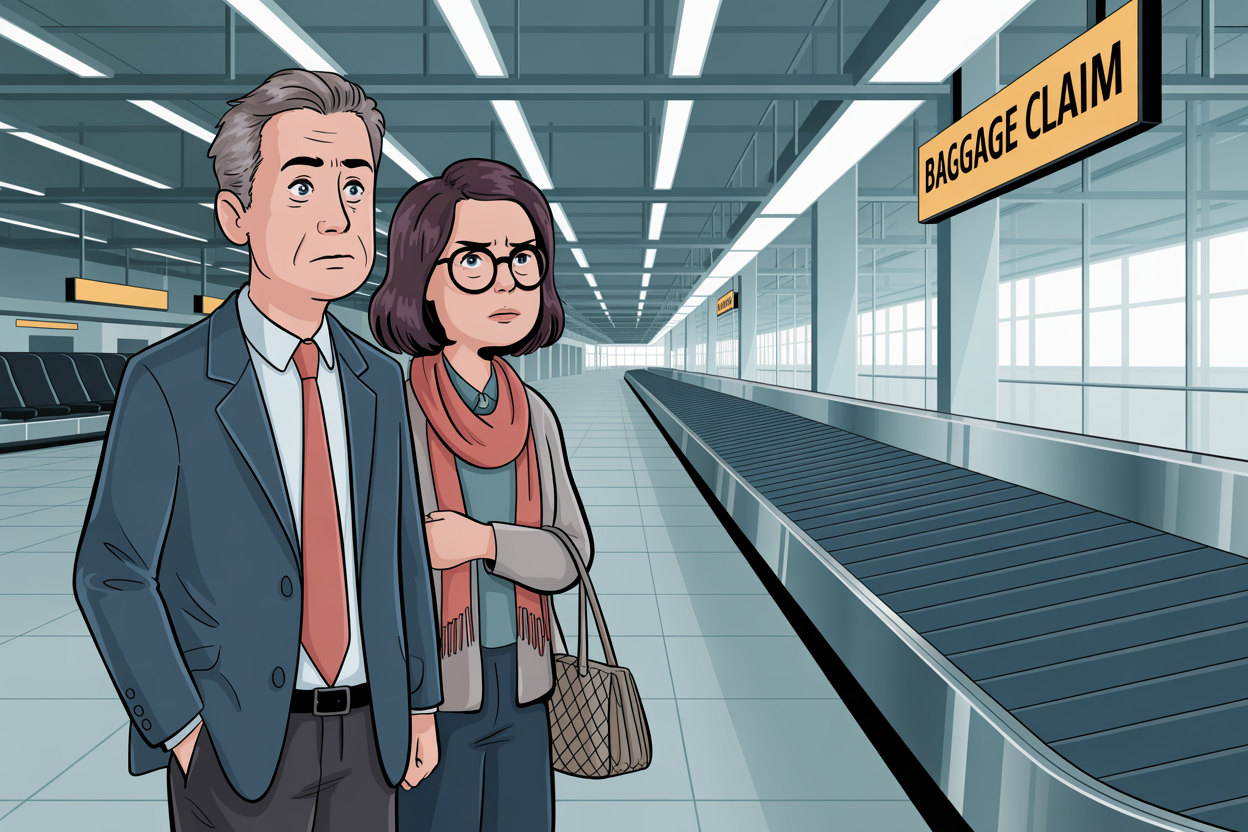
Illustration showing frustrated business class passengers standing next to their luggage while an Aer Lingus airplane flies away in the background, depicting the airline's failure to load priority-tagged baggage onto multiple consecutive flights despite tracking confirmation

Business class baggage disaster! Why is Aer Lingus ghosting us?

Aer Lingus failed to load business class passengers’ priority-tagged luggage onto four consecutive flights despite AirTag tracking showing exact airport locations. The airline then promised $265 baggage delay reimbursement in writing but ghosted the couple for six months before declaring their case closed without payment. Under the Montreal Convention, airlines are liable for baggage delays on international flights and must compensate passengers for reasonable replacement expenses.

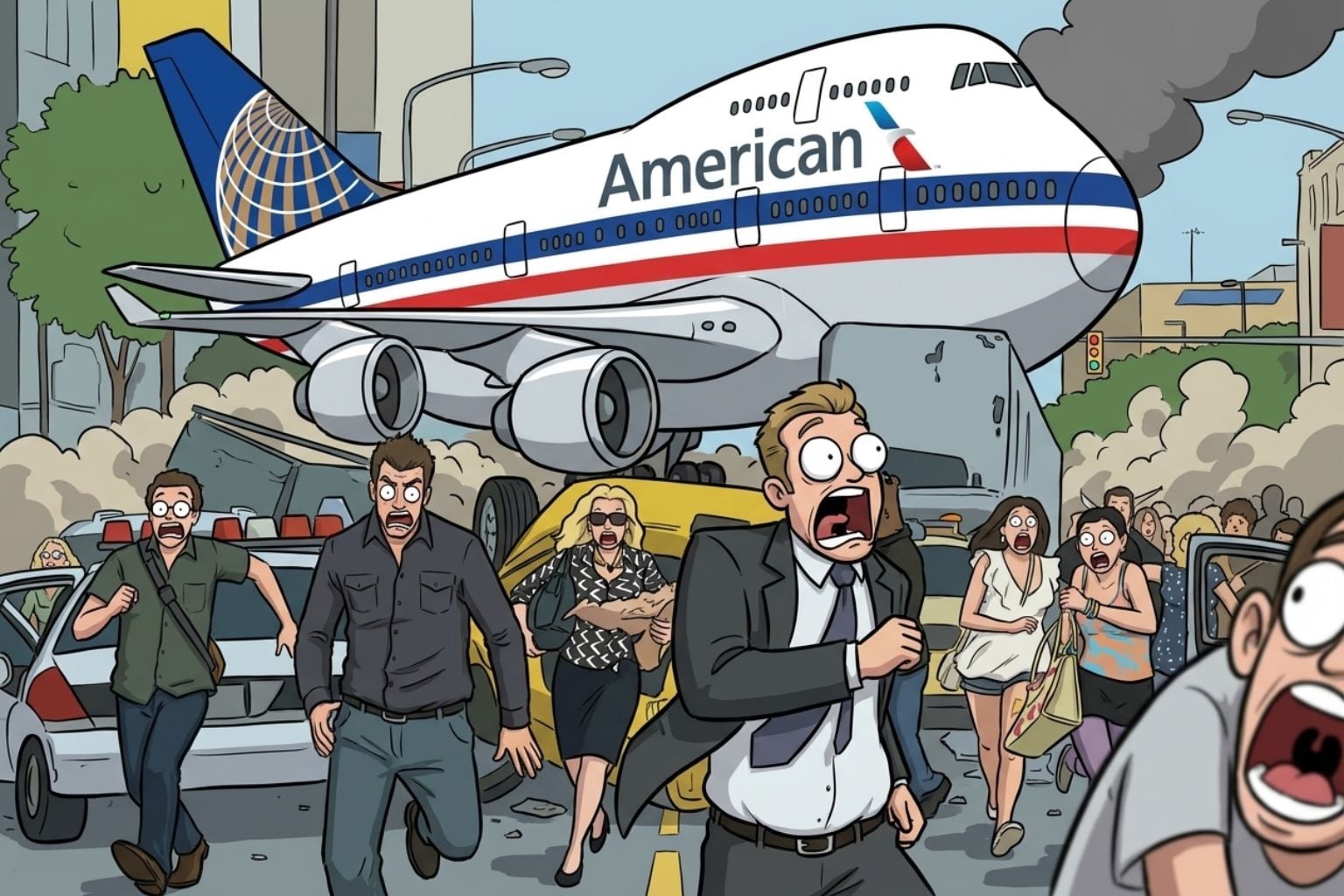
Editorial cartoon illustration of shocked and panicked travelers running away from an enormous airplane featuring both American Airlines red-white-blue livery and United Airlines globe logo, symbolizing consumer anxiety about the proposed United-American Airlines merger that would control 40% of the U.S. market

Should we allow United and American to merge?

The United Airlines–American Airlines merger everyone feared may actually be happening.

United Airlines CEO Scott Kirby reportedly met with administration officials at the White House in February to float an audacious proposal: a combination with American Airlines.

Iran war

Have airlines failed you during the Iran war?

As the war with Iran escalates, hundreds of thousands of travelers have found themselves stuck between closed airspaces and indifferent carrier policies. You might think a global airline would prioritize getting you out of harm’s way, but the reality is much more cynical. Airlines are looking at their bottom line first—not your safety

Will an Iran war ground your travel plans?

Will an Iran war ground your travel plans?

If you’re holding a ticket to Europe or Asia, you might want to check your flight status after you finish this article. The U.S. military is massing an impressive amount of hardware in the Persian Gulf, with reports suggesting a decision to attack Iran could come within the next week.