Southwest Airlines responds to needy passenger with compassion – why won’t US Airways?

Can you be right -- and wrong? / Photo by Tipek US Airways - Flickr
When you’re in my line of work, you hear your share of sob stories. Few are as tragic as Charley Price’s, and few have as frustrating an outcome.

His story starts with the death of his wife’s father last summer, only two months after Price’s mother-in-law had passed away.

“We were initially led to believe from family that a delay in scheduling a family funeral for both parents was going to happen at a later date, but with less than two weeks notice we were informed that the funeral service was being scheduled for both parents on July 14.”

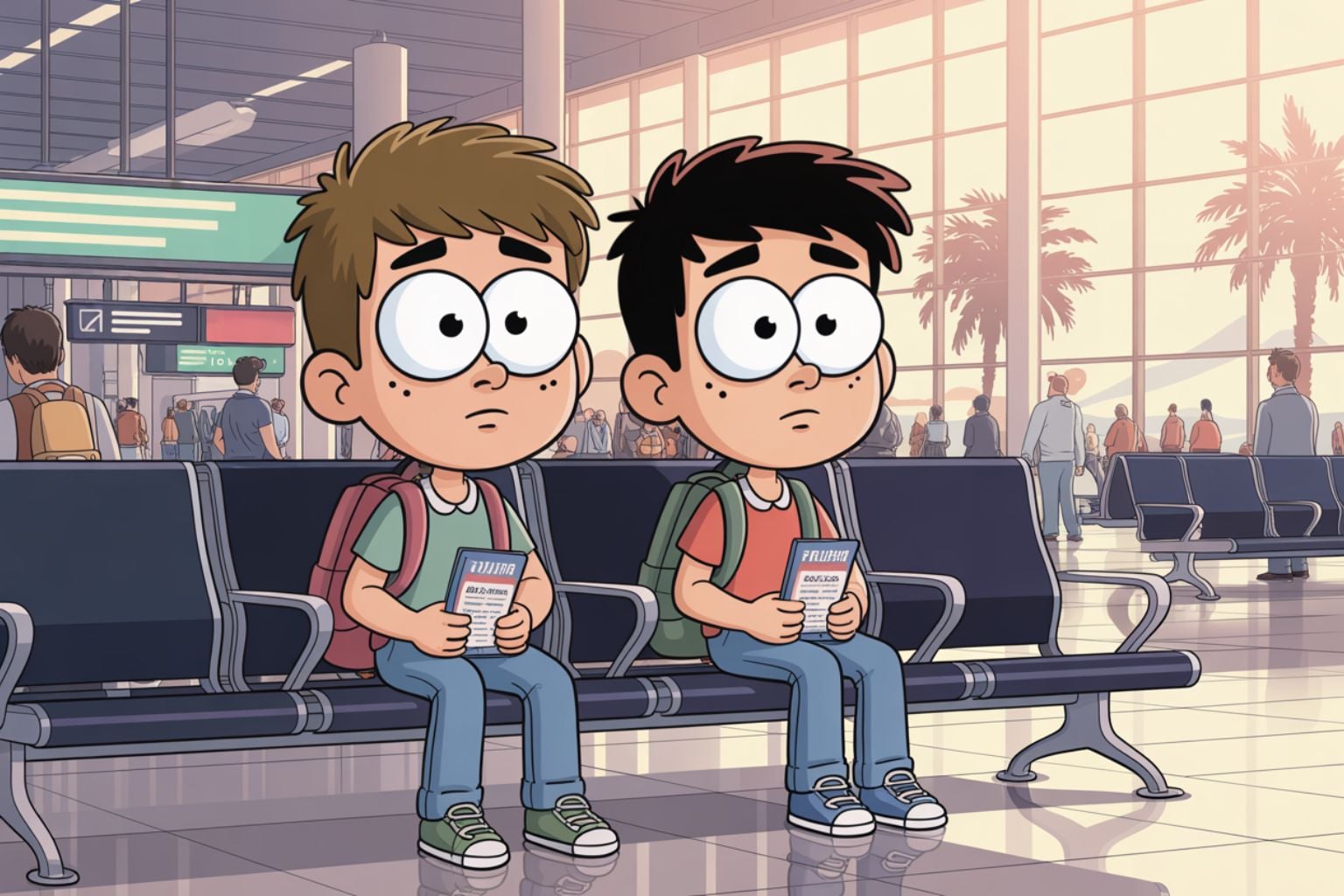
Because of scheduling difficulties, Price and his wife had to book two sets of one-way tickets from Minneapolis to El Paso, Texas: one on Southwest Airlines, the other on US Airways.

“Unfortunately, my wife became severely ill the evening before we were to travel which required hospitalization and we were forced to cancel our air travel plans and miss the funeral service.”

I can’t imagine the grief of losing two parents, followed by the hardship of a severe illness.

You would expect an airline to be sympathetic to the Prices, particularly if they could show a death certificate and a doctor’s note.

Price explains what happened next:

I immediately called US Airways to cancel our scheduled trip and explained what happened.

The agent dutifully cancelled our travel plans, and was quick to state we had one year to use the tickets from date of issue, plus any additional airfare and a minimum $150 per person reissue fee.

I explained the unforeseen medical emergency and asked that the reissue fee be waived.

I was informed that US Airways does not allow refunds for non-refundable tickets and would enforce the reissue fee. The combined reissue fee of $150 per person ($300 total for my wife and I) nearly matched our original one-way airfare of $440.

It was quite the contrast with Southwest.

When I called Southwest to cancel and stated what happened, the person on the phone could not have been more gracious and expressed concern for my wife.

The agent stated that I had one year from date of issue to use our non-refundable tickets and any additional airfare.

Expecting the worst, I asked if there were any additional fees and was told no. To make sure I specifically asked if there was a reissue fee and again I was told no.

OK, we could get into a debate about US Airways and Southwest and fees, but I think there are two noteworthy takeaways here.

First, the US Airways representative could have expressed some sympathy for Price, which costs nothing.

Second, both US Airways and Southwest should have had a notation in Price’s reservation that he was flying on a bereavement fare. Combined with his other personal circumstances, it wouldn’t be unusual for them to offer a full refund.

(Passengers cut airlines a break when circumstances “beyond their control” force them to cancel a flight. If ever there was a time for a little quid pro quo, this would be it, don’t you think?)

Price appealed to a supervisor and then put his request in writing. Unfortunately, it came back with the same response.

Dear Mr. Price:

Though I understand your situation, I must adhere to established policies which do not allow for refunds of non-refundable tickets, even due to medical circumstances.

You have one year from the date of issue to complete travel.

I thought Price’s case was worth a second look. After all, he wasn’t flying to El Paso on vacation, and he missed the flight because of circumstances beyond his control.

US Airways didn’t respond to my request.

No question about it, US Airways did what it had to, contractually speaking. It isn’t required to do any more. But was this an appropriate response to a passenger in need?


  • mikegun

    I recently came across my airline ticket receipt from a flight I took in 1991. It was a bereavement fare purchased after the death of my father. The fare was $500.

    That route today is over $1000 for a last minute published fare ticket. However, Delta  offers a bereavement fare in their system in some routes: 

    http://www.delta.com/planning_reservations/special_travel_needs/bereavement/index.jsp 
     
    A quick call to them and I was told a fare of approximately $550 in 2012 dollars for the same city pair.

    The bereavement fares are still out there on some carriers and certainly, in my case, a better bargain than it was 21 years ago when comparing 1991 dollars to 2012 dollars.

  • flutiefan

     they haven’t been paper tickets for a few years now.

  • http://pulse.yahoo.com/_3GFLE6Z4HRANDMBKAE3HZHKWKA patb

    I understand about Peak Oil but the greediness and total lack of compassion by some airlines is something that people should take into account when deciding on an airline to travel by.

  • TonyA_says

    I remember this case 
    http://www.elliott.org/blog/dont-wait-too-long-to-ask-southwest-airlines-for-a-refund/

    I understand SW Vacations still issued paper tickets since a couple of months ago.

    I am glad to hear your news. So now all money can go back to ticketless funds. Nice.

  • Alia Naffouj

     I think USAirways may have waived the fee if he had been re-booking at the same time.  I know when I had a similar situation with US Airways, they did not charge me the change fee only the fare difference.  My son was in the hospital and they asked for the hospital info and his doctor and that was it, fee waived. At the time I was canceling I was booking the same trip for a month later so that may be why they waived it as it was being used immediately. All I can say is I was very thankful for the waived fee otherwise it would have cost quiet a lot more with the fare difference.

  • flutiefan

     ah, yes, Roomie says some Vacations package tickets are still paper, because they’re processed by a contracted vendor. but they are converting to etickets for everything eventually.
    (Roomie says: “They can put a man on the moon, but they can’t make the Vacation packages ticketless?!”)

  • TonyA_says

     None

  • Lindabator

    Agreed.  I know people always want the airlines to bend the rules, but they do not HAVE to.  Since they booked nonrefundable fares, and the actual reason for the cancel was NOT the death in the family, but the ILLNESS, and the airlines does NOT accept medical reasons for cancellation, they were within their rights to say no.  Unfortunate, but the client chose the fare, he has to abide by the terms and conditions, regretable as they may be.  It would be the same story for anyone else.

  • TonyA_says

     What year did this happen?

  • Lindabator

    AMEN!

  • Lindabator

    Actually, Southwest now does not allow you to transfer your ticket to another passenger, either.  Too much FRAUD involved with that!

  • Lindabator

    Actually, Southwest now does not allow you to transfer your ticket to another passenger, either.  Too much FRAUD involved with that!

  • Lindabator

    And the SHEER NUMBER of BS medical notes we used to get at the airline (a Doctor travelling with 9 other surgeons to a surgical convention actually felt we should accept HIS note and refund his return), caused this problem.  So now, the nonrefundability of a ticket is fairly strictly followed.  Unfortunately, with good reason.

  • Lindabator

    And the SHEER NUMBER of BS medical notes we used to get at the airline (a Doctor travelling with 9 other surgeons to a surgical convention actually felt we should accept HIS note and refund his return), caused this problem.  So now, the nonrefundability of a ticket is fairly strictly followed.  Unfortunately, with good reason.

  • Lindabator

    Don’t bother – he never lets little things like “facts” get in the way of making his point.

  • Lindabator

    And if they weren’t there, the low-cost carriers would have to pick up the costs of the podunk airports, turning their pricing structure into that of the legacy carriers.  Its their ability to cherry-pick the profitable routes ONLy that keeps them so lucrative.

  • Lindabator

    It is based on the clients’ needs – if you want to waive pre-existing conditions, make sure you buy the insurance with the waiver in the time frame necessary.  And I have had MANY successful claims with TravelEx and Travel Guard policies. 

  • Lindabator

    But, once again, they do not HAVE TO.  And Chris wasting his time going around with USAir once again makes no sense in this case.  USAir is following the rules – the client just doesn’t like it.  But he chose a nonrefundable, and he chose the penalties that go along with it.  Sad, but no different than anyone else in the same situation.

  • Lindabator

    But then the subsequent changes were due to the death, which gave you a lot more latitude with the airlines, as they could ensure that case if need be.

  • TonyA_says

    Actually, if we read this case closely, bereavement fare was irrelevant. What is relevant is CANCELLATION WITHOUT PENALTY if the pax becomes ill and hospitalized.

    Oops, Linda beat me to it. Sorry for repeating the message.

  • Lindabator

    That is an excellent point. 

  • Lindabator

    But just because someone WANTS something, doesn’t mean they are ENTITLED to it.  And following your rules makes it fair for everyone travelling, because believe me, everyone has a valid reason in their own mind for cancelling – and then pitch a fit because they chose a nonrefundable fare to save money, and now want to be able to refund it.  Can’t win!

  • Lindabator

    Its not greed to expect that when you offer a choice between fully refundable with no restrictions, and nonrefundable WITH restrictions, that you offer them to anyone who wishes to follow the rules – and then THEY FOLLOW THEM!  I find the greed with those who DO book the least expensive, with the most restrictions, and then expect those restrictions waived when THEY WANT THEM TO BE.

  • TonyA_says

    Linda, when I was still working in the industry (long time ago), I recall they said if cost anywhere from $25-40 for each SIMPLE customer service call.

    Considering that bereavement or personal emergency travel would necessitate multiple calls and examination of the VALIDITY of presented documents (or lies); I expect the transaction cost of this kind of requests to be more than the $150 change fee.

    IF my guess is correct, then who shall pay the burden for this? Should other passengers subsidize grieving passengers? The airlines will simply pass on these costs somewhere.

  • Lindabator

    Agreed – but then I’m not saying the client SHOULD get his money back on this??????  I worked for the airlines not Too long ago, and remember how costly it was, and how many BS stories we heard all the time!

  • TonyA_says

    Me, too. I don’t think the passenger should get his/her money back. If they want REFUNDABLE they should buy refundable fares. Otherwise, some other customers will end up subsidizing them.

  • TonyA_says

    What city pair?
    Let’s compare the walk-ups and see how compassionate that Delta fare is.
    Is the $550 Round Trip including tax?

  • TonyA_says

     A few keystrokes? How about validating the medical certificates (and the like)? Who’s gonna do that for free?

  • TonyA_says

    @emanon256:disqus  @Raven_Altosk:disqus
    I wish to pass this by you and see if it would work.

    Let’s assume the OP was holding USAir non-refundable tkts. If he simply cancelled before the departure date his tkt was worth $$$ minus the $150 change fee. (In other words, it devalued by $150).

    I believe there is a way NOT to lose the $150. USAir has this exemption to the $150  change fee if you upgrade:

    //TICKET UPGRADE EXCEPTION – SEE BELOW//
      TICKET UPGRADE –
      PASSENGERS UPGRADING TO AN ENVOY/FIRST CLASS FARE    
      //C-/D-/Z-/J-/F-/Y-UP-/YUP-// WILL NOT BE ASSESSED    
      THE CHANGE FEE – ALL OTHER RULES MUST BE MET – SEE    
       BEFORE/AFTER PROVISIONS BELOW.  ANY NONREFUNDABLE    
        AMOUNT REMAINS NONREFUNDABLE.

    So it the OP simply walked to the USAir counter and said he changed his flight plans and wants a one-way Y fare from MSP-ORD let’s say 01NOV, he will get this for $307.80. Note he can actually book as far as 331 days but the ticket is $337.50.

     PNR PRICED ON 01MAY FOR TKTG ON 01MAY
    * PRICING RULES VALIDATING CARRIER DEFAULT US
    ** 01NOV DEPARTURE DATE/ 02MAY IS LAST DATE TO TICKET
    * FARE MAY CHANGE UNLESS TICKETED *
                                                               
    TICKET     BASE USD                TX/FEE USD       TKT TTL USD
     ADT01       276.28                     31.52            307.80
    *TTL         276.28                     31.52            307.80

    FBC ADT YA0KY
    ADT MSP US CHI276.28USD276.28END US ZPMSP XT2.50AY4.50XF
        MSP4.5

    The additional collection would be $307.80 minus what he paid for his old tickets $220, or $87.80.

    So for less than ninety bucks, he is holding Y (changeable without fee) tickets. Sometime in the future, when his wife is ok, he can change his Y fare ticket to any ticket he really wants on USAir. He would not lose a cent to book his future roundtrip ticket.

    What do you think?

  • the_desh

    I agree w/ you that this comes down to ticket policy, spelled out on the respective airlines tickets and websites.  However, I don’t think the location of the call center had anything to do with the OPs failure to illicit sympathy w/ US Airways.  People in India die too, and they don’t like loved ones dying any more than we do, so I think they appreciate how sensitive someone in mourning is as well as any average American.

  • the_desh

    I agree w/ you that this comes down to ticket policy, spelled out on the respective airlines tickets and websites.  However, I don’t think the location of the call center had anything to do with the OPs failure to illicit sympathy w/ US Airways.  People in India die too, and they don’t like loved ones dying any more than we do, so I think they appreciate how sensitive someone in mourning is as well as any average American.

  • the_desh

    (removed… this was supposed to be a reply to another post)

  • the_desh

    There’s a massive set of logistics behind every single flight and that costs a lot of money.  Don’t think of the $150 as how much someone got paid to press a couple of buttons – think of it as the amount the airline had to pay to arrange the aircraft to be in place to get you where you want to go, and a disincentive to interrupt an often complicated and expensive plan.
    Airlines are by no means shining examples of good will and customer service – but they owe it to their shareholders to _sometimes_ make a buck or two.

  • Michael__K

    Ignoring every data point except for the one that is convenient is not the way to engage in good faith discussion.  

    The data demonstrates that inflation-adjusted airfares, absent baggage fees, are higher today (by more than 10%) than they were just before baggage fees were first introduced.  Despite the fact that the price of oil has fallen slightly over the same timeframe!  (Recall that first-bag fees were initially introduced in the spring of 2008 in response to an oil price spike).

    If you think that only the 2008-09 fare comparison is relevant (and that this had nothing to do with the Great Recession or oil prices), but that 2007-08, 2009-10, and 2010-11 fare comparisons are irrelevant, then there’s nothing to discuss.

    You do make a good point about the tax-free status of baggage fee revenue.  We as citizens and taxpayers are subsidizing and helping to create this monster through questionable policy decisions.

    And of course, it’s simply a fact that lighter planes use less fuel, which reduces the carriers’ costs.  I guess you’re entitled to believe that this somehow has no bearing on the decision to charge baggage fees.  I beg to differ based on common sense.

  • TonyA_says

    What you say makes a lot of sense. If the policy of the airline is to say “NO” to all requests for compassion, then it is certainly cheaper to do that from a foreign call center (not just India).

    I pity these offshore/outsourced workers because they can’t “win”. They are a lightning rod for all highly emotional customer service issues and they do not have any right to go on strike against the company.

    That said, I am amazed how SWA has managed to keep its 6 call centers in the USA – Albuquerque, Chicago, Houston, Phoenix, Oklahoma City, and San Antonio. SWA crew (both flight and cabin) are also unionized. So why can SWA keep on delivering value to its customers better than other US carriers can? It must be doing something right.

  • Michael__K

    If you are referring to EAS, our government subsidizes that.

    What forces a carrier to participate if it doesn’t want to?  As I understand it, carriers are welcome to withdraw with sufficient advance notice.

  • emanon256

    That’s a really good question and I can’t tell you the actual answer, but I can tell you more about YUP.  The Y-Up is a special Y fare basis, usually with a code like YUP6 or YUAUP1 that will book directly into and first class or business seat.  There are typically used as buy-up incentives to get customers to buy up to First for less than an actual First ticket, though they will waive the change fee if you simply buy up to full price first too.  An example of the YUP is the where the customer pays $201 for an M fare on that route (MSP-ORD), where the YUP is $708, they will offer the customer the ability to buy-up to First Class for the difference of $507.  They do this by offering an instant upgrade as a re-fare for $507 and they waive the change fee.  The new total $708 is still less than the F price of $1,047.  And even lower than full Y which is $838.  A YUP is generally still considered a restricted coach ticket, and carry’s the same rules as the originally purchased ticket.  They do mention “ANY NONREFUNDABLE AMOUNT REMAINS NONREFUNDABLE.”  So I am not sure what would happen if they YUPed and then tried to change it.  I believe, though I am not certain, it would carry the same restrictions as the original ticket, but the fare difference would be refundable.  I also don’t think they would allow them to change the date while they applied the YUP, I believe it would have to be the same date and O/D to qualify.
     
    What is confusing me are the YAOKYs showing on that route.  They are really low for Y.  It could be a highly competitive route with mostly regional jets, or it could be a negotiated fare.  Many airlines have special negotiated government and corporate rates that have no restrictions, so they always book into Y, and cost a lot less than Y would cost the general public.  However the inventory must be booked through the corporate or government contract only.

  • emanon256

    I didn’t ignore every data point; I looked at the data point before the un-bundling and the data point after the un-bundling and compared those two as that is when the change occurred.   The amount of change at that point in time is also a clear outlier in comparison to the other changes over time.  It’s also interesting that the change is almost exactly equal to the new checked bag fee charge, when they deducted the cost of the bag fees from the fare.
    Saying that airfare is 10% higher today than before the baggage fees is a red herring as the base fares have been typically going up each year, even when oil goes down.  What I am saying is that when they un-bundled, they lowered the cost of the tickets by the price of the checked bags, the fact that the price of tickets has changed since is irrelevant.  The tickets would have changed over time had they not unbundled, so they cannot be compared in that way.

  • TonyA_says

    Rereading the rules, the upgrade they are referring to is a fare that must be upgradeable to ENVOY/FIRST Class. So the minimum is Y-UP and not just any Y class fare. So the YUAUP3  $757 is the cheapest Y-UP fare. If the OP was thinking of going to Europe anytime soon, this might have worked.

    The non-refundable amount (~$220) will still be noted as non-refundable. But the Y-UP ticket itself can be exchanged  (in the future) for another ticket without a fee. It would not be refundable for the whole amount but that’s not the goal. The goal is to prevent losing (or paying) the $150 change fee and keeping future travel options open.

  • Michael__K

    Are you interested in discussing any facts or just in personal attacks?

  • TonyA_says

     Michael, I think it is fair to conclude that BASE fares would have gone up more if airlines couldn’t or didn’t charge ancillary fees. How else could they have hidden the extra cost (to us)? Bogus taxes?

  • Michael__K

    Data point before unbundling was 2007. Unbundling already happened in 2008.

  • Jeanne_in_NE

    Unfortunately, honesty also seems to have become an antiquated ideal, which directly led to policies such as those enforced by US Airways. For what it’s worth, I do feel sorry for Mr. Price. 

  • Michael__K

    That’s certainly possible (essentially sirwired’s scenario (A) above).

    He also proposed scenario (B) and I added (C), (D), and (E).  Perhaps there are other scenarios we missed.  

  • Raven_Altosk

    My point wasn’t that they are incapable of showing sympathy, but that the scripts they read from do not allow for it.

    Many of those folks are also paid by the number of calls they field, so the faster they get you off the phone, the better for them.

  • TonyA_says

    I suppose as companies or organizations become bigger, they lose their ability to be feel like a “person”. Providing compassion or empathy requires feelings (or a soul). For a company, it means the CEO/COO and the board must proactively institute policies that the rank and file are empowered to execute. For employees to act genuinely compassionate, they must first be treated with the same compassion by the company. If jobs keep on being outsourced, then that’s not happening anytime soon. If you want to know how you will be treated by an airline, look first at how the airline is treating its own employees. What happened to the OP does not surprise me at all.

  • emanon256

    There was no unbundling in 2007, so I can’t compare that.  As it happened in 2008, the best I can do with that data is 2008-2009.  Unless you can provide daily transactional data for all of 2008, then I can do a comparison based on the actual day in which it changed.

  • emanon256

    I like your idea.  What if they did a Y-up to $757 and changed it later for another domestic ticket and get a credit for the remainder?  Would they get them out of the fee and get them 2 future tickets? 

  • Michael__K

    @emanon256:disqus   - Baggage fees were introduced in May, 2008.  It was widely reported at the time (including on this blog) that fares were not being lowered at the same time.  It was also widely reported that these fees were a response to record oil prices ($132/barrel, eventually rising to $145 in July).  

    By late December, oil prices had suddenly collapsed to below $40/barrel.  Oil prices stayed low and never rose beyond $80 in 2009.  You are welcome to delude yourself into believing that this (and the peak of the recession) had no impact on airfares.

    If you really believe that unbundling causes lowers fares, then you would expect fares to be lower in 2008 than they were in 2007 (they weren’t).  You would also expect fares to have continued to go down in 2010 and 2011 as unbundling increased and baggage fees increased (they didn’t).

    I’m referring throughout to inflation-adjusted fares.  If you believe, as you stated, that “fares have been typically going up each year, even when oil goes down” then you need to explain 1995 – 2007.  Because in that 12 year period, the opposite was predominantly true (the only year-to-year exceptions coincide with the tech bubble and with the oil shocks in 2006 and 2008)

  • Michael__K

    see new thread