Korean Air cancels tickets because of fare error

Here’s a case that’s been keeping me up at night.

It’s not just because this one’s about errors — one of my favorite topics. It’s also because it raises several difficult questions about ethics, journalism and consumer advocacy.

I’ve spent my career studying errors and have made plenty of my own. But back in September, it was Korean Air’s turn to screw up.

It accidentally loaded what appeared to be a discounted travel agent-only rate — a so-called “fat finger” fare — into its reservation system.

You could buy a roundtrip ticket between North America and Palau for around $560. That’s a very good fare, but not too good to be true.

Then, instead of immediately canceling the tickets, it waited two months, reportedly consulting with U.S. government regulators on how to appropriately compensate those who were inconvenienced by the slip-up before notifying its customers.

The affected passengers were eventually given two choices: either a full refund of the ticket or the opportunity to purchase a discounted ticket on the same itinerary.

Korean Air also offered to reimburse passengers for any additional expenses incurred as a result of canceling their Palau trip, such as cancelation fees for previously booked flights, hotels, and ground transportation. And it threw in a $200 travel voucher for a future flight to any Korean Air destination from a U.S. gateway.

By the way, that’s not a terrible offer. The timing could have been a lot better, though. A whole lot better.

The media campaign

Some passengers refused to go along with it.

“I am not interested,” one of them told me. “My girlfriend and I just want to go on vacation as planned, for what we paid.”

I received the first request for help early on Thanksgiving Day, according to my email records. When I promised to investigate, I quickly heard back from several other Korean Air customers who had similar problems with their Palau tickets. They had gotten organized, they said, and they were happy to have me as their advocate.

On Friday morning, I had a conversation with someone at a fairly high level at Korean Air about the situation. The offer on the table was fair, I was told, and besides, what more could they do?

“Well,” I said. “You could honor the tickets to Palau.”

My contact agreed to send another request up the chain to see if something could be done. Accepting the tickets would be expensive, but Korean Air really wanted to “do the right thing.”

Getting organized

More emails had arrived from others asking for help with the same problem. One of them revealed that they were getting behind-the-scenes help from an organization whose claim to fame is lobbying the government for tarmac-delay laws.

“I think we can mount a media campaign very successfully,” its leader wrote in one of the emails.

Then she enclosed detailed instructions for the Korean Air passenger group, suggesting she had a network of journalists at her command. She even dropped a name or two.

It made for some entertaining reading.

That, in itself, is no reason to reject a case. In fact, I’ve been the wingman for other consumer advocates a couple of times, and as long as it helps a deserving customer, I can be a team player.

But the more I investigated, the more skeptical I became of the story these passengers were telling. I discovered an absurdly long exchange on a popular forum for frequent fliers that clearly identifies the fare as an error, and invites participants to exploit it. (I cringe to even link to it, but there you go.)

I phoned Korean Air back.

“I’m deeply conflicted about this case,” I said. “On the one hand, there are passengers who booked these fares, not knowing they were a mistake. I think you could make an argument to honor their tickets.

“On the other hand, there are people who booked these fares because they knew they were a mistake, and they probably thought they could shame Korean Air into honoring them,” I added. “I can’t advocate for them.”

That’s the problem, though. Korean Air can’t really determine the motive behind a reservation, nor should it be expected to. Either it honors all the fares or none of them.

I told Korean Air I wasn’t sure I could urge it to accept the tickets any longer, and asked them to convey my misgivings about this case to the powers that be.

Meanwhile, the media campaign appears to be in full swing. One of the stories appeared yesterday, and it at least acknowledged — but then dismissed — the stealing issue. Based the questions these journalists have been asking of Korean Air (I told you I have good sources) it appears that most of them find nothing at all wrong with knowingly booking an erroneous fare.

This is deeply troubling.

Enabling thieves?

I’ve been over my arguments many times before on this site, so here’s the Readers Digest version: If you book a fare that you know is a mistake, you are stealing from the airline. If you give aid and comfort to those who do it, you are an accessory to theft.

This entire episode has made me wonder about what it means to be a consumer advocate. Do you always side with consumers, even when they behave unethically? Is the customer really always right?

Apparently, there are some capable journalists whose work I respect, who feel that the answer to both questions is “yes.”

In the coming days, we’ll see some of these same writers weigh in on the canceled tickets to Palau case. They will probably highlight the hard-luck stories, like the canceled honeymoons, of which I’m told there are several. That’s how I would write the story if I wanted to embarrass Korean Air.

But I hope they also give the problem of the fat-finger fare thieves the attention it deserves. And I hope they do a little independent thinking instead of obediently participating in a media campaign.

Now what?

I really don’t know what to do with this case. Honestly.

I think Korean Air made a series of mistakes: the fat-finger fare, the lengthy delay, and underestimating the resolve of the spurned passengers. It’s one thing to cancel a wrong fare right a few hours after a reservation is made — but two months seems a little excessive.

Is there any other American business that is allowed to void several hundred transactions months after the purchase date, with the apparent blessing of regulators? I can’t think of one.

So what should I do? Should I push Korean Air to honor the tickets, even though some, and perhaps many, were booked by criminals? Or should I leave well enough alone and urge the passengers to accept the airline’s latest offer?


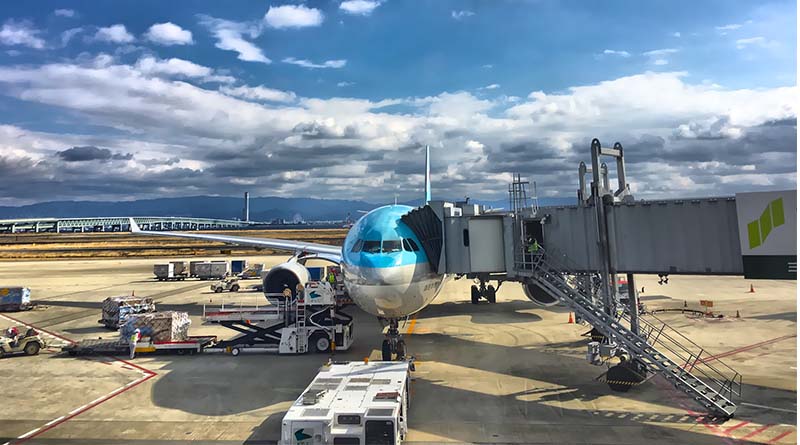
(Photo: BW Jones/Flickr)

  • Tony A.

    KE has no defined fare for DEN-ROR. UA/CO, CI and DL have.

    Please note that I do not need to web searches for fares. I have a GDS and have full access to both PUBLISHED AND BULK (non published) fares loaded in ATPCO. I get the fares and their associated rules in a few keystrokes and in 1-2 seconds. Non Travel Agents can subscribe to ExpertFlyer and see the same things I am seeing except for non published fares. Understanding the jargon is another thing.

  • DavidZ

    “David, you have to understand how the airlines treat their distributors. ”

    I do, actually. In my experience, though, customers don’t know and don’t really care about the devil in the details except to get the advertised (and expected?) results based on what they’re willing to pay for.

    Sure, those on the travel provider side do care about these things. On the customer side, the only thing they care about is if the product or service does as “advertised” or if it meets what they expect or look for.

    I think that’s what people like zonks have been also saying from the start, even though you, Tony A et al are emphasizing another point from another perspective. One can insist on the other to understand what they’re explaining, but obviously one can’t force the other to agree or accept it.

    If anything, a challenge is to see where the two can meet and work out.

  • DavidZ

    Tony, I posted my reply above regarding ultimate and contributing. And yes, I worked on the travel agency side before, though I’m not necessarily as knowledgeable on the details as you and Bodega are on that side of the fence.

  • DavidZ

    “Why don’t you come out with a solution that you believe is fair?”

    Uhurm…

    “So what should I do? Should I push Korean Air to honor the tickets, even though some, and perhaps many, were booked by criminals? Or should I leave well enough alone and urge the passengers to accept the airline’s latest offer?”

    If even Chris has difficulty coming up with even a remotely win-win solution, what more the rest of us?

  • Anonymous

    Right, but not all (pilgrims) have such access thus I was attempting to have you do a search that us pilgrims would normally attempt via OTA or other mechanisms such as searching say CO, DL, or KE sites directly.

  • Bodega

    You are correct.  All online shoppers care about is price.  With the internet, everyone THINKS they know about tickets, but this is an excellent example of what people think and how things actually work.

  • Bodega

    I fully get that all online shoppers do is look at price and don’t care about the details UNTIL they get caught up in something like this.  This was bound to happen and now you know that you have a responsibility as an online purchaser to know that what you are buying is legit.  Mistakes happen in our industry and now it happened online.  We are use to it, now this is an eye opener to the rest of you. 

  • Bodega

    It is interesting that the feeling is that because the OTA has it posted, they rightfully should get it.  We know on our end, the airlines have NEVER allowed that with us and now they are experiencing how the airlines operate. 

    I find it so interesting that so many don’t think they have a responsibility in reading the rules and that even by clicking on the agreement to the terms and conditions doesn’t apply to this.

  • DavidZ

    Then the OTAs can simply say to KE, “Hey, you gave us this fare, you didn’t tell us it’s only for travel agents, we pretty much did what you told or shared with us.” The ball will keep being tossed between one and the other.

  • Bodega

    If you can’t tell, then you shouldn’t be purchasing them.  When something is too good, call.  It is a CYA and we do it all the time as errors are out there and the airlines don’t always accept them.  You just haven’t heard about them because agencies have handled them.  Which is why it is weird that the OTA companies are not being mentioned in how they are being involved in the cancellations.

  • Bodega

    BTW, Pan Am folded years ago, so your comments make me wonder if you know what you are talking about.

  • Bodega

    The consumers bought something that wasn’t valid for them to purchase.  Pretty clear to us on this side of the industry.  I guess you haven’t been reading pass posts but international tickets have many governmental regulations to follow.  It just isn’t as simple as you assume it to be.

  • DavidZ

    If anything, Bodega, KE can choose (and it looks like they did) to handle the issue directly. They can then maybe take control of the tickets from the OTAs, or advise the OTAs how to process refunds and so forth.

    Beyond that, it’ll be a subjective debate as to who’s responsible for what else. Of course, one can always choose not to do business with whomever arising from this cluster****.

  • Tony A.

    Honestly Bodega, it’s depressing to see how people are so engulfed into this convoluted consumer rights trip. Very few even understand the concept of Common Carriage and what Airline Tariffs mean in the first place. To them it’s a game – how cheap a fare can I get even if I have to cheat with the rules or take advantage of someone’s mistake. They are so good at playing the victim card, too.
    Let’s take this S-class AD75 fare to Palau (ROR) as an example. You get all these people who you’ve never seen in this forum before suddenly show up pleading that Elliott advocate for them. Let’s see how selfish they can be.Suppose they get their way and are provided flights to Palau on S class AD75 fares for something like $500-600 R/T. Did these people ever consider that there were others who bought ordinary Q and T class tickets for the same flight and will pay around $1600~$1800 minimum. Those honest people who bought Q and T class tickets using the regular fares will be the real VICTIMS. They will have been cheated by a gang of “thieves?” (as the article alluded to them).And since S class fares are one of the most expensive fares in Korean’s economy class inventory, then the KE yield manager may automatically zero out the cheaper Q and T class inventories forcing HONEST customers to pay even more.And then you hear these BS – oh it’s our honeymoon, our trip of a lifetime, family reunions, robbing a blind Phd student of blah, blah blah … Ok so why should these bunch of opportunists PAY LESS than anyone else who will follow the rules? Common Carriers are required to publish a tariff of fares, and to charge the same fare to everyone complying with the same set of rules and conditions in that tariff.  Providing these self-centered losers with a discount (NOT intended for them) and NOT providing the same discount to similar types of customer might actually BE ILLEGAL because it is highly discriminatory. Of course self-centered folks will never see this point. But Chris Elliott should.

  • Tony A.

    You should read the fares rules and understand the parts that apply to you. The general public is not eligible to receive travel agency discounts. Category 21 Rules Restricts the discounts to Travel Agents. If you are an adult not traveling with Children or Infants then those provisions don’t apply to you either. You are free to read them but why would you since they don’t apply to you.

    You and I do not know what happened to KE and why they made their decisions. The only factual information I have is the historical fares and rules since they were published as tariffs. We can speculate as much as we want but in the end its useless. Flyertalk published the emails and letters sent by KE to the affected people. It explained their options. Let’s leave it at that.   

  • Tony A.

     I have a GDS. We are in different planets indeed.

  • Tony A.

    That’s the way it could have worked. But of course the OTA will rather choose to have the Airline cancel everything and issue a refund.

  • Tony A.

    DavidZ, I suspect there is something here we still don’t know. The simplistic solution is to cancel everyone’s ticket and give them a refund.  Maybe some people have not called KE and asked for the refund. Remember the KE sent them an email that they had options. The ball is on the court of the passengers. They have to make a choice to accept the offer according to the email. Have they? ( Email Posted Below)

    Dear Valued Customer,At the beginning of September, an erroneous fare was briefly published for travel on Korean Air from North America to Palau. We regret to inform you that Korean Air is unable to honor this erroneous fare for travel and has cancelled all tickets, including yours. As an accommodation for any inconvenience the cancellation of your ticket may cause you, Korean Air offers you:1) Full refund of the amount paid without penalty, or the opportunity to purchase a ticket on the same itinerary on Korean Air at a price equal to the lowest fare offered by Korean Air for the same itinerary or the closest similar market during the past year; and2) Reimbursement for any additional expenses incurred by you as a result of having purchased this ticket such as cancellation fees for previously booked flights, hotels, and ground transportation; and3) A USD $200 travel voucher for a future flight to any Korean Air destination from a Korean Air U.S. gateway on Korean Air operated flights. The travel voucher will be valid for one year from the date of issuance (Nov. 7, 2011) and cannot be bartered, transferred, or sold.Please remember, your ticket for travel on Korean Air has been cancelled and you will not be able to travel without a valid ticket. Therefore, it is imperative that you contact us as soon as possible by telephone or e-mail as set forth below if you would like to accept this offer.</b?To make your travel arrangements, please call us for further assistance. To claim additional expenses for reimbursement, please send supporting documents for verification via e-mail, fax, or mail.Phone: (213) 484-5785 (Mon. – Fri. 8:30am – 5:30pm PST)Fax: (213) 484-5788E-mail: custo mercare@mail.k oreanair.com Mailing address: Korean AirCustomer Care1813 Wilshire Blvd. #300Los Angeles, CA 90057Again, we sincerely apologize for this inconvenience and look forward to serving you soon. If we may be of further assistance, please contact us.Sincerely,John E. Jackson IIIVice President, Passenger Marketing & SalesKorean AirRegional Headquarters, The Americas

  • http://www.facebook.com/andrelot Andre Lot

    I like to think in terms of fairness and equivalence when it comes to these borderline fat-finger cases.

    For a starter, what do airlines (or hotels, or car rentals) do when a costumer do a fat-finger on a non-refundable fee? I don’t think most, if any, airlines would agree to refunds a wrongfully purchased ticket. It happened to me once due to a confusion between American and European date format (7/12 being July 12th or December 7th), and I certainly had to swallow a ticket issued for use 5 months after the date I actually needed it.

    I think at this day and age of non-refundable fares everywhere, locked-in purchases, hefty cancellation fees, the airlines should be entitled to correct any mistake they make while leaving costumers with no option to correct theirs.

    While I do not condone those exploring knowledgeable mistakes and IT system faults for their profit, there are many cases of people who just happened to have been searching for such fares on that date. And I think is is grossly unfair for airlines to cancel tickets that were properly paid and confirmed.

    What would happen if a costumer not that familiar with online purchasing but rounded up enough to know her/his way bought a fare to Portland, Maine instead of Portland, Oregon, and took 2 months to take action? What would happen if a costumer bought an US-Israel flight connecting in Europe with a too tight connection shown on the airline website, only to realize on the fine print that the airlines do not take responsibility for connections to Israel-bound flight booked with transfers shorter than 150 minutes?

  • http://www.facebook.com/andrelot Andre Lot

    @c4a583a8e644de030720c1fcf5282979:disqus , in this age of know-down fire sales, last minute discounts, 1h buy-now-or-never offers we have been witnessing in the industry, it is quite hard for an average costumer to know the inner workings of impenetrable fare codes.
    It is also unreasonable for a costumer to be expected to visit internet forums before buying a straight-forward service like air transportation.

    This is not like somebody saw a car that should go for 14,900.00 advertised as 149.00 for instance. It’s far from being a clear-cut case. 

  • http://www.facebook.com/andrelot Andre Lot

    @LadySiren:disqus , how can the average costumer know that the fare was a fat-finger mistake? Fire sales or very short term offers are common in air travel these days. The range of price of legitimate offers in a OTA website for a pair origin-destination, in any given day, is more likely to be over 150% than less (difference between the highest and lowest fares for same travel date between same airports).

    This is not like somebody shared a hidden link in a website meant only for recipients of a newsletter, or a hidden promotion code meant only for a group of people. It was a publicly advertised fare, and I think it is wrong to throw out legitimate costumers together with those that knew the fare was a mistake. 

  • Rebecca

    What would be ethically wrong is not helping those that booked in good faith and then went about planning for a trip for the next two months.  Consumers have long known that making mistakes can cost them money.  For some reason, businesses don’t seem to have the same expectation.  I think you should swallow the distaste you have for helping those unethical consumers and make the innocent travelers your priority for this one.

  • Chasmosaur

    The customer is not always right, though they are usually willing to pay less than what is fair.

    I have my own business as a web developer and consultant for micro- and small-business.  So I do big-agency work at more affordable prices.  Yet you would not believe how some clients still don’t think it’s cheap enough.

    One client – after signing the contract – presented me with three projects, not the one we discussed.  Since I only work on a T&M basis – which I am very up-front about – I called to tell her that I’d send over two new Statements of Work for the new projects for her to sign, and noted that there would be three different bills, all probably about the same amount.  The previously excited client immediately turned shrewish, and insisted that I do all the work for the one price…even though that wasn’t even a binding estimate and the projects had never been brought up before the e-mail landed in my Inbox.

    As we talked, I realized that she probably hadn’t even been planning on paying me for the single project we had contracted for.  So I told her that as she was violating the terms of my contract, I wouldn’t do her site after all (a clause in my contract allowed that, thank god for my lawyer and his deep foresight).

    She actually replied ”You ‘webby’ people – how are regular people supposed to get nice sites if they don’t want to pay for them?”  I think silence from my end of the phone answered her question.

    Seriously – some people just don’t get it.  Whether it’s deliberately booking a fare that they know isn’t legitimate or trying to get out of paying a vendor for their time.  I’m not saying KAL is in the right here, but I don’t believe the customer is always right either.

  • Asiansm Dan

    My point is just to say very low fare exist. It’s not a fat finger or some error. I did travel JFK-LHR RT for 199$ many times.  The 560$ transpacific fare from WestCoast is not totally absurd for common traveler. I did travel on KE/TWA RTW fare for 999$ in the 90′s. But when Airlines and OTA make errors, don’t penalize the customers. I know the Korean mentality, Korean managers always blame subaltern and others for their mistakes to save their face and their job.
    Myself, I like to browse the web but seldom buy ticket on the web. I have very good TA to take care of me because most of the times  we travel with numerous relatives, so it’s rare to have avaibility by OTA. Our TA can call airlines yield managers to accommodate large number of seats at certain fare even it’s not show on the stocks online.
    And I dont to deal with numerous providers when there are changes or problem, my TA take care all.

  • Bodega

    You aren’t buying a pair of pants, you are buying something that has governmental requirements to it, which you are neglecting to understand.  Suckers have been lured on line at fire sale bargins so it is always buyer beware.  You need to cross you t’s and dot your i’s with every purchase and airline tickets are not exempt.  If you see a too good to be true price, call the carrier.  Makes sense and as you can see, that too good to be price on KE was an error.  You are falling for a false security in trusting internet pricing espeically through a company that doesn’t own the product they are selling.

  • Bodega

    You aren’t buying a pair of pants, you are buying something that has governmental requirements to it, which you are neglecting to understand.  Suckers have been lured on line at fire sale bargins so it is always buyer beware.  You need to cross you t’s and dot your i’s with every purchase and airline tickets are not exempt.  If you see a too good to be true price, call the carrier.  Makes sense and as you can see, that too good to be price on KE was an error.  You are falling for a false security in trusting internet pricing espeically through a company that doesn’t own the product they are selling.

  • gromit82

    The OTAs and KE presumably do a lot more business with each other than either of them do with any of the customers involved here. Better that they negotiate a resolution with each other than make the customers bear the burden of the error.

  • Celliottblog

    Let me attempt to explain the “why” in your question.

    I purchased the ROR ticket in question.  I buy all my tickets from online sites like Expedia, or directly from airlines but I am not a TA and I can only read plain English on these *consumer* sites and rules.

    Having said that, 1) I was charged by KE, not Expedia for the purchase.  2) I first spoke with Expedia about the cancellation.  I was told the fare including all the rules was published by KE and they (Expedia) simply show those rules.  The airlines decide or not to offer tickets to consumers or specific groups (in which case they are not available on Expedia.com)  The contract, I was told, is with the airline, not Expedia.

    So, as a common consumer, I am trying to understand your statements that it is Expedia’s fault, not KE’s, and that I should have been aware of all cryptic codes in fare rules.

    From my point of view, I bought the tickets and no restrictions showed up (yes, it said no restrictions in fare rules and I really had no idea what AD75 is at that time), my credit card was charged, I spent many hours/days/weeks planning my trip, foregoing all other holiday travel plans for this winter.  And after all my effort I am told: “oops, sorry, forget about it all.”

    I presume you are a TA and you would have handled this differently from a giant like Expedia (and would not have let your customer buy this fare.)  That’s probably a great thing about dealing with a person instead of a huge corporation.  But this is not how most people buy tickets these days, for better or worse.

    So please try to put yourself in my shoes as a consumer and then, honestly, say if you think KE/Expedia/Travelocity handled this well.  In the end I’m the one who got screwed up.

  • Vic P

    *not sure why my post got deleted, so here’s another attempt* 

    Let me attempt to explain the “why” in your question.

    I purchased the ROR ticket in question.  I buy all my tickets from online sites like Expedia, or directly from airlines but I am not a TA and I can only read plain English on these *consumer* sites and rules.

    Having said that, 1) I was charged by KE, not Expedia for the purchase.  2) I first spoke with Expedia about the cancellation.  I was told the fare including all the rules was published by KE and they (Expedia) simply show those rules.  The airlines decide or not to offer tickets to consumers or specific groups (in which case they are not available on Expedia.com)  The contract, I was told, is with the airline, not Expedia.

    So, as a common consumer, I am trying to understand your statements that it is Expedia’s fault, not KE’s, and that I should have been aware of all cryptic codes in fare rules.

    From my point of view, I bought the tickets and no restrictions showed up (yes, it said no restrictions in fare rules and I really had no idea what AD75 is at that time), my credit card was charged, I spent many hours/days/weeks planning my trip, foregoing all other holiday travel plans for this winter.  And after all my effort I am told: “oops, sorry, forget about it all.”

    I presume you are a TA and you would have handled this differently from a giant like Expedia (and would not have let your customer buy this fare.)  That’s probably a great thing about dealing with a person instead of a huge corporation.  But this is not how most people buy tickets these days, for better or worse.

    So please try to put yourself in my shoes as a consumer and then, honestly, say if you think KE/Expedia/Travelocity handled this well.  In the end I’m the one who got screwed up.

  • Tony A.

    Yes it is Expedia’s fault. They sold you a fare that you are NOT ELIGIBLE to use. Either you buy a fare that you are eligible to use or get the refund offer that KE gave you. When they informed you of their cancellation of your ticket last 07NOV, they gave you options to choose from. You could have elected to get you money back + expenses you have incurred + $200 vouchers. Or instead of a refund you were offered the ability to buy the lowest fare KE has charged to ROR or similar markets + the $200 voucher.
    If you expect KE to fly you to ROR for ~$500, then I must say you are expecting to much for your money. Get real.

  • Tony A.

    A few more things:
    (1) KE did not charge your credit card. Either Expedia did or ARC did. Either way, they are the ones that charged your card and they settled with KE after.

    (2) KE does not really “publish” the fares as you know it. KE uploads fare rule definitions to ATPCO which is distributed by ATPCO as automated rules. OTAs and GDS companies use the automated rules so that they in turn can automate pricing and quoting. My GDS never had the faulty fare basis S**EE/AD75 defined. I assume that Expedia’s pricing system faultily defined that fare basis by incorrectly interpreting Category 21 of the rules. So I ask you, if my system did not have the wrong fare basis defined for sale from 01SEP to 06SEP, then why did Expedia have it? My GDS and Expedia were simply looking at the same ATPCO automated rules. Why is mine correct and theirs wrong? So how can Expedia blame Korean Air when my fares were correct?

    (3) I will repeat this for the nth time. You should have never been sold that fare by Expedia.

    (4) the idiots from flyertalk most probably tainted the credibility of innocent buyers, too. I read their posts. Those people were playing a bad game. I hope you are not one of them.

  • Ian

    I’m a neutral party, but this definitely does not fall anywhere near the set of obvious mistake fares where a digit is left off or a flight to LHR costs $10.  In fact, it’s on the low end of entirely plausible.  I just flew to Costa Rica from SFO for $275, for example, and I flew to Dublin from SFO on a ~$400 fare when Aer Lingus had just started the direct flight.  $560 is a very, very good deal, but certainly not obviously a mistake. 

    I’m a reasonably expert flyer and even someone who reads Flyertalk often, but I would have never caught the travel agent restriction.  Expedia and other booking sites make finding the booking codes often next to impossible, and the fare rules can be even harder to find.  I check the booking codes, as I want to make sure I can accrue miles.  In fact, one often has to even enter traveler information and come just shy of purchase or back up in the midst of the transaction to even see the booking codes. 

    All that notwithstanding, if they had canceled these tickets in a day or a week or maybe even two weeks I might have understood.  After two months, it’s not a mistake anymore, people have asked for time off work, they’ve made reservations, bought travel gear, etc.  I’m a pretty reasonable person, but Korean should just transport these people to their destination.  The offer of a $200 voucher on Korean airlines for those living in the US is next to worthless. 

    Let’s not conflate this with those that take advantage of obvious mistake fares. Chris, you should stand up for these folks.  

  • Tony A.

    Post #4 in the flyertalk thread already identified the fare as AD75. Most bought after discussing this and other posts, so they knew the risks. I suggest you re-read the FT thread. Why should Chris advocate for these guys?

    Also why do you think that after 2 months of buying a mistaken fare, that it is not a mistake anymore. What is your logic? To correct a mistake it’s better to annul the sale and return the money. The contract of carriage allows the airline to cancel at anytime.

    KE made a decent offer to reimburse the expenses caused by the cancellation (i.e. hotel fees, etc.). That’s better than nothing.

  • Lindabator

    But this is NOT a fat-finger fare – it IS a legitimate fare – but only for travel agents with an IATA card.  The fact these people bought a ticket they were NOT entitled to is the OTAs problem – if they had purchased a child’s fare or senior fare, they would have had to pay the difference – and it is in the fare rules that if you do not have an IATA card, it is an invalid fare and you will be denied boarding. 

  • rob

    After two months, is it still an “error”?  Too many cloudy issues…

  • Mike

    Just FYI (don’t think it will change your perception), just because a post on FT talks about the AD75 doesn’t mean that everyone who bought the ticket knew about it. Myself, for example. I heard about it from FT but didn’t even click in the thread; I’m not concerned about miles just looking for deals.

    Anyway, I can’t believe you are saying it’s okay for an airline to do this. Korean Air knew of this “mistake” since Sept 6th and waited until Nov 7th to officially cancel and likely only did that because the first people were leaving in two weeks. How would you feel if an airline pulled this bait-and-switch a couple weeks before your big trip and pointed to an obscure code basis as justification?

    “Decent offer”? KE is NOT reimbursing all my expenses (I booked for Feb) so I either pay them ~$400 extra for the trip or lose ~$200 on expenses. I bought the equipment specifically for the trip (for example, a map of Palau) and I have asked KE about this and they specifically told me it is not covered.

    Korean Air is in the wrong. They released these tickets to the public and allowed people to purchase them. Then they waited over two months between pulling the fare and cancelling tickets. I suspect, like many people, that they did this so travelers would make plants and become financially and emotionally attached to the trip so that we would have a higher chance of taking their ‘deal’ and filling otherwise empty seats. I should also note that in the ‘fare rules’ it stated that there were NO ELIGIBILITY REQUIREMENTS.

  • Anonymous

    It’s not really checkmate.  You’re correct that they can refuse boarding but most people who are not travel agents or lawyers don’t really understand the terms and conditions of a product or a service.  For example, I’d highly doubt that you read the terms and conditions of every piece of software you purchase and wouldn’t really understand what EULA would be.  

    I find your posts to be exceedingly arrogant when it is more than likely that people who have no clue what Flyertalk is could have found that ticket and booked it without knowing what “AD75″ would be.  I have no idea what AD75 would mean and granted, I don’t know what the normal person who booked the ticket would have seen on their screen when they bought the ticket.Whether Expedia/Travelocity or Korean Air is to blame is probably more of a legal issue and it’s clear to me that while you know the semantics of the travel agency, you sir, are not the end all on what actually happens here legally.  The law is not predicated on just what the law states but rather on how the courts interpret the law.  I can see a case in which the affected consumers who had no idea this was a fare mistake could file suit against Korean Air, Travelocity, and Expedia and based on the current interpretation of consumer rights laws, this is not the slam dunk case you make it out to be.

  • Anonymous

    I don’t understand why you have to be so snotty about this.  Who gives a crap whether it’s KA, KE, or CX?

  • Anonymous

    Good for you, want a cookie?  Not everyone is a travel agent.

  • Anonymous

    Also, it seems these are the airline codes that the airline industry uses.  Just to let you know, in Korea, Korean Air is referred to as KAL.  So it’s not just KE.

  • Anonymous

    You make it sound so simple but actually, most courts and attorneys know that the common layman does not read these rules, terms, and conditions.  For example, when was the last time you read Microsoft’s terms and conditions for using Windows when you bought a computer or a laptop?  You have the luxury of knowing what these T&Cs mean because you get paid to know them but the average consumer doesn’t really understand it.  That’s why we also have consumer protections in the law.

  • Anonymous

    And this is why most people think Brooklyn is full of ghetto ass know-nothings.

  • Anonymous

    You act like the onus is only on the consumer but Andrew NYC explains it pretty well.  It’s pretty clear that you’re just a travel agent but when it comes to legal arguments, just as you’re telling people to know what AD75 means, I suggest you pick up some law books before you post on a legal issue because it’s clear you have no idea how the US legal system functions.

  • Anonymous

    OK, I’d say the majority of people see this and they have no idea what IATAN, TEE, SEE, SO2, Y, Yo2, TEECA, SEECA, S, SO2, YO2, ETR, FBC, and all these other acronyms.  Post definitions of those things too.

    Also, where is Area 1 and where is Area 3?

    What is an “S” class fare?

    what are P/F/C Class: R/P/F/J/C/C2RT fares?  Why is this not explained?

    You show this to a judge and he’ll laugh at you and tell you to go back and define all terms that a layman would not know.

  • Anonymous

    Delta had a fare sale for tickets to Tokyo Haneda airport last summer for about $600.  Please explain that.

  • Anonymous

    The term “agent” is ambiguous to a layman as most attorneys would state.  You can’t assume it means travel agent here.  This is the fare rule that if someone were to actually sue, I’d say most of the case will rest on whether the rules clearly defined “agent” to mean “travel agent.”  If there isn’t then I’d wager that there is a legal case here.

  • http://www.globaltowncar.com/ Seattle Airport Transportation

    Even if the passes were not purchased in excellent trust, you still need to use typical complimentary and be affordable when interacting with such clients.

  • Pingback: Are Business Travelers Stupid? - View from the Wing

  • Fred95

    Arrived here via a link from another of his articles today. Wow … what a load of misguided nonsense about “ethics”.

    There is nothing unethical about booking a fare at the rate posted on an airlines website. There is something unethical about an airline later claiming “oops” .. it is incumbent upon the airline to honor the fares they post – if they’ve made a mistake, well … gee. Most of us aren’t going to be able to determine that.

    For comparison, if I enter a sell order in the markets and I “fat finger” the amount to sell at a lower than market price, I don’t get to say “oops”. My error, my responsibility … and my loss to endure.

    To their detriment, airlines have been far from cooperative whenever they have passengers at a disadvantage – and we have laws on the books specifically because airlines have been overly “opportunistic”. So is it unethical for consumers to benefit from airlines’ mistakes? Absolutely not.

    This isn’t about 2 wrongs don’t make a right, it’s about the nature of electronic markets, and the responsibility of a seller to honor the price they post in a marketplace.

  • Pingback: ErrorFare: FRA-KUL mit Oman Air in C: 471 Euro - Seite 60