


Proposed government rule would force airlines to disclose “full price” of tickets

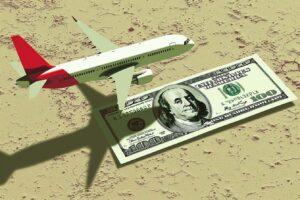
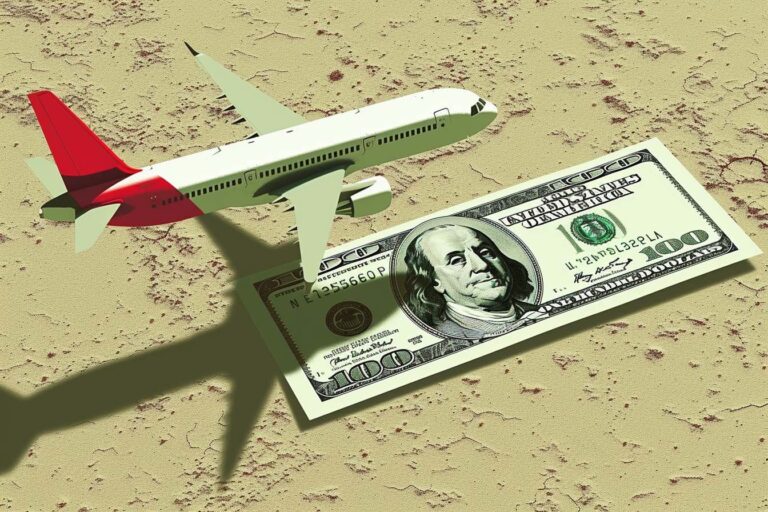
Today’s sweeping rulemaking proposal by the Transportation Department is so enormous, it can’t be analyzed in a single post. But let’s not bury the lede as they say in journalism: The government wants to do us all a big favor by requiring airlines to post a “full price” — including all mandatory fees.

You can read the entire document here (.DOC).


Here’s the relevant language:

The Department is considering changing its enforcement policy concerning this rule to enforce the “full price advertising” provision of the rule as it is written and, consistent with longstanding Department enforcement policy, to clarify that the rule applies to ticket agents.

This change in enforcement policy would also include a requirement that all advertisers include all mandatory fees in the advertised price.

Given technological innovations and new methods of communication, carriers and ticket agents are finding new and creative ways to advertise airfares, some of which circumvent the spirit if not the letter of the full- price advertising rule and Department enforcement policy.

Consumers now receive airfare solicitations through print advertisements, radio advertisements, internet advertisements, and solicitations sent directly to consumers via email newsletters, social networking websites, text messages, and applications designed for many different kinds of cell phones. The ease and speed of information sharing also allows airfare information to be presented to consumers in many different forms.

Even in cases where those forms of advertising comply in a technical sense with our enforcement policy with regard to the full-price advertising rule, we are concerned that in many cases consumers are not easily able to determine the total cost of air transportation services or are deceived regarding the true price.

Accordingly, we believe consumers would be better served if we enforce our existing full-price rule as written and prohibit the practice of advertising fares that exclude any mandatory fees or surcharges, regardless of the source.

The proposal goes on to say the government “no longer see[s] a useful purpose in presenting what purportedly are “fares” to consumers that do not include numerous required charges and, in our view only act to confuse or deceive consumers regarding the true full price and to make price comparisons difficult or improbable.”

In a related move, the DOT wants to end the onerous practice of “opt out” marketing I’ve highlighted on this site.

No longer will carriers or ticket agents be allowed to require that a consumer opt out of purchasing such products or services in order to avoid being charged for them.

The proposed rule, as part of the current full-price advertising rule, would also apply to carriers and ticket agents that advertise tours which include air transportation. Examples of such opt-out procedures the Department has seen in recent years include fees for travel insurance, rental cars, transfers between airports and hotels, priority boarding, premium seats, and extra legroom.

Oftentimes the consumer does not realize that the ancillary services are included in the total price of the ticket due to the deceptive nature of such opt-out provisions.

Sounds as if the government is as tired as customers with having to wade through a myriad of footnotes and hyperlinks regarding government taxes and fees. It’s time for airline to make the full-price calculation themselves to establish which among many displayed “fares” is the real fare.

What do you think? Is this going to help air travelers — or is it unnecessary government intervention in a free market?

You know where I stand on this issue. How about you?

(Photo: Vidiot/Flickr Creative Commons)

  • cjr

    Government intervention in a ‘free market’ wouldn’t be necessary if the companies in said market could be trusted to work in the best interests of everyone. But they can’t; they only ever work for themselves. Hence the requirement of regulation and intervention.

  • http://www.aroundtheglobe.nl Erik

    We have this in Europe since 2008 and for consumers it’s much more transparent! You only need to check if they advertise with a one way ticket price or not.

    Although the ticket prices are transparent they now come up with ridiculous extra charges which you can’t avoid. They need to make money somehow I think?!

  • Kevin

    It is about time.

    Thank you for being on top of the reporting, once again, Mr. Elliott

  • Roberto

    I’m not sure if this is as big a deal as you’re making it out to be. Airlines, and the mainstream travel sites (the travelocitys, the expedias, the orbitzs of the world) already display the full price. This may cut down on the deceptive print advertisements you see for international travel (“Europe! For as low as $199!”, nevermind that that’s one way and doesn’t include about $500 in taxes and surcharges), however.

    I wish someone could make the hotels do the same with resort fees. They are the worst offenders in this department right now.

  • sweepergrl

    I hate to get my hopes up, but this would be a welcome change.

  • Arizona Road Warrior

    I think that it is unnecessary government intervention in a free market. If you don’t like how an airline price it tickets, you don’t have to fly them. Unless you are traveling to a small market, you can always fly Southwest, AirTran and Frontier which does a better job of disclosing their prices according to the critics.

    My concern as an elite FF is that I will lose benefits such as premium coach seats, check 3 bags for free, etc.

  • Joe Farrell

    Government intervention in a free market would not be necessary if consumers actual paid attention – regulations for consumers are necessary when consumers act like clueless idiots and do things without thinking or questioning. If people acted like everyone they dealt with was trying to take advantage of them and learned what they needed to learn about what they intend to buy consumer protections would not be necessary. . . . people would vote with their wallets intelligently and the market would react to that -= meaning bookings on opt-out airline junk would go away forcing the carrier to stop doing it.

    Heck, I had a local company stuff a flyer on my windshield the other day. I went to the shop – spoke to the owner – and told him that he LOST my business permanently because of the annoyance of having to pull his flyer off my windshield – I handed it back to him and told him to throw it out. If MORE people did that, then we’d get alot less guerrilla marketing.

  • Johnny Triumph

    It’s all just more hype, since there are so many other fees that they can apply to the ‘full’ fare (bags, meals, headphones). This may help things out but will not solve the problem.

  • MeanMeosh

    Guess it depends on the government’s definition of “mandatory”. If they mean the government taxes and fees and stuff like those irritating “peak travel surcharges”, then fine (though you can figure that out already by doing a search on Kayak). But if they start defining too many things as mandatory – baggage fees, meal fees, etc. – it’ll start cluttering up fare displays unnecessarily. Not to mention, I’m lazy, and I don’t want to have to start unchecking a bunch of boxes for stuff I don’t want to figure out what I actually need to pay.

    Now if only the government would mandate the same things for hotels. If you ask me, the mandatory but always nicely buried-in-fine-print “resort fee” is far more deceptive than anything you might find in an airline advertisement.

  • Carver

    A couple thoughts

    Government always intrudes in the free market. Ever heard of minimum wage. So that discussion is already over. The question is, is this a good idea?

    Alas, as MeanMosh implies, the devil is in the details.

    Personally, I break fees into two types: Mandatory and Discretionary

    Mandatory fees are fees that it is impossible to avoid. Those are fees that unless you pay them, you cannot purchase a ticket. Fuel charges, airport concession fees, etc.

    Discretionary fees are fees that a reasonable number of people can avoid. Luggage fees for example. As much as they are hated, many people do not pay them, whether because of elite status or better packing.

    The grey area are the almost mandatory fees. For example, suppose an airline charged for in flight bathroom access?

  • Logan

    Let me put it this way: There’s a good reason I use Kayak to look up airfares. In addition to searching the Legacy Carries plus JetBlue, it folds up all of the taxes and fees, and can even add on the baggage fees. Southwest includes the taxes on its site voluntarily, on the initial search results page..

  • Jesse

    This is good news.

    Let this be the end of the dreaded advertisement:

    LONDON FOR $199*!!!!!!!!!!!!

    * One way based on round trip purchase. Taxes, surcharges, and fees extra.

  • Marsha

    I think it is about time for this change! Thank goodness…now if we could only do something about those damn baggage fees.

  • http://nextflighthome.com NextFlightHome

    This is very good news for the traveling public! I honestly don’t know how I missed this yesterday!?!

    The way I look at it is like this. Suppose you need a dozen eggs. At the grocers the price of the eggs is clearly marked $1.95, and at the Farmers Market organic locally farmed eggs are $2.50. Being budget conscious you go to the grocers, but when you get to the register you’re charged an additional $.50 for the carton the eggs come in, plus $.20 security fee for the store’s surveillance system, plus $.15 for a bag to carry the eggs out of the store, and finally $.10 tax.

    Now my $1.95 eggs cost me $2.85 because of the hidden fees, while meanwhile across the street at the Farmers Market, I could have bought Organic locally farmed eggs for $2.50 all in.

    If you feel you were deceived at the grocers, well you’re being deceived at most of the major airlines (and car rental firms too for that matter).

  • Vanessa

    I typically don’t agree with the govt getting in our business, but this is one of a few instances that I do appreciate their getting involved. The govt isn’t telling airlines what to charge- just forcing them to simply state the whole price of the ticket upfront – voila transparency :-). I believe this may stop the tricky bait and switch advertisements we see so often (until the airlines can think up some other schemes), and hopefully as consmers we won’t have to be so paranoid when purchasing a ticket.
    Not everyone is internet saavy, and he or she could go to an agent but this is a good move, and like stated above i’ll be even more happy to see these rules applied to the hotel industry too. Thanks for the info Chris

  • Buddy

    How does the ultimate fare price change if every carrier has to pay the same government fee on an airport by airport basis? My ultimate question would be what pet government (airport official) project is the fee funding? Look at your local airport, study the additional fees, and look hard where they go. I would recommend looking up the airport financials; you may be surprised what you find.

  • http://www.clarkecomputer.com Charles Clarke

    @Arizona Road Warrior
    How would elite travellers lose those benefits? Those aren’t mandatory charges and you get the charges for those waived.

    I’m definitely a free market person and I think anyone who is a free market type person should support this. More transparancy is what makes up a true free market. Not who can hide the real cost or externalize those costs best. Make sure I have the information easily and nondeceptively available to make the best decision for what I want and I’ll do it.